News

Block
Highlights
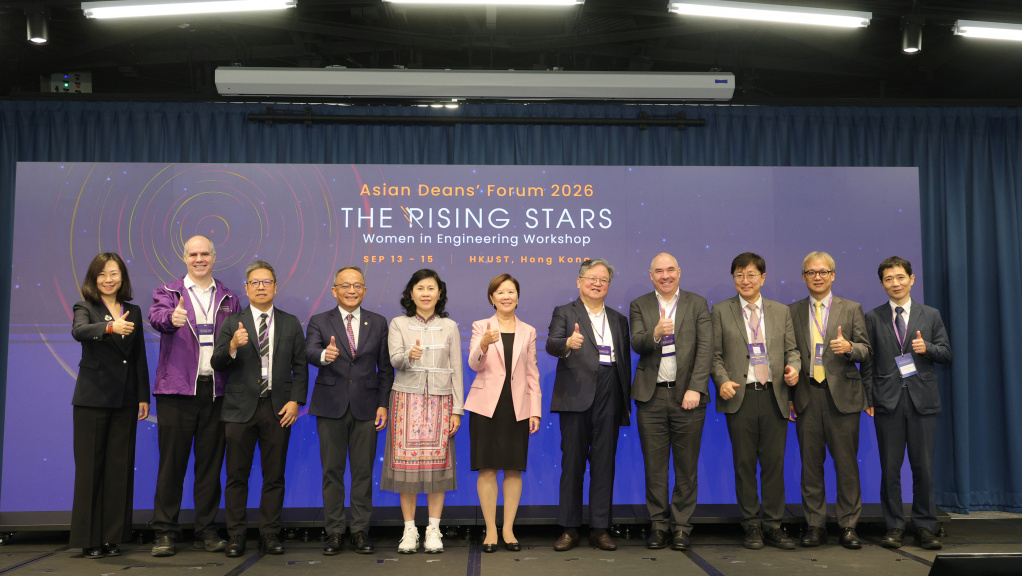
Prof. Nancy Ip (center), President of HKUST; Ms. Mable Chan (5th left), Secretary for Transport and Logistics of the HKSAR Government; Prof. Guo Yike (5th right), Provost of HKUST; Prof. Tim Cheng (4th left), Vice-President for Research and Development, HKUST; Prof. Hong K. Lo (3rd left), Dean of Engineering, HKUST; Prof. Xu Ruina (1st left), Dean, Department of Energy and Power Engineering, Tsinghua University; Prof. Martin Buist (2nd left), Deputy Dean (Education), College of Design and Engineering, Natio
Prof. Nancy Ip (center), President of HKUST; Ms. Mable Chan (5th left), Secretary for Transport and Logistics of the HKSAR Government; Prof. Guo Yike (5th right), Provost of HKUST; Prof. Tim Cheng (4th left), Vice-President for Research and Development, HKUST; Prof. Hong K. Lo (3rd left), Dean of Engineering, HKUST; Prof. Xu Ruina (1st left), Dean, Department of Energy and Power Engineering, Tsinghua University; Prof. Martin Buist (2nd left), Deputy Dean (Education), College of Design and Engineering, National University of Singapore; Prof. Julien Epps (4th right), Dean of Engineering, The University of New South Wales; Prof. Young-Oh Kim (3rd right), Dean, College of Engineering, Seoul National University; Prof. Louis Ge (2nd right), Associate Dean, College of Engineering, NTU Taiwan University; and Prof. Tomonori Nagayama (1st right), Professor, Department of Civil Engineering, The University of Tokyo, officiate at the opening ceremony. 
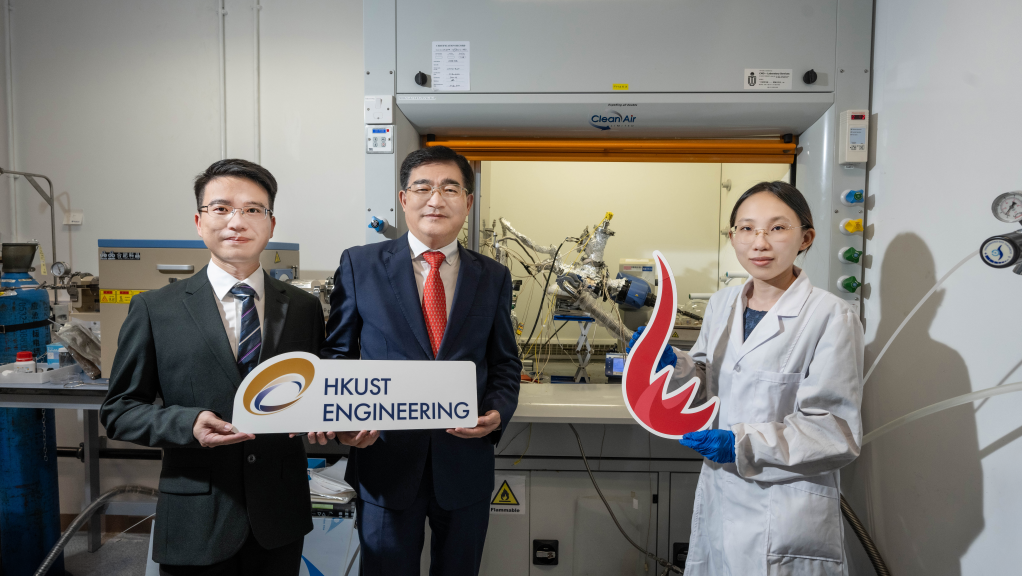
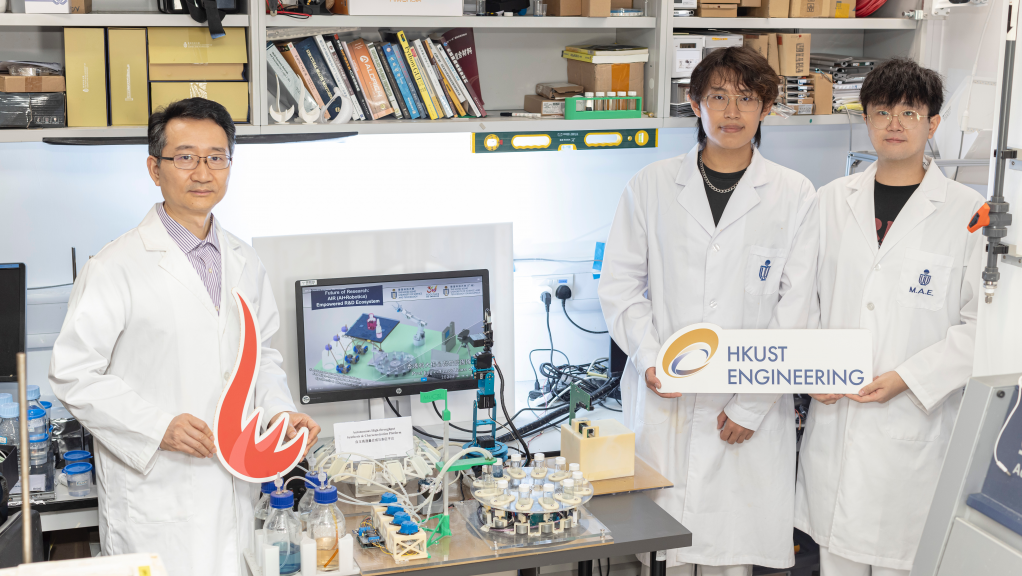
The autonomous high-throughput synthesis and characterization platform placed on the table was developed by a HKUST research team from the Department of Mechanical and Aerospace Engineering. Team members include Prof. Yang Jinglei (first left), Professor of the Department of Mechanical and Aerospace Engineering, PhD student Ma Guoxiong (first right), and MPhil graduate Cui Haozhe (second right).
The autonomous high-throughput synthesis and characterization platform placed on the table was developed by a HKUST research team from the Department of Mechanical and Aerospace Engineering. Team members include Prof. Yang Jinglei (first left), Professor of the Department of Mechanical and Aerospace Engineering, PhD student Ma Guoxiong (first right), and MPhil graduate Cui Haozhe (second right). 
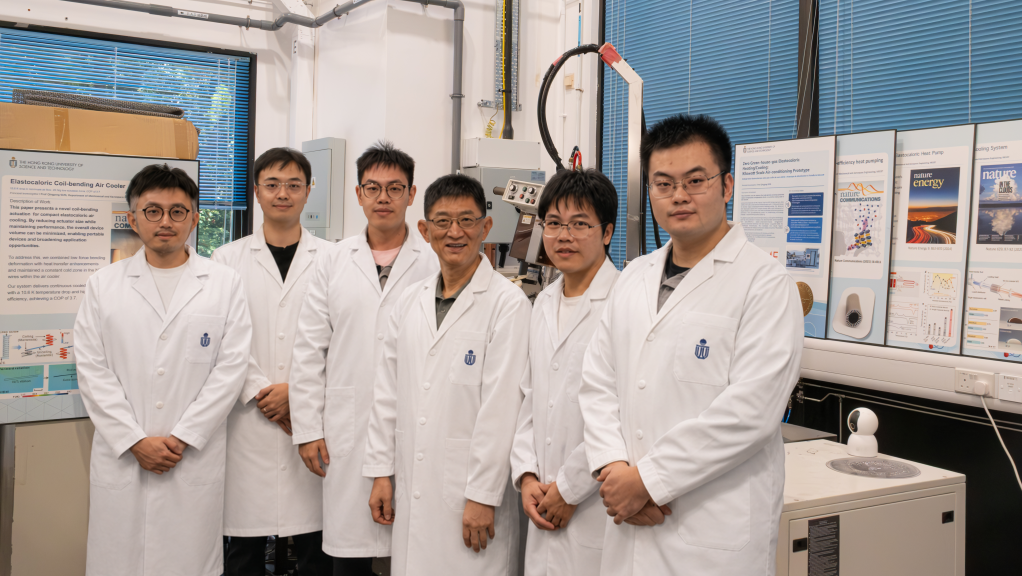
A team led by Prof. Sun Qingping (third right), Chair Professor in the Department of Mechanical and Aerospace Engineering at HKUST, has unveiled the world’s first zero-degradation elastocaloric cooling device. Team members include (from first left) Dr. Li Xueshi, Su Changfeng, Li Yang, (from fifth left) Dr. Lin Hongyang, and Hu Jiyuan.
A team led by Prof. Sun Qingping (third right), Chair Professor in the Department of Mechanical and Aerospace Engineering at HKUST, has unveiled the world’s first zero-degradation elastocaloric cooling device. Team members include (from first left) Dr. Li Xueshi, Su Changfeng, Li Yang, (from fifth left) Dr. Lin Hongyang, and Hu Jiyuan. 
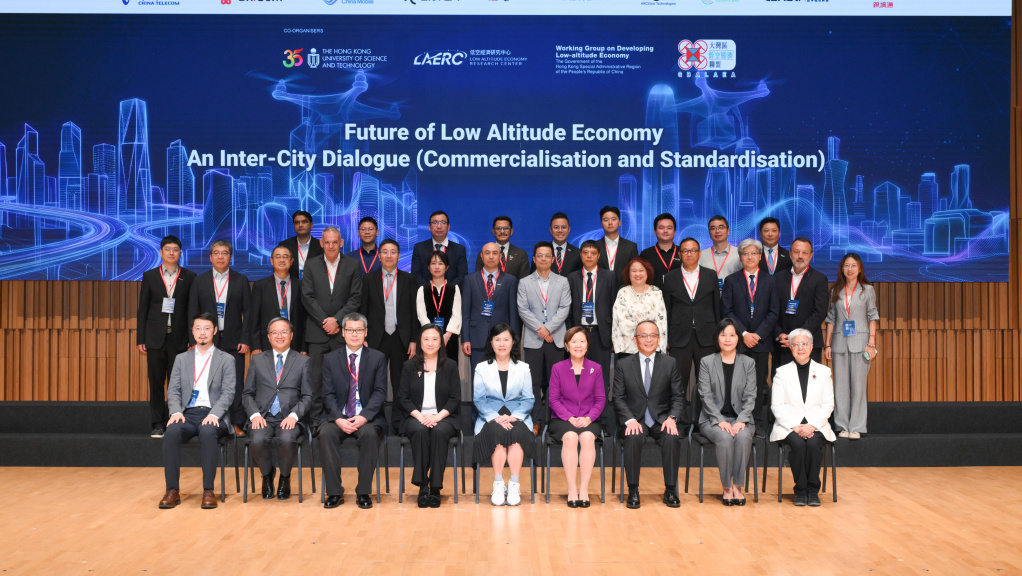
HKUST in collaboration with the Working Group on Developing Low-altitude Economy under the HKSAR Government and the Greater Bay Area Low Altitude Economy Alliance, hosted the thematic forum titled “Future of Low Altitude Economy – An Inter-City Dialogue (Commercialization and Standardization)”. Pictured are Ms. Mable Chan (front row, fifth left), Secretary for Transport and Logistics of the HKSAR Government; Prof. Nancy Ip (first row, fourth right), President of HKUST; the Hon. Elizabeth Quat (first row, fo
HKUST in collaboration with the Working Group on Developing Low-altitude Economy under the HKSAR Government and the Greater Bay Area Low Altitude Economy Alliance, hosted the thematic forum titled “Future of Low Altitude Economy – An Inter-City Dialogue (Commercialization and Standardization)”. Pictured are Ms. Mable Chan (front row, fifth left), Secretary for Transport and Logistics of the HKSAR Government; Prof. Nancy Ip (first row, fourth right), President of HKUST; the Hon. Elizabeth Quat (first row, fourth left), Legislative Council Member of the HKSAR and Founding President of the Greater Bay Area Low Altitude Economy Alliance, and Prof. Tim Cheng (first row, third right), Vice-President for Research and Development of HKUST, together with other distinguished guests. 
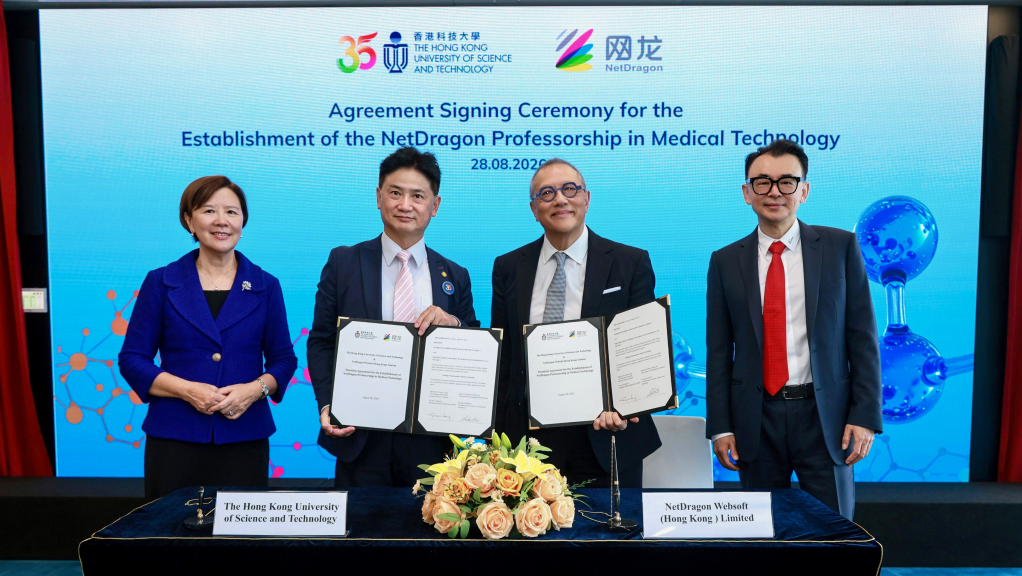
HKUST has received a generous donation from NetDragon to establish the “NetDragon Professorship in Medical Technology” at the School of Engineering, supporting the University in advancing research excellence. Witnessed by Prof. Nancy Ip, President of HKUST (first left), and Dr. Liu Dejian, Chairman and Executive Director of NetDragon (first right), the agreement was signed by Prof. Charles Ng, Vice-President for Institutional Advancement of HKUST (second left), and Dr. Simon Leung, Vice Chairman and Executi
HKUST has received a generous donation from NetDragon to establish the “NetDragon Professorship in Medical Technology” at the School of Engineering, supporting the University in advancing research excellence. Witnessed by Prof. Nancy Ip, President of HKUST (first left), and Dr. Liu Dejian, Chairman and Executive Director of NetDragon (first right), the agreement was signed by Prof. Charles Ng, Vice-President for Institutional Advancement of HKUST (second left), and Dr. Simon Leung, Vice Chairman and Executive Director of NetDragon (second right). 
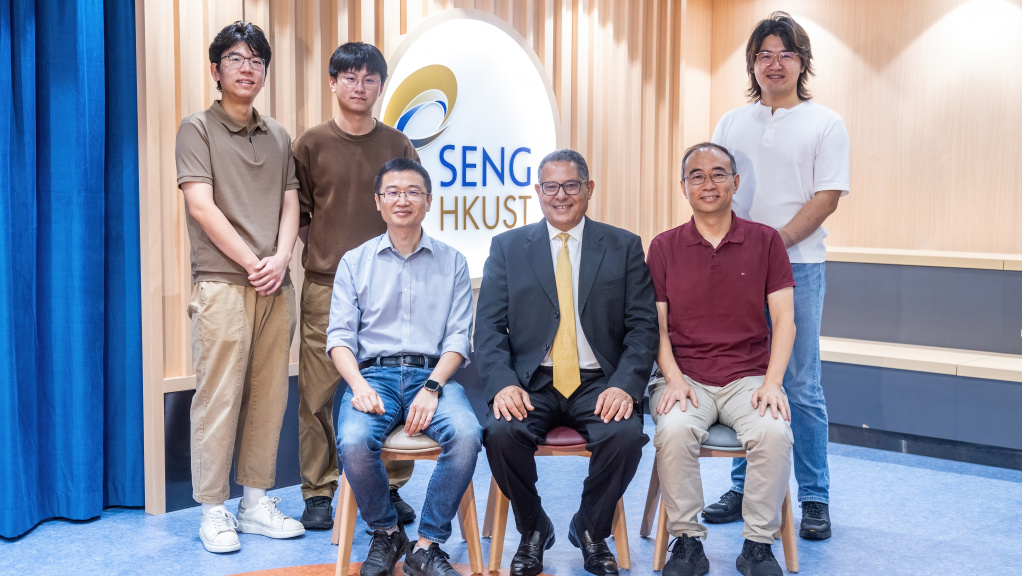
HKUST proposes the “Reasoning-Empowered Task-Oriented Communication” framework, equipping AI agents with autonomous logical reasoning capabilities to determine what information to share, when to communicate, and why information exchange is necessary. The research team includes Prof. Khaled B. Letaief (front row, center), Prof. Zhang Jun (front row, left), Prof. Song Shenghui (front row, right), Dr. Wang Zixin (back row, right), Xie Songjie (back row, first left) and Li Hongru (back row, second left).
HKUST proposes the “Reasoning-Empowered Task-Oriented Communication” framework, equipping AI agents with autonomous logical reasoning capabilities to determine what information to share, when to communicate, and why information exchange is necessary. The research team includes Prof. Khaled B. Letaief (front row, center), Prof. Zhang Jun (front row, left), Prof. Song Shenghui (front row, right), Dr. Wang Zixin (back row, right), Xie Songjie (back row, first left) and Li Hongru (back row, second left). 
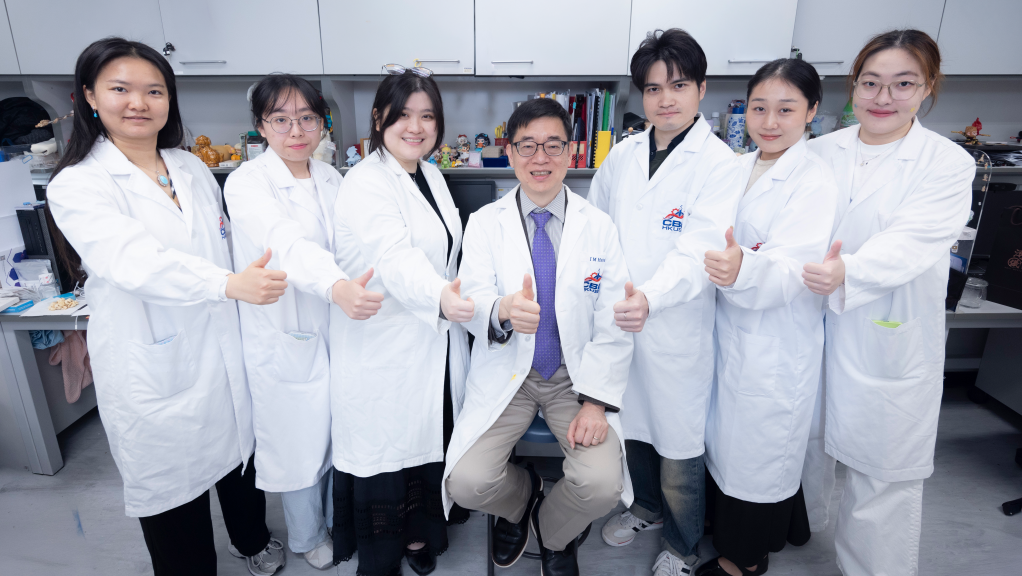
A research team led by Prof. Hsing I-Ming (center), Professor of the Department of Chemical and Biological Engineering at HKUST, has developed TEMPO, a thermodynamically programmed one-pot CRISPR platform for rapid, point-of-care nucleic acid testing. Mr. Wu Xiaolong (third right) and Ms. Li Yanan (first left), PhD students from the Department of Chemical and Biological Engineering, are the co-first authors of this study.
A research team led by Prof. Hsing I-Ming (center), Professor of the Department of Chemical and Biological Engineering at HKUST, has developed TEMPO, a thermodynamically programmed one-pot CRISPR platform for rapid, point-of-care nucleic acid testing. Mr. Wu Xiaolong (third right) and Ms. Li Yanan (first left), PhD students from the Department of Chemical and Biological Engineering, are the co-first authors of this study. 
A large-scale international study led by Prof. Lu Mengqian, Professor of the Department of Civil and Environmental Engineering at HKUST, revealed that inter-city collaboration on emission reduction can improve overall sustainability performance by more than 10%.
A large-scale international study led by Prof. Lu Mengqian, Professor of the Department of Civil and Environmental Engineering at HKUST, revealed that inter-city collaboration on emission reduction can improve overall sustainability performance by more than 10%.  
A research team, led by Prof. Irene Lo Man-Chi (first right), Chair Professor of the Department of Civil and Environmental Engineering at HKUST and formed by HKUST Research Associate Dr. Zheng Zexiao (second left), PhD candidate Zhang Jin (center), postdoctoral fellow Dr. Jonathan J. Calvillo Solís (first left), and MPhil student Howard Y. M. Cheung (second right), has recently achieved a major breakthrough by discovering a novel oxidant-free electrocatalytic mechanism, opening up a new direction for water
A research team, led by Prof. Irene Lo Man-Chi (first right), Chair Professor of the Department of Civil and Environmental Engineering at HKUST and formed by HKUST Research Associate Dr. Zheng Zexiao (second left), PhD candidate Zhang Jin (center), postdoctoral fellow Dr. Jonathan J. Calvillo Solís (first left), and MPhil student Howard Y. M. Cheung (second right), has recently achieved a major breakthrough by discovering a novel oxidant-free electrocatalytic mechanism, opening up a new direction for water purification technologies. 
Prof. Chen Hao (center), Assistant Professor of the Department of Computer Science and Engineering and the Department of Chemical and Biological Engineering and Director of the Collaborative Center for Medical and Engineering Innovation at HKUST, together with co-first authors Mr. HE Sunan (left) and Mr. NIE Yuxiang (right), both PhD students from the Department of Computer Science and Engineering, in collaboration with an international team, have developed the novel medical AI framework GSCo.
Prof. Chen Hao (center), Assistant Professor of the Department of Computer Science and Engineering and the Department of Chemical and Biological Engineering and Director of the Collaborative Center for Medical and Engineering Innovation at HKUST, together with co-first authors Mr. HE Sunan (left) and Mr. NIE Yuxiang (right), both PhD students from the Department of Computer Science and Engineering, in collaboration with an international team, have developed the novel medical AI framework GSCo. 
Block

News

Highlights
AI supports personalized teaching by helping educators see students’ learning more clearly and choose the next teaching move with greater precision.
AI supports personalized teaching by helping educators see students’ learning more clearly and choose the next teaching move with greater precision. 
Insight Exchange, Teaching & Learning
Block

Press Release

Highlights
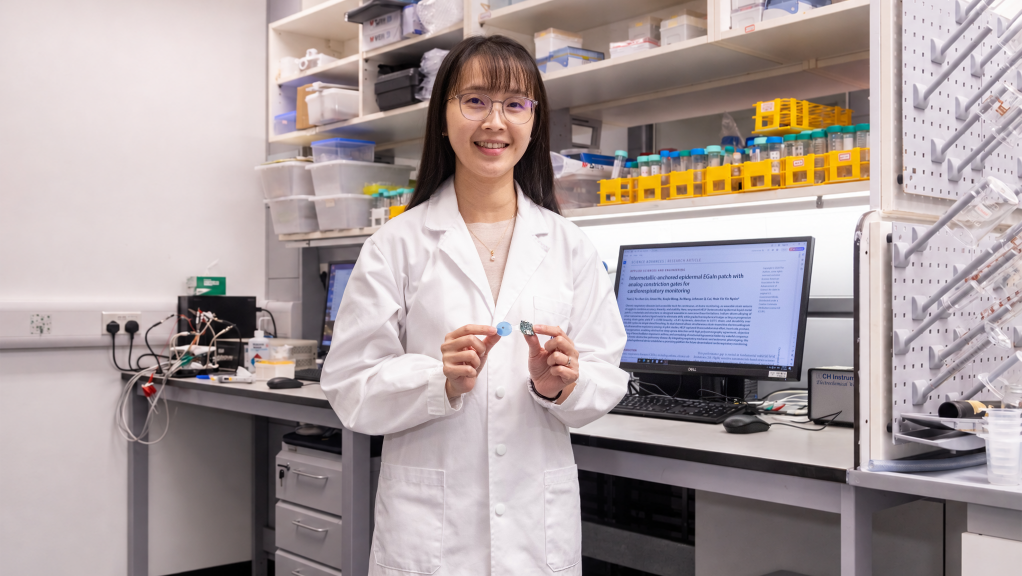
Prof. Hnin Yin Yin Nyein, Assistant Professor of the Department of Chemical and Biological Engineering at HKUST, holds the heteromodal epidermal liquid-metal patch (HELP) developed by her research team.
Prof. Hnin Yin Yin Nyein, Assistant Professor of the Department of Chemical and Biological Engineering at HKUST, holds the heteromodal epidermal liquid-metal patch (HELP) developed by her research team. 
Block

Feature Stories

Highlights
Prof. Gao Yang with a model of the first-generation Hong Kong Operation Robot, a novel multifunctional lunar surface robot being designed and developed by the HKUST-led InnoHK Hong Kong Space Robotics and Energy Centre (HKSREC) for the nation’s lunar exploration mission.
Prof. Gao Yang with a model of the first-generation Hong Kong Operation Robot, a novel multifunctional lunar surface robot being designed and developed by the HKUST-led InnoHK Hong Kong Space Robotics and Energy Centre (HKSREC) for the nation’s lunar exploration mission. 
Title
Faculty Column
From Tool to Teammate: Turning AI into an Authentic Learning Partner
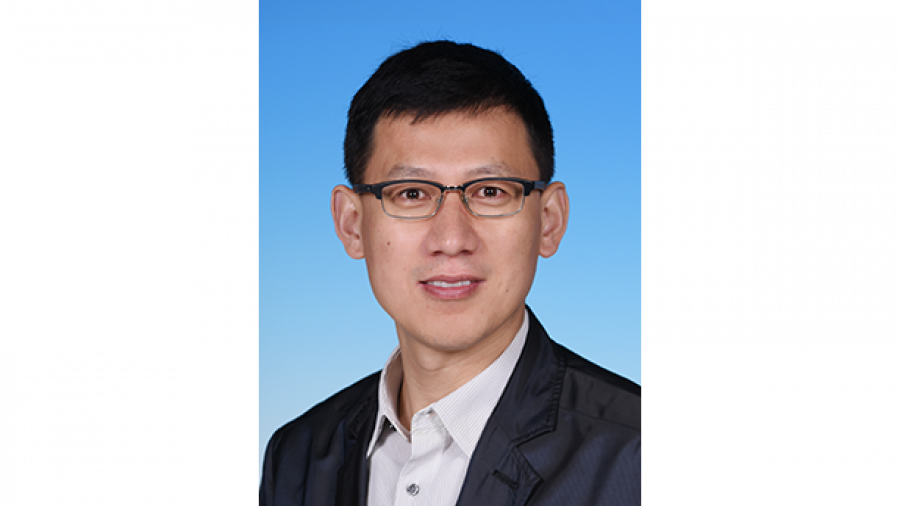
By Prof. Marshal LIU
Associate Director, Center for Engineering Education Innovation (E2I)
From Tool to Teammate: Turning AI into an Authentic Learning Partner
Designing with Empathy, Accelerating with AI: Educating the Next Generation of Global Innovators
By Dr. Malinda ABEYNAYAKE
Associate Director, Student Innovation for Global Health Technology (SIGHT)
Designing with Empathy, Accelerating with AI: Educating the Next Generation of Global Innovators
AI Literacy Beyond Tools: Preparing Lifelong Learners in the Age of AI
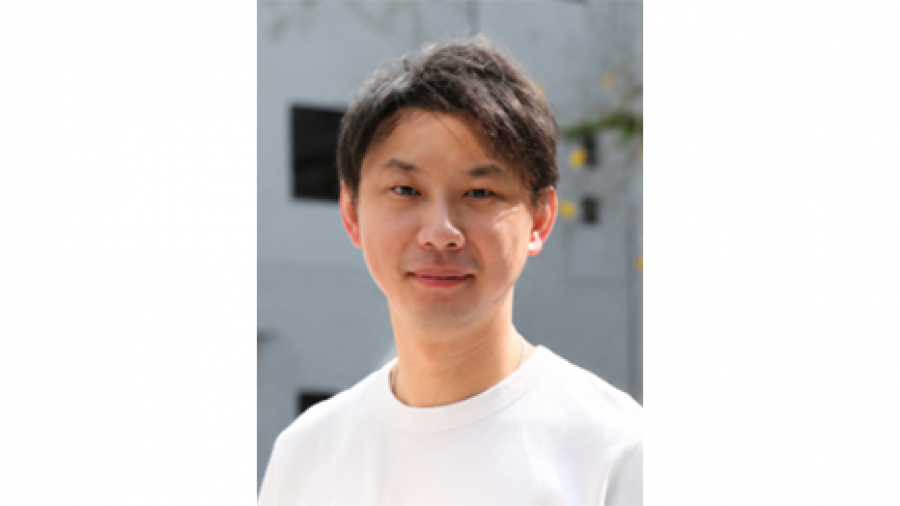
By Prof. Kenneth LEUNG
Associate Professor of Engineering Education, Department of Computer Science and Engineering
Prof. Kenneth LEUNG
The Integration of AI in STEAM Education: Enhancing Learning and Creativity
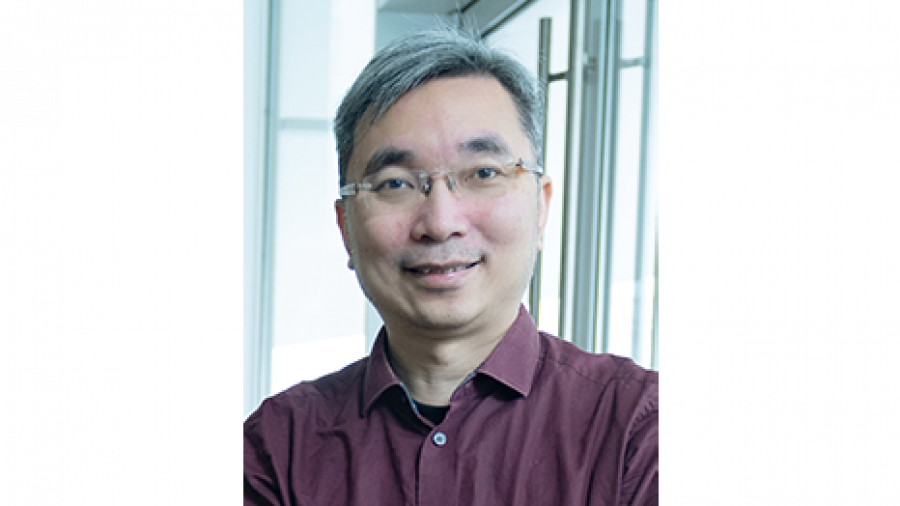
By Prof. Tim WOO
Founding Director, Center for Global & Community Engagement (GCE)
Prof. Tim Woo
Ctrl+Alt+Del: Rebooting Education for the AI Age
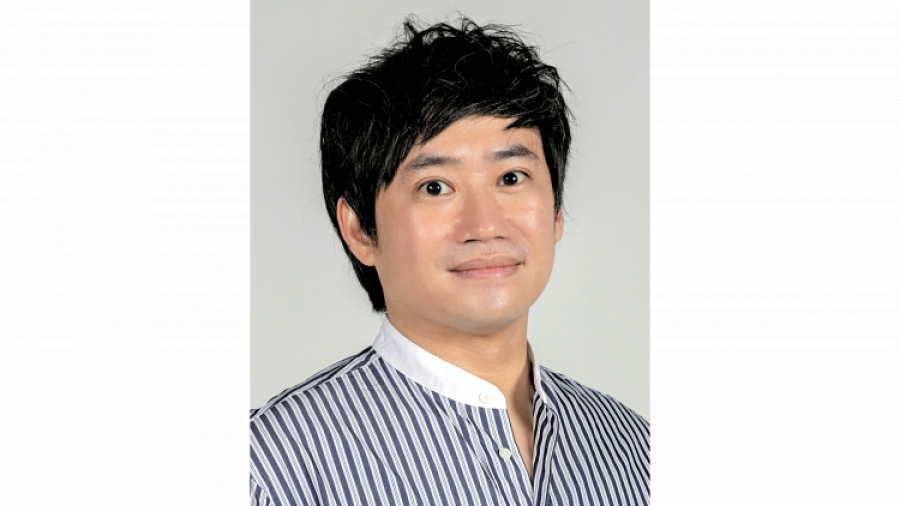
By Prof. Ben CHAN Yui-Bun
HKUST Associate Dean of Students; and Associate Director of the Center for Engineering Education Innovation (E2I)
Ctrl+Alt+Del: Rebooting Education for the AI Age
From Virtual Pre-Labs to Physical Judgment: Co-Intelligence in Mechanical and Aerospace Engineering Education
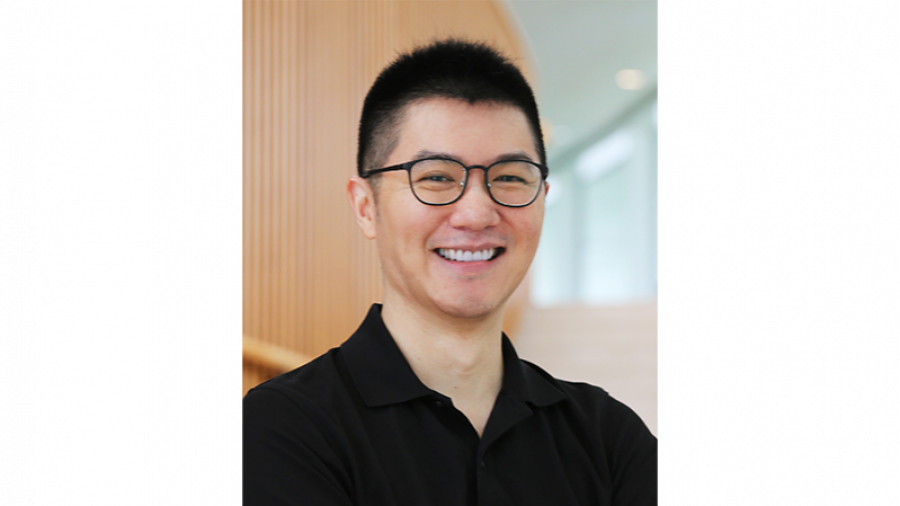
By Prof. Larry LI
Associate Head and Associate Professor, Department of Mechanical and Aerospace Engineering
Prof. Larry Li
Co-Intelligence Education: Preparing Engineers for the AI–Robot Era
By Prof. WANG Yu-Hsing
Director, Center for Engineering Education Innovation (E2I)
Co-Intelligence Education: Preparing Engineers for the AI–Robot Era
Why Join Bioengineering at HKUST’s Chemical and Biological Engineering Department?
By Prof. Terence WONG
Undergraduate Programs Coordinator, Department of Chemical and Biological Engineering
Why Join Bioengineering at HKUST’s Chemical and Biological Engineering Department?
Building the Future of Low-Altitude Mobility: The Vision of the Low-Altitude Economy
By Prof. LI Mo
Director, Low Altitude Economy Research Center
Why Join Bioengineering at HKUST’s Chemical and Biological Engineering Department?