From Tool to Teammate: Turning AI into an Authentic Learning Partner

|
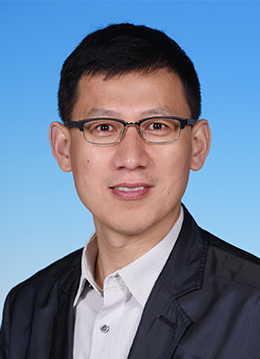
Prof. Marshal LIU is Associate Professor of Engineering Education in the Department of Chemical and Biological Engineering and Associate Director of the Center for Engineering Education Innovation (E2I) at HKUST. His work focuses on engineering education innovation, experiential learning, blended learning, sustainability, and AI-enhanced learning. Recognizing the transformative impact of AI on higher education, he has been an early advocate of integrating AI into classroom activities, project-based learning, assessment design, and curriculum development. He has delivered numerous talks on AI-enabled education, responsible AI adoption, and the evolving implications of AI for the workplace and society. More recently, he co-developed the AI Horizons Common Core course, Exploring Smart Living: AI & IoT Essentials, which introduces students to human-AI collaboration through real-world applications. He is passionate to help students move beyond simply using AI tools to becoming thoughtful, creative, and responsible partners with AI in shaping the future. |
By Prof. Marshal Liu
We are living through one of the most significant transformations in the history of education. Artificial intelligence (AI) is reshaping how knowledge is created, analyzed, and applied. Across industries, professionals are already working alongside AI to draft reports, generate ideas, analyze data, and support decision-making. As educators, we therefore face a critical question: how do we prepare students to thrive in an AI-enabled world?
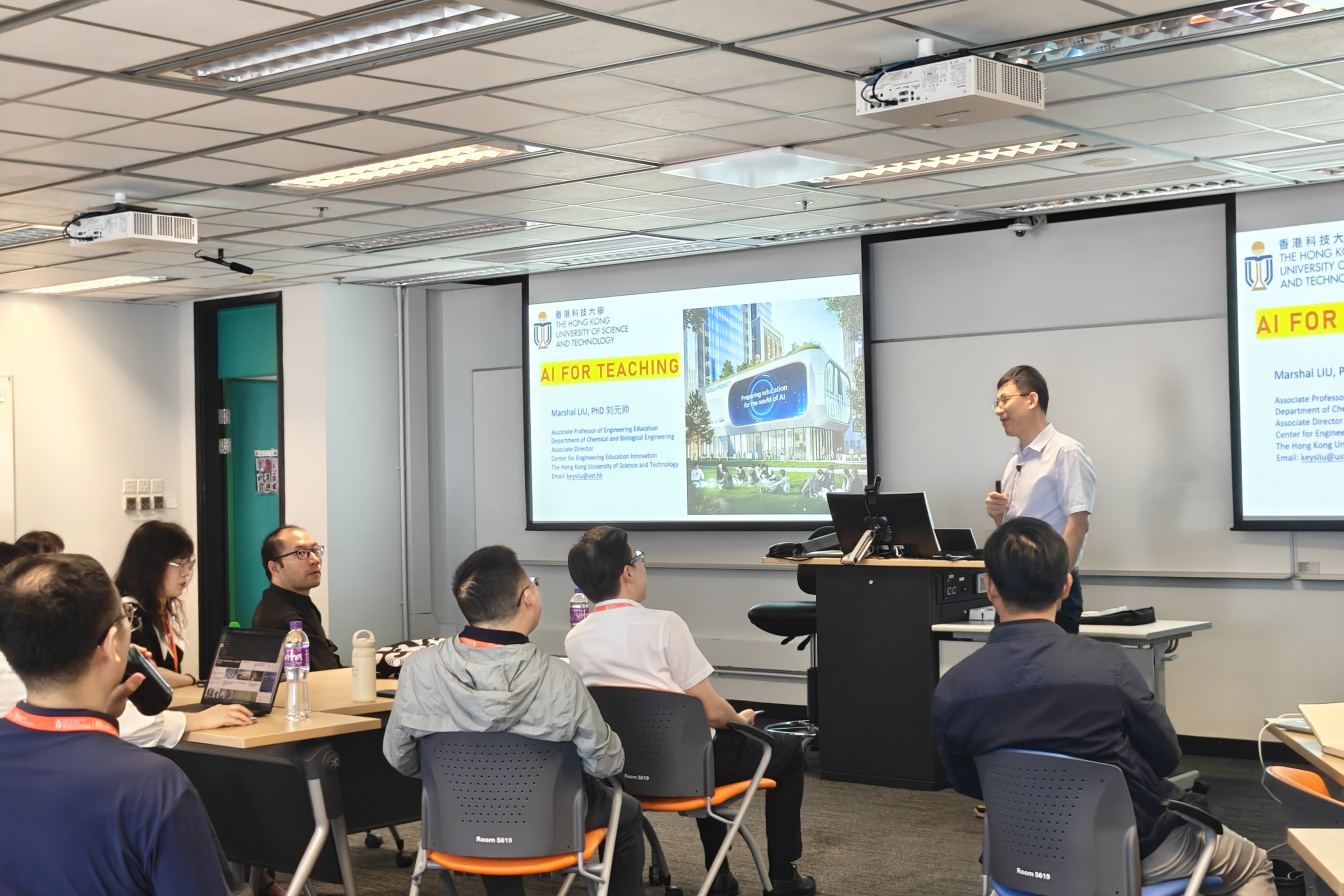
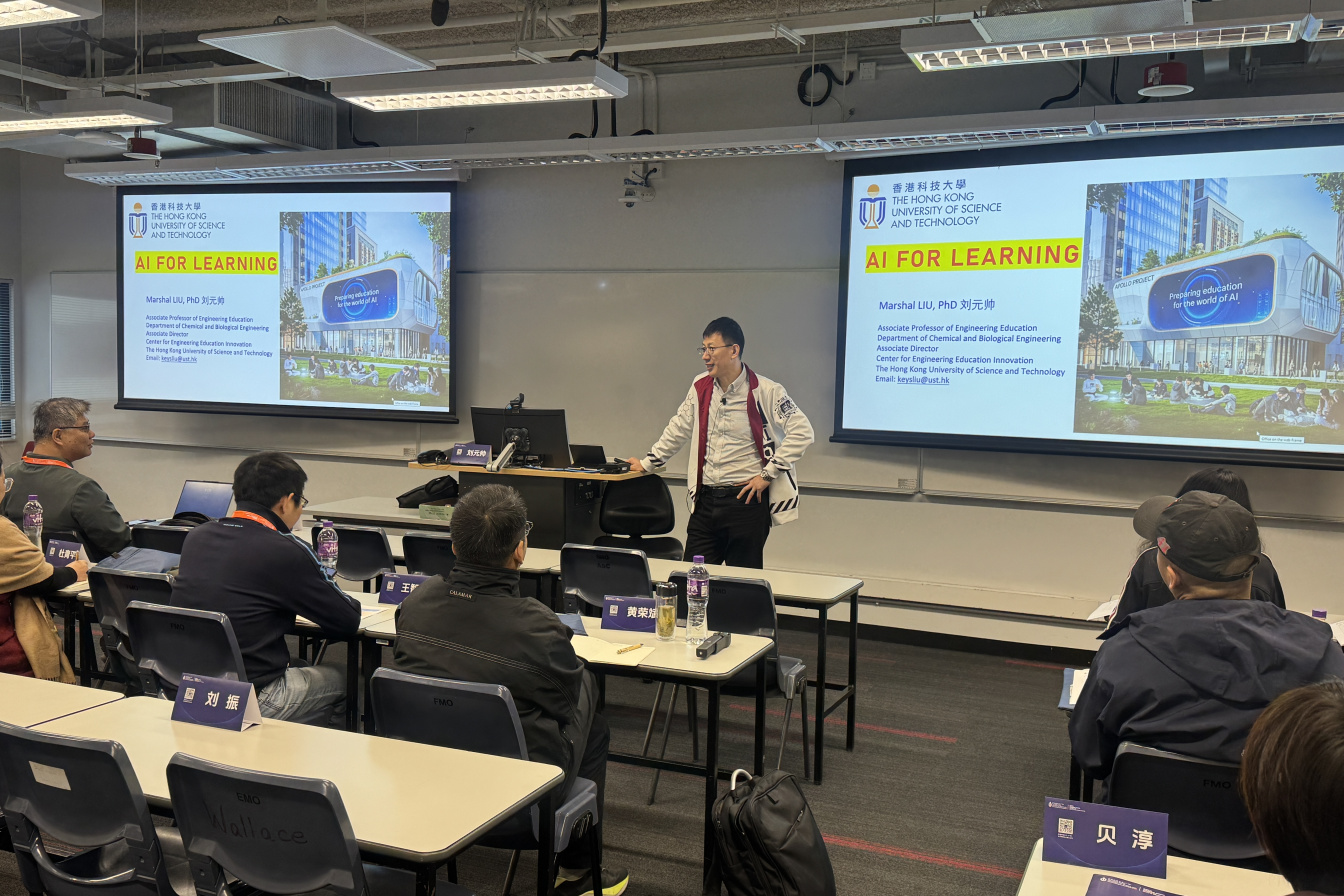
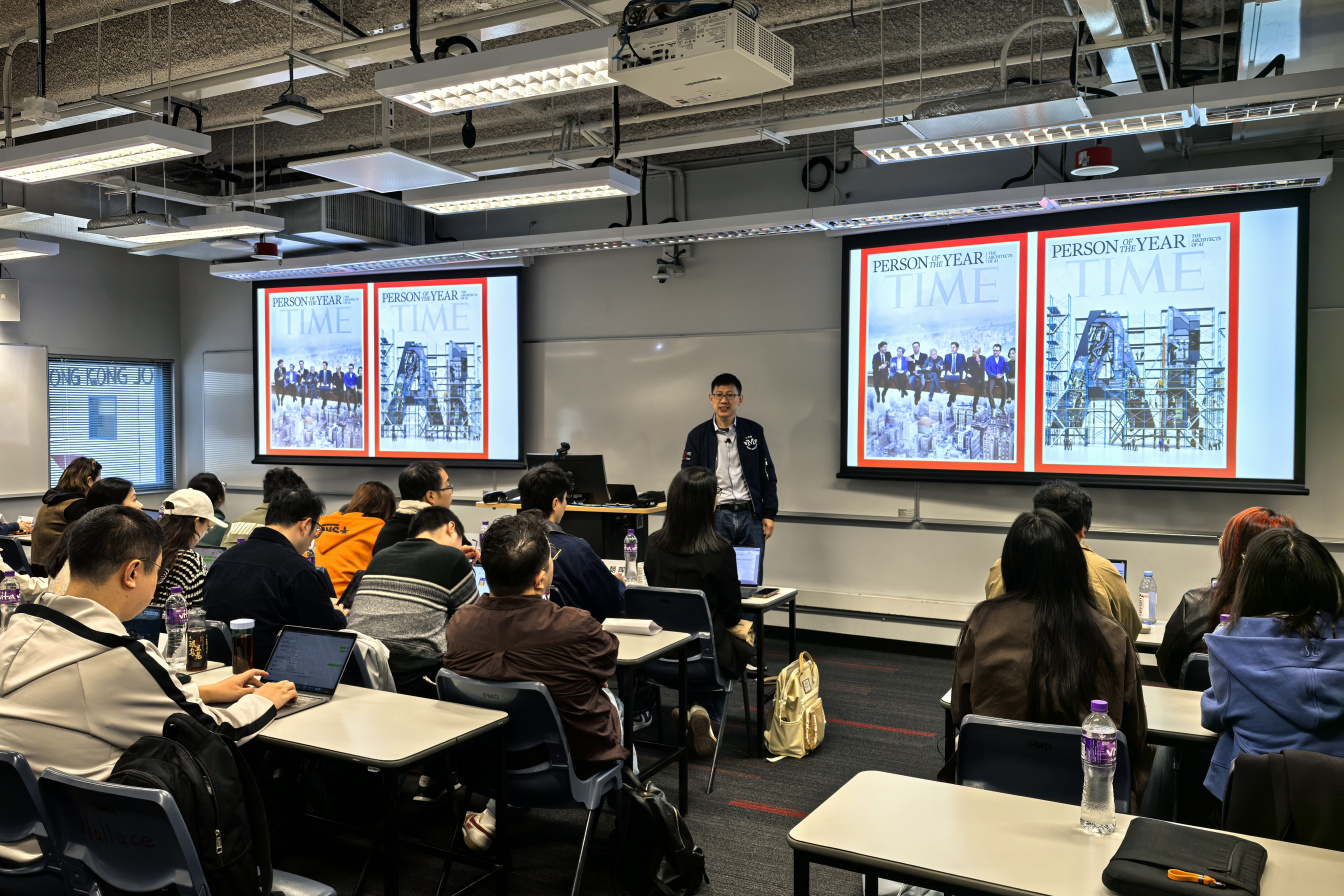
My own AI journey began in early 2023 when generative AI first demonstrated its remarkable capabilities. I was fascinated by its ability to generate teaching materials, answer complex questions, summarize information, and suggest innovative ideas during course preparation. Recognizing that AI would fundamentally reshape higher education, I immersed myself in learning. I subscribed to AI newsletters and podcasts, attended workshops organized by the Center for Education Innovation, Information Technology Services Office, and professional communities, and made it a habit to explore emerging AI developments every day. These experiences gave me the confidence to incorporate AI into my courses and to share my experiences through numerous talks delivered to students, educators, and industry professionals on AI-enabled learning and workplace transformation.
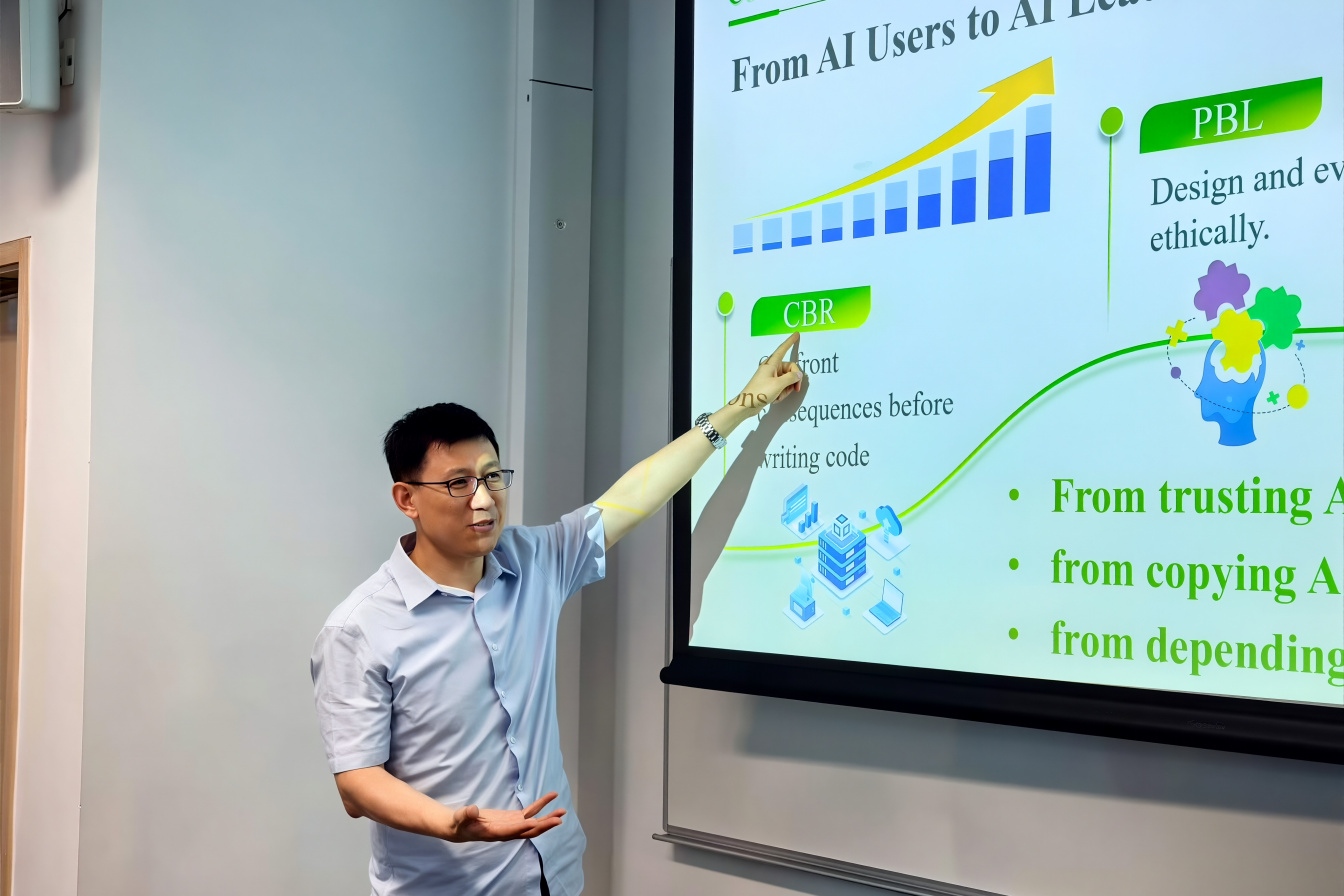
I quickly realized that AI should not simply be viewed as another software tool. Instead, it can become a learning partner that supports students throughout their learning journey. In my courses, students are encouraged to work with AI in assignments, projects, and even examinations. They use AI to search for information, create presentations, generate images and videos, develop animations, and design self-assessment quizzes. To strengthen students’ practical AI competencies, I have also collaborated with AI-for-Education companies to provide hands-on workshops featuring tools and workflows commonly adopted in industry.
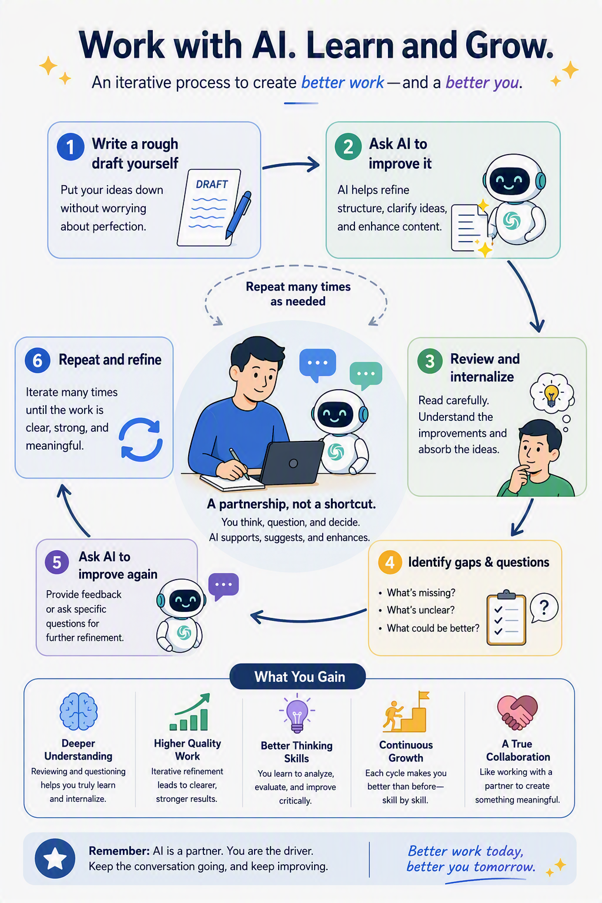
However, the key is not AI usage itself, but how students interact with it. For written assignments, students engage in an iterative dialogue with AI, much like collaborating with a human teammate. They begin with an initial draft, evaluate AI-generated suggestions, identify weaknesses, refine their ideas, and repeat the process several times, as the diagram below. Students are required to document and submit this development process, allowing assessment of both the final product and the thinking behind it. For lab reports, students use AI to generate procedural infographics and assist with data analysis, but they are the gatekeepers of accuracy and quality, responsible for validating every output.
This distinction is important because AI can be both empowering and potentially problematic. One major risk is the “illusion of learning”. Students may feel more confident because AI makes tasks easier and faster, yet confidence does not necessarily indicate understanding. Without careful instructional design, students can become overly dependent on AI and gradually lose motivation, learning efficiency, and independent problem-solving abilities.
For this reason, I believe AI should never be introduced into classrooms without appropriate guardrails. Students must be guided through continuous coaching, feedback, and mentorship from teachers. Effective AI-enhanced learning requires activities that encourage reasoning, reflection, and validation. The objective is not to replace thinking with AI, but to use AI to enhance thinking. In this model, AI augments educators rather than replace them, while teachers remain central in helping students develop judgment, curiosity, intellectual independence, and ethical responsibility.
The emergence of AI has also prompted us to rethink assessment. When AI can produce technically correct answers within seconds, traditional examinations focused on information recall or routine problem-solving become increasingly inadequate. Assessment reform has therefore become a strategic priority in my teaching.
Rather than asking students to compete against AI, I increasingly design assessments that require them to work with AI to solve authentic engineering problems. Examination questions now incorporate more open-ended scenarios, practical applications, visual information, and real-world complexities that require assumptions, approximations, and professional judgment. These questions reward reasoning, decision-making, and problem framing rather than answer generation alone.
More importantly, assessment is shifting from product-oriented evaluation to process-oriented evaluation. In smaller classes, students present their solutions directly to me, explaining their reasoning and responding to follow-up questions. In larger classes, similar discussions are conducted with teaching assistants. These conversations make students accountable for their thinking and provide a far more reliable indication of genuine understanding than written submissions alone. In the AI era, educational values must increasingly be anchored in judgment, decision-making, communication, and ethical reasoning rather than correctness alone.
In support of HKUST’s AI Common Core initiative, I collaborated with colleagues in the Center for Engineering Education Innovation (E2I) to develop the proposed AI Horizons course, Exploring Smart Living: AI & IoT Essentials. This course aims to introduce smart-home systems, visual programming, and human-AI collaboration, and position AI as an enabler of creativity, innovation, critical thinking, and societal problem-solving.
Ultimately, my philosophy on AI literacy is simple: AI should become an indispensable component of teaching and learning, while educators focus increasingly on cultivating the uniquely human qualities, including curiosity, critical thinking, creativity, ethical judgment, communication, and the ability to collaborate effectively with AI.
As higher education stands at this pivotal moment, AI will either disrupt us or empower us. The difference lies not in the technology itself, but in how we choose to embrace it. Our responsibility as educators is clear: not to resist AI, nor to surrender to it, but to harness its power thoughtfully. By guiding students to work with AI, we can transform AI from a mere tool into an authentic learning partner and prepare the next generation to prosper in the age of human-AI collaboration.