


HKUST Engineering Researchers Develop Low-Cost Elastocaloric Refrigerant Structure with Over 100-Million-Cycle Fatigue Life
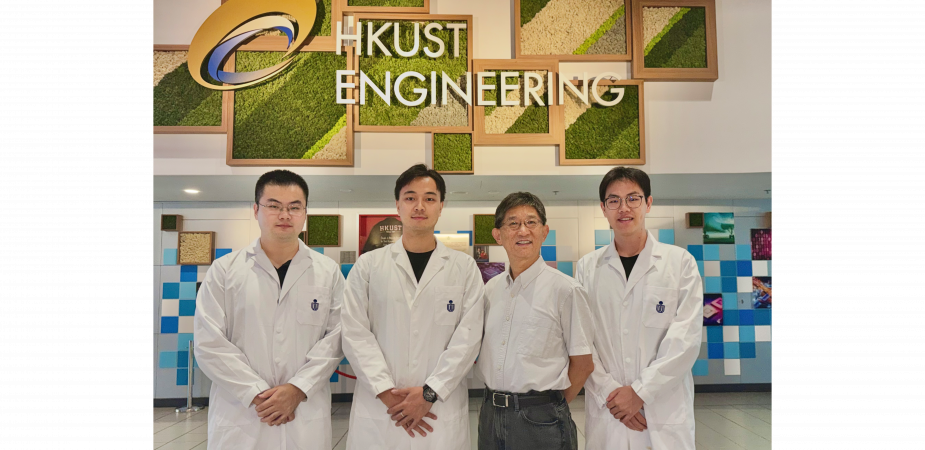
As global demand for cooling continues to grow, the urgent need for sustainable refrigeration technologies is becoming increasingly evident. Conventional vapor-compression systems remain energy-intensive, while the refrigerants can contribute to the greenhouse effect. The Hong Kong University of Science and Technology (HKUST) research team has manufactured a low-cost, ultra-durable elastocaloric refrigerant structure inspired by the stacked porous architecture of honeycombs that operated for more than 100 million cooling cycles with an estimated service life of over 10 years.
This manufacturing approach substantially increases production efficiency and reduces costs, paving the way for the practical deployment of elastocaloric cooling. The findings have recently published in the international journal Science under the title “Stacked porous NiTi structure with low cost and ultrahigh fatigue life for elastocaloric cooling”.
Elastocaloric cooling absorbs and releases heat through the reversible phase transformation of shape memory alloys (SMAs), offering a highly promising solid-state alternative to conventional refrigeration. However, achieving the combination of rapid heat transfer, high mechanical reliability and low manufacturing cost in SMA refrigerant structures remains a major challenge for practical applications. Most existing structural forms reply on commercial tubes, plates and wires, or thin-walled structures produced by wire-cut electrical discharge machining. These approaches are often associated with high production costs, slow fabrication, and susceptibility to fatigue failure and buckling under repeated loading. Such limitations have hindered large-scale deployment of elastocaloric cooling technology.
Prof. SUN Qingping, Chair Professor in the Department of Mechanical and Aerospace Engineering at HKUST and corresponding author of the study, stated, “The cost-effective manufacturing of refrigerant structure is a key factor in determining whether elastocaloric cooling can move from the laboratory prototypes to mass-produced products. These structures must deliver fast heat transfer, extremely high mechanical reliability and at the same time low manufacturing cost. Achieving all three has been a longstanding challenge for the field.”
To address these challenges, a team led by Prof. SUN has developed a “Stamping and Stacking” method. In this approach, commercial SMA thin sheets are stamped into porous chips and stacked to form a tubular refrigerant structure. Drawing inspiration from the exceptional mechanical robustness of bamboo and honeycomb architectures, the layered structure integrates efficient heat transfer, outstanding structural reliability, and cost-effective manufacturability. The resulting refrigerant structure features three key advantages:
(1) Fast and low-cost manufacturing: The stamping process can produce 100 SMA chips per minute, making it more than 100 times faster and 95% less expensive than the existing wire-cut electrical discharge machining (WEDM) method.
(2) Ultra-high structural durability: The refrigerant structure is assembled from individual porous chips rather than a single long tubular structure. The interfaces between adjacent chips help arrest crack propagation through the structure and prevent catastrophic longitudinal splitting failures. Tests showed that the refrigerant structure withstands more than 100 million operating cycles, corresponding to an estimated service life of over 10 years under the tested operating conditions.
(3) Promising cooling performance: Using only a 30-mm-long refrigerant unit containing 200 stacked SMA chips, the team built an elastocaloric cooling prototype that achieved a maximum temperature span of 11.7 K and a specific cooling power of 3.85 W g⁻¹, demonstrating excellent cooling performance.
Prof. SUN said, “Recent advances have demonstrated the significant cooling capacity of elastocaloric technology. Equally important, however, is the ability to manufacture reliable refrigerant structures in a cost-effective manner. Our stacked design combines high-performance SMA materials with a low-cost manufacturing process, providing a practical pathway to large-scale production of elastocaloric cooling structure.”
This novel manufacturing method is not limited to the stamping of SMA thin sheet. Similar refrigerant structures could also be fabricated from thin SMA sheets produced through laser cutting or etching. Moving forward, the team will focus on enhancing heat-transfer performance, developing more energy-efficient actuation systems, and engineering higher-performance SMA to further improve the efficiency and cooling capacity of elastocaloric devices, accelerating the commercialization of this potentially transformative technology.
Supported by the Strategic Topics Grant from the Research Grants Council of Hong Kong and the RAISe+ Scheme of the Innovation and Technology Commission of Hong Kong, the team has filed multiple international patents for the technology to accelerate its commercialization.
The paper’s corresponding authors also include Prof. LI Qiao, Research Assistant Professor in the Department of Mechanical and Aerospace Engineering at HKUST and Dr. LI Xueshi. The first author is SU Changfeng, a PhD student. Other members of the research team include LI Yang and HU Jiyuan, both PhD students.
This latest achievement marks the research team’s third breakthrough within a year. In January, the team developed the world’s first sub-zero celsius elastocaloric green freezer capable of reaching -12°C, with the findings published in the prestigious journal Nature. In August, they further developed a fatigue-resistant NiTiCuCo alloy and built the world’s first zero-degradation elastocaloric cooling device, capable of delivering long-term stable cooling performance. The results were published in the international energy science journal Joule.
About The Hong Kong University of Science and Technology
The Hong Kong University of Science and Technology (HKUST) (https://hkust.edu.hk/) is a world-class university renowned for its excellence in innovative education, research, and impactful knowledge transfer. Adopting a holistic and interdisciplinary approach to education, HKUST was ranked 33rd globally and 6th in Asia in the QS World University Rankings 2027 and QS Asia University Rankings 2026, respectively. It was also ranked 20th worldwide in the Times Higher Education Sustainability Impact Ratings 2026, placing first among universities in Hong Kong and the Chinese Mainland for the third consecutive year. Eleven HKUST subjects were ranked among the world's top 50 in the QS World University Rankings by Subject 2026. In addition, HKUST's Computer Science discipline, which encompasses areas such as artificial intelligence and machine learning, was ranked No. 1 in Hong Kong for the tenth consecutive year in the Times Higher Education World University Rankings by Subject 2026. Its graduates are highly competitive, consistently ranking among the world's top 30 most sought-after employees. In research and entrepreneurship, more than 80% of HKUST's research was rated "world-leading" or "internationally excellent" in the University Grants Committee's Research Assessment Exercise 2020. As of September 2026, HKUST members have founded more than 2,000 active start-ups, including 11 unicorns and 23 successful exits through initial public offerings (IPOs) or mergers and acquisitions (M&A).
(This news was originally published by the HKUST Public Affairs and Global Communications Office here.)