

From Virtual Pre-Labs to Physical Judgment: Co-Intelligence in Mechanical and Aerospace Engineering Education
|
|
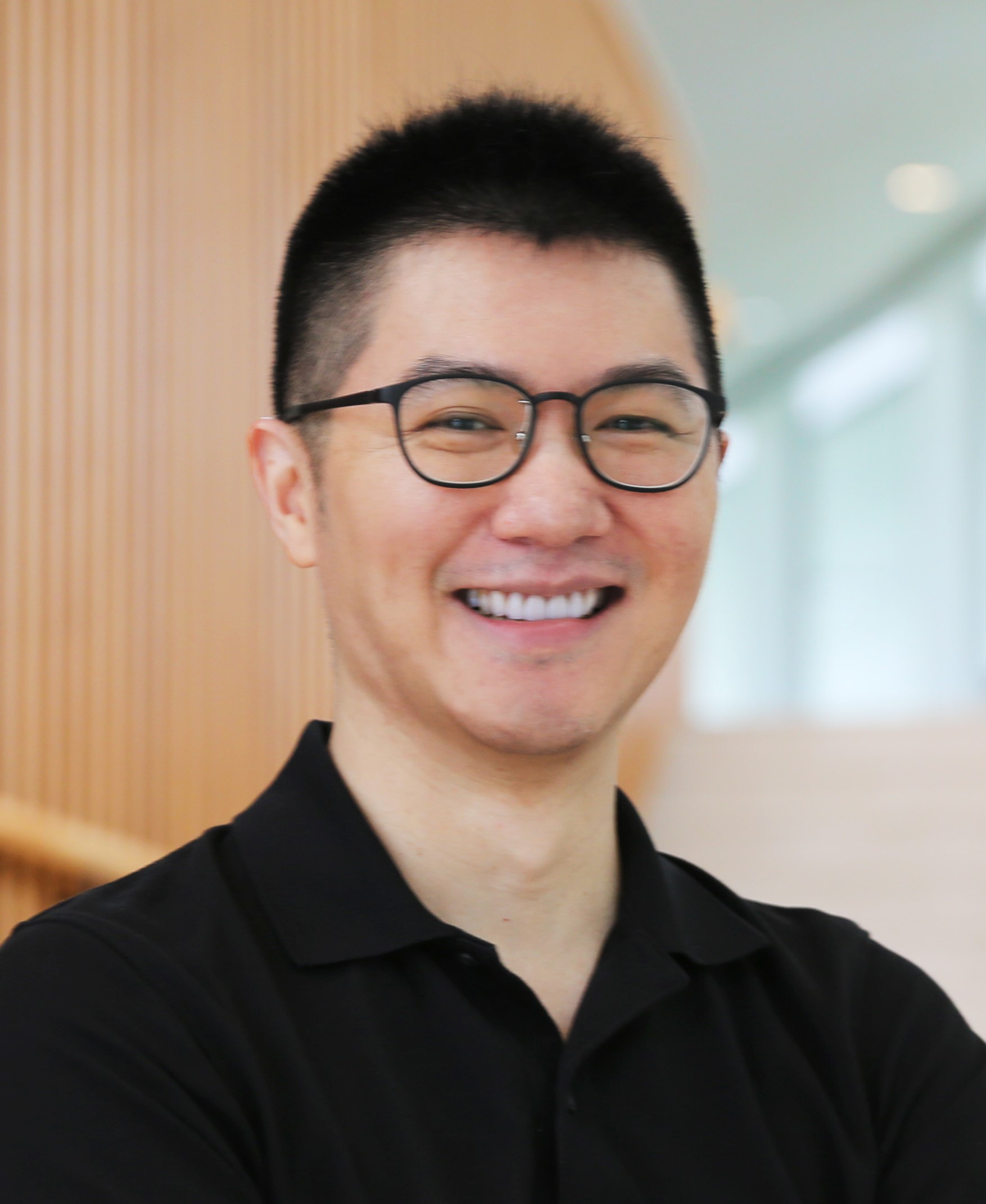
Prof. Larry LI is Associate Head and Associate Professor in the Department of Mechanical and Aerospace Engineering at HKUST. A recognized leader in engineering education innovation, he won the Silver Award in the Immersive Experiential Learning category at the QS Reimagine Education Awards 2025 and is a two-time recipient of the School of Engineering Teaching Excellence Appreciation Award. Prof. Li is passionate about transforming engineering education through experiential learning and emerging technologies. He currently leads a multi-institutional UGC-FITE project, “Harnessing the Power of Augmented Reality for Enhanced Learning,” which pioneers AR laboratory experiences enhanced with artificial intelligence across multiple disciplines and institutions. |
By Prof. Larry Li
Artificial intelligence (AI) is changing engineering education in a deceptively simple way: it makes it easier to obtain an answer. Yet that convenience forces a deeper question: if answers are increasingly abundant, what becomes scarce and valuable in an engineer’s formation?
In my view, the scarce element is not information, but judgment in context: the ability to make defensible decisions under uncertainty, grounded in physical reality, constraints, safety, and ethics. This is especially true in Mechanical and Aerospace Engineering (MAE), where students must learn to reason about systems that are continuous, dynamic, and often invisible to the naked eye (e.g. airflow, stress, vibration, heat transfer) while remaining accountable for real-world consequences.
The previous article of this faculty column series frames the era we are entering as one of co-intelligence, where humans, AI agents, and physical systems interact as a coupled ecosystem. I would like to offer a complementary MAE perspective: what co-intelligence means at the level that students experience most directly − the laboratory − where theories become measurements, and where competence becomes responsibility.
Experiential learning remains the invariant: AI changes the pathway
My teaching philosophy is rooted in experiential learning: students learn best when they experience, reflect, think, and act in a cycle. Over the years, I have found that the students who thrive after graduation are not necessarily those with the highest grades, but those who actively engage with authentic engineering opportunities, such as student teams, undergraduate research, design-and-build projects, and entrepreneurial activities. These experiences cultivate not only technical skills, but also the habits that matter: curiosity, discipline, skepticism, and perseverance.
What AI changes is not the need for experiential learning, but the pathway to it. Traditionally, lab learning has been constrained by time, equipment access, and the amount of instructor guidance available. Today, mobile devices, augmented reality (AR), and AI enable us to extend the learning cycle beyond the scheduled lab session, so that students can prepare meaningfully before touching equipment, practice more safely, and reflect with richer feedback afterward.
When virtual and physical worlds converge: AR as “pre-lab experience”
In MAE, a common learning barrier is that students often enter a lab without a clear mental model of what they are about to do or observe. They may know the equations, but not yet “see” the phenomenon. AR is powerful precisely because it can make the invisible visible, and the complex navigable.
With support from the UGC Fund for Innovative Technology-in-Education and the HKUST Center for Education Innovation, my team has been pioneering AR laboratory experiences enhanced with AI across multiple disciplines and institutions. One example is our AR-powered wind tunnel, accessible via smartphones. Students can preview procedures and understand measurement setups before the physical session, so that precious in-person time is spent on deeper inquiry rather than basic orientation.
While AR helps students perceive and orient, AI helps them reason. In AR-enhanced learning, an AI agent can prompt students to articulate assumptions, question implausible results, suggest diagnostic checks, and reflect on uncertainty. Done well, this enhances rigor because students must explain their thinking rather than simply present a final number.
Assessment must follow values: from correctness to defensible decision-making
The ability of AI to generate technically correct outputs forces a needed reset in assessment. If we continue to reward only the final product, we implicitly tell students that engineering is the act of producing an answer. But engineering education must increasingly reward what AI cannot responsibly own for the student: accountability for decisions.
In MAE education, this means shifting assessment toward problem framing (what matters? what can be ignored? and why?), validation (how do we know the result is credible?), uncertainty reasoning (what could break this conclusion?), and ethical/safety awareness (what are the consequences of being wrong?). This is not an “anti-AI” stance. It is a pro-engineering stance. If AI accelerates computation, education must ensure students accelerate in judgment.
Why this matters: engineers who can think with AI, grounded in physical reality
Our graduates enter fields where AI is embedded everywhere: smart manufacturing, sustainable energy, aviation, robotics, and beyond. The differentiator will not be whether they can access AI tools, but whether they can think with AI while staying grounded in physical constraints, evidence, and responsibility.
Co-intelligence, in this sense, is not just a slogan. It is a lived competence developed through repeated cycles of action and reflection, which is exactly what experiential learning provides, now amplified by AR and AI.
HKUST Engineering has the opportunity, and responsibility, to lead this paradigm shift: preserving the invariants (deep understanding, critical judgment, ethical responsibility, purposeful action) while intelligently adopting the variants (rapidly evolving AI and immersive technologies). If we get this balance right, we will graduate engineers who do not merely adapt to technological change, but can shape it responsibly, linking digital intelligence to physical systems in service of society.