
Designing with Empathy, Accelerating with AI: Educating the Next Generation of Global Innovators

|
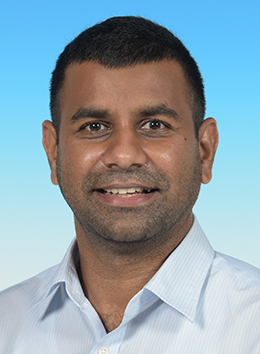
Dr. Malinda ABEYNAYAKE is the Associate Director of SIGHT (Student Innovation for Global Health Technology) and a Lecturer in the Department of Chemical and Biological Engineering (CBE) at HKUST. He holds a background in product design, human factors, and education innovation. A Design Thinking and Life Design coach, he has mentored over 40 student-driven projects across Asia. He is a recipient of the HKUST Common Core Teaching Excellence Award (Honorary Mention) and was a finalist for the UGC Teaching Award in the Team category as a member of the SIGHT team. |
By Dr. Malinda Abeynayake
Over the past decade, I have had the privilege of witnessing firsthand how passionate undergraduate students can take abstract ideas and turn them into real solutions that improve lives in underserved communities. At SIGHT, I have learned quite a lot alongside my students by working with different communities while tackling projects. Together with the SIGHT teaching team, I have been teaching both credit bearing and non-credit bearing courses. These include “ENGG 1300 Design Thinking for Health Innovation” and “UCOP 3200 Design for Global Health”, as well as non-credit bearing initiatives like the SIGHT Camp and project implementation trips. Across all of these programs, I have been guiding and coaching interdisciplinary teams through the messy but deeply rewarding process of human-centered design.
Every project starts with one fundamental question, “How do we truly understand the user’s needs, and how do we translate that understanding into a user-centered solution that makes a real impact?”
Today, the conversation around AI in education tends to focus on speed, automation, and code generation. The real opportunity with AI is not just about helping students work faster, but to help them understand problems more deeply, explore ideas more freely, and spend less time wrestling with technical hurdles. That leaves more room for creating genuine impact.
The human core of innovation
SIGHT was launched in October 2014 by Prof. Ying CHAU (Founder and Director), with a mission to empower students with the mindset and skills to innovate health technologies for underprivileged communities. Since then, we have engaged over 600 students and implemented more than 35 projects across eight countries. And now, we find ourselves standing at the threshold of a new frontier: the age of Artificial Intelligence.
Our driving force has always been Design Thinking. This is a human-centered framework that guides students through Empathy, Ideation, Prototyping, and Testing, a model famously defined by the Stanford d.school. Whether a student comes from engineering, business, science or social sciences, we teach them one thing first: start with people, not just solutions.
For years, the Empathy phase was one of the biggest hurdles, especially for projects in overseas communities or places that are simply hard to reach. Users are often separated by oceans, language barriers, limited accessibility, or unreliable internet connections. Service-learning immersions are one of the primary ways to gather user insights. Those trips are irreplaceable, but they are also resource intensive and infrequent. Before students travel, we depend on our local partners to share pain points and insights. Even so, it is always hard to get a full picture of the community, the needs, the behaviors, and the culture of the project stakeholders. So how do we expect students to truly grasp the daily struggles of a tea plantation worker in Sri Lanka who cannot easily access public health services? Or the needs of a dental team working in rural Philippines, trying to collect children’s dental health data, boost health awareness, and improve dental care among young kids?
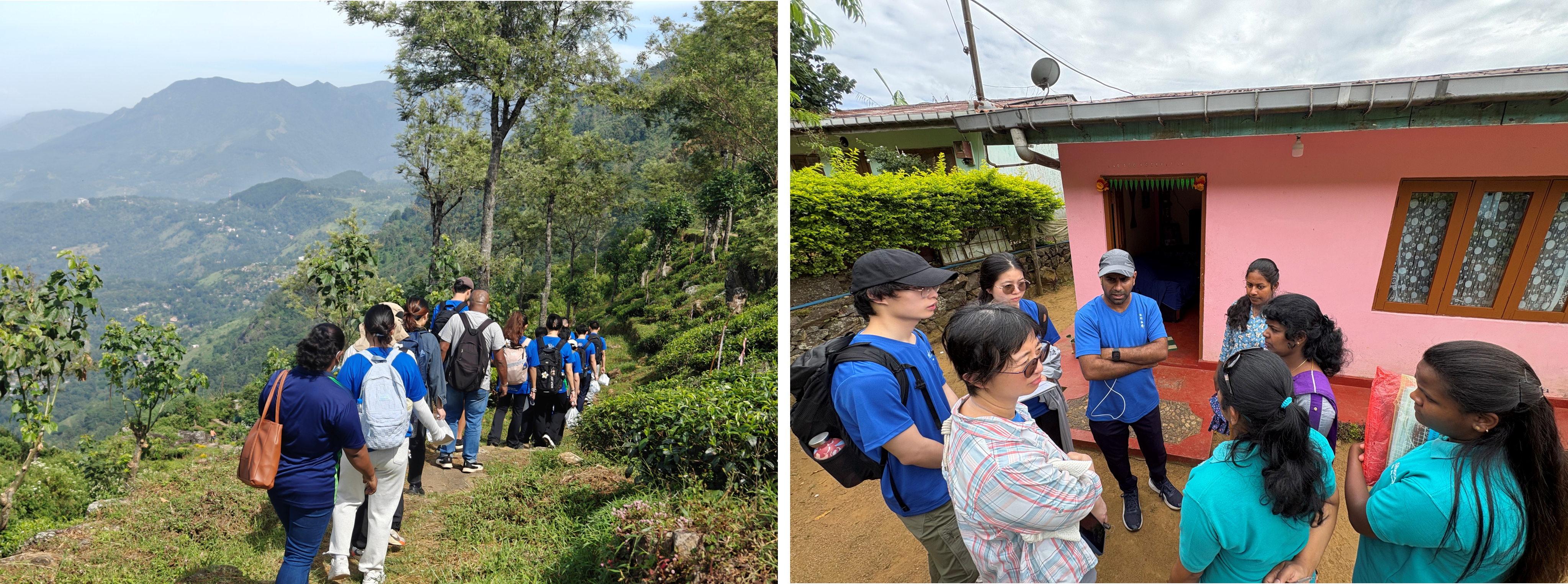
Visiting tea plantation communities in Sri Lanka to understand user needs through interviews and on-site observation.
AI as a bridge: from data to deep insight
AI has become a surprisingly effective bridge across that gap. It does not replace human intuition. Instead, it helps synthesize human context before students even set foot in the field.
AI didn’t just summarize the data, it helped students shift from organizing information to questioning it. AI helped students build personas, user journey maps, and compare community behavior patterns. It transcribed interviews and revealed cultural cues, enabling students to map existing solutions, pinpoint gaps, and understand real needs. This transformed raw data into deep human insight. Students arrived in the field not with assumptions, but with genuine empathy. AI didn’t replace human connection, it accelerated it.
Expanding creativity through collaboration
Beyond user research, AI is also reshaping how students brainstorm and develop ideas. One of SIGHT’s greatest strengths is its interdisciplinary nature. But diverse teams often struggle to move past their own academic biases. AI acts as a neutral creative partner. It helps teams diverge and converge more effectively.
I often suggest to students that innovation is not just about finding a technical solution; it is about defining the right pain point through deep user research and empathy, then exploring a wide range of possibilities before narrowing down to the most meaningful, impactful, and feasible solution which is best for the end-users. AI accelerates that exploration. It allows to diverge and converge on ideas while drawing on the rich perspectives of a multidisciplinary group.
Prototyping: from years to months
The biggest shift I have witnessed over the last decade has been in the Prototyping phase. In 2015, SIGHT students started the MedEasy project in Cambodia. The goal was to build an electronic health record system for mobile clinics serving slum communities. The first iteration took a year to build. It ran on laptops, was clunky, and suffered from hardware problems. We went through few iterations over three years. Students constantly fixed software bugs, dealt with broken cloud syncs, and struggled to bridge the gap between what was technologically possible and what could actually function in the field. The development cycle was painfully slow.
Now compare that to 2025. In our HapuTele project in Sri Lanka, students built a telemedicine platform to connect tea plantation residents with doctors remotely. The difference was remarkable. With AI-assisted coding tools and modern cloud infrastructure, a team of students built a fully functional platform in less than three months.
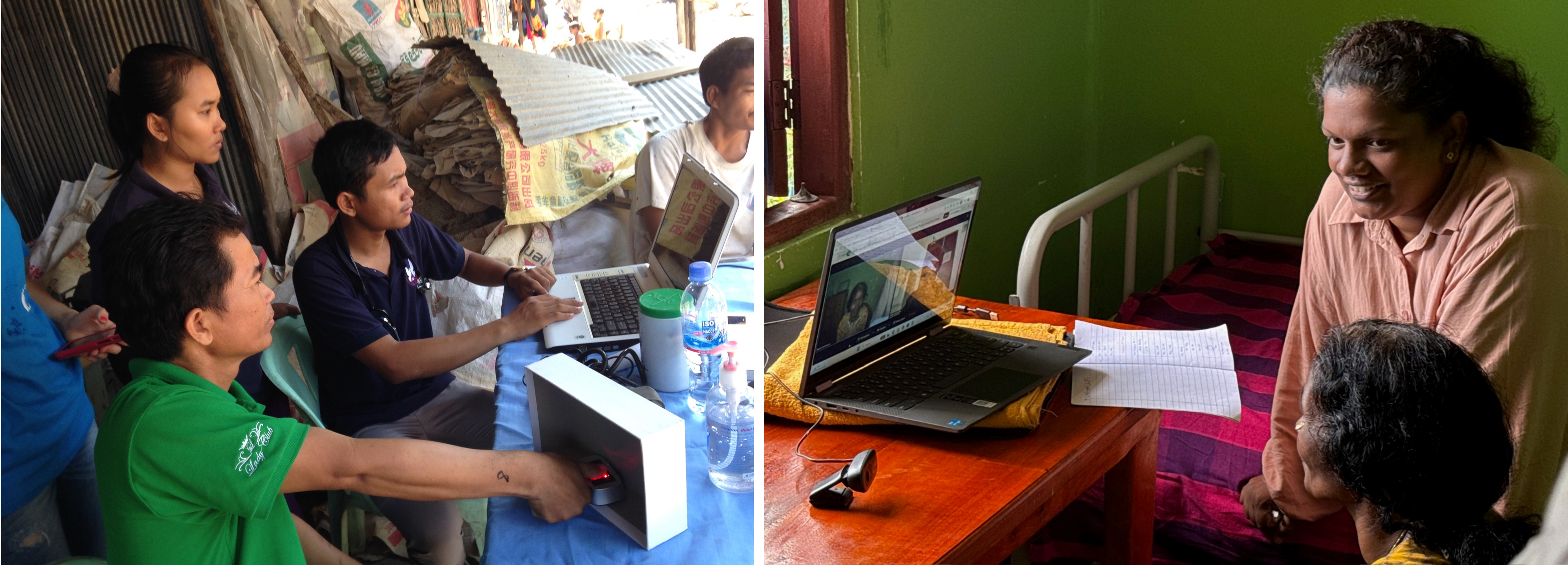
A decade of student innovation in action: users testing MedEasy, an electronic health record system developed in 2016 (left), and HapuTele, a telemedicine platform built in 2026 (right).
AI has democratized coding. It has removed the friction that once discouraged non-Computer Science (CS) students from tackling IT heavy projects. It empowers a student majoring in a non-CS field to develop user interfaces, or develop through user training manuals and develop user training systems. At the same time, it allows students with computing backgrounds to stretch their capacity and build more complex systems.
This speed changes everything. We can now move from years of experimentation to just a few months of iteration and implementation. We deploy a prototype, test it with local partners, gather feedback, and redesign it within a single semester. That rapid cycle leads to user-friendly, sustainable solutions rather than rigid, one-off prototypes.
The virtual user: simulating feedback
One of the persistent challenges in global health projects is the lack of access to real users for testing. For instance, when students work on improving nutrition and well-being for children in Sri Lanka, they design their first prototype far away from the end users. It is hard to get initial feedback in real time.
AI offers a creative workaround. By feeding local demographics, cultural habits, and workflow constraints into AI models, students can generate synthetic user personas. They can simulate how a local health worker or a child might interact with a new solution. It can anticipate points of confusion and spot usability problems before deployment. AI provides local context, highlights areas needing more attention, and helps students understand user behaviors and preferences. This is no replacement for genuine human interaction. But it serves as a valuable first filter.
The SIGHT philosophy: Simple Technology, Big Difference
Our motto at SIGHT is “Simple Technology, Big Difference”. In the AI era, that phrase has never felt more true. AI helps us make technology simpler to build, simpler to use, and simpler to adapt to local conditions.
But here is the point that cannot be overlooked. AI must augment human connection, not replace it. A successful project is never just about the technology. It is about whether the end user embraces the solution. AI can assist with developing prototypes and user simulation, but it cannot replicate the trust and understanding that emerge from real human interaction. A handshake with a local project partner, the conversations over a meal, the insights gained through in-person user testing or the deep bonds that form between students and project partners over years of working together.
To thrive in this new era, students need more than technical fluency. They also need resilience, ethical judgment, cultural humility, empathy, and the ability to collaborate across disciplines. At SIGHT, we prepare them to be well-rounded human beings, civic citizens, and change makers who understand that technology is a tool. Humanity is the mission.
The future of engineering education is not about choosing between AI and human-centered design. It is about using AI to be more human. To bridge distances. To accelerate care. And to create lasting social impact for those who need it most.
