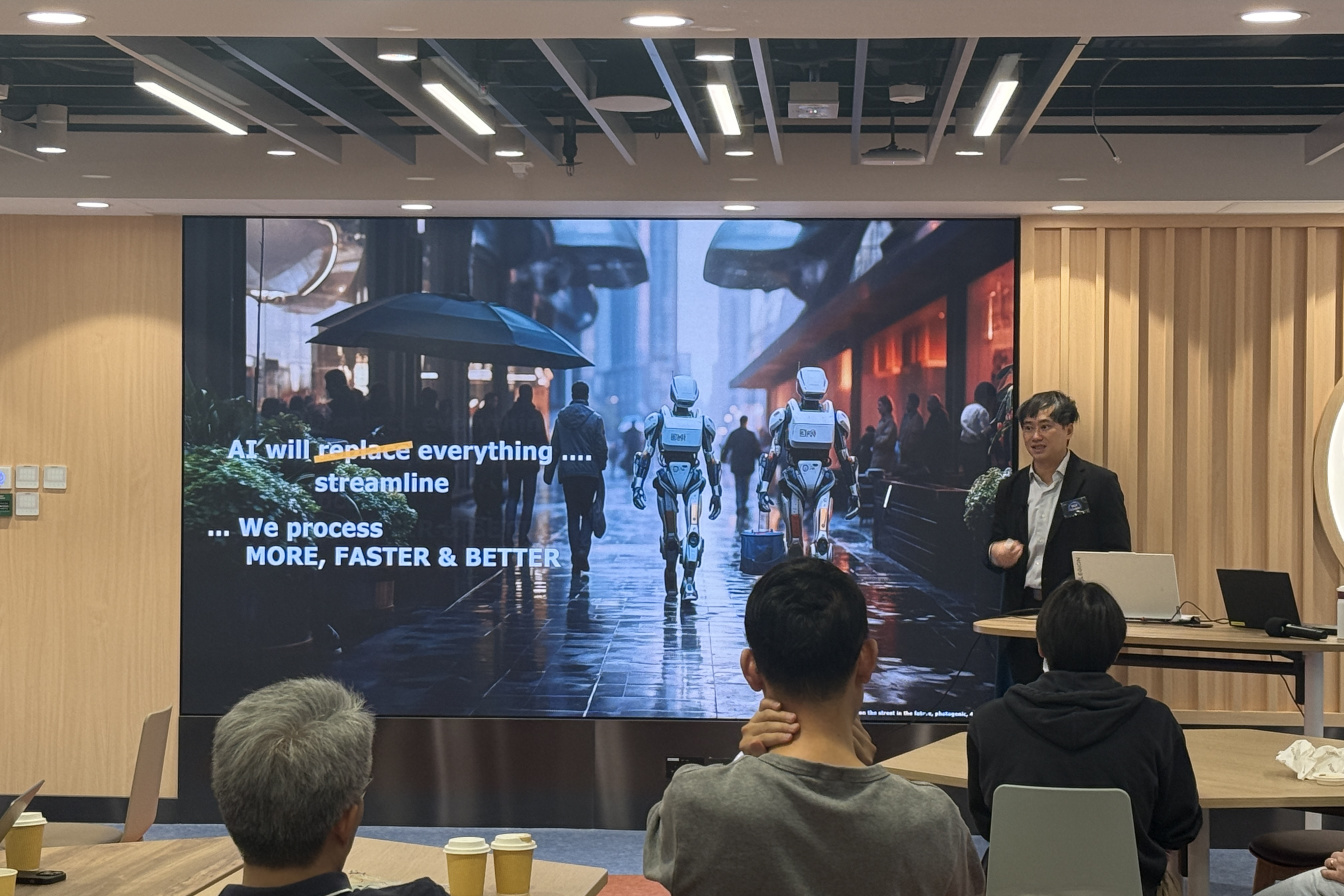
Ctrl+Alt+Del: Rebooting Education for the AI Age

|
|
Prof. Ben CHAN Yui-Bun is Professor of Engineering Education in the Department of Civil and Environmental Engineering and the Division of Integrative Systems and Design. He is currently the University’s Associate Dean of Students and Associate Director of the School of Engineering’s Center for Engineering Education Innovation (E2I). As a faculty member on the frontlines of technology-enabled learning, Prof. Chan has been recognized by multiple prestigious teaching awards. These include HKUST’s Michael G. Gale Medal for Distinguished Teaching 2025 and the University Grants Committee Teaching Award 2024. |


By Prof. Ben Chan Yui-Bun
For over a century, “education reform” has been a familiar slogan. Yet, true revolution in education has been elusive—until now. As a faculty member on the frontlines of technology-enabled learning, I see the seismic impact of Artificial Intelligence. AI is not merely a new subject to teach or a new tool for our pedagogical kit; it is a force that shakes the very bedrock of what education means in this new era.
Though the consortium of technologies around AI is still evolving, we already see that searching for information, remembering facts, understanding concepts, and applying knowledge can be done in seconds. This presents a peculiar paradox. On one hand, we have never had more powerful tools to accelerate knowledge acquisition. On the other, the very definition of “knowing” is shifting beneath our feet. For decades, higher education has operated as a gatekeeper of static information—lectures delivered, texts memorized, essays regurgitated. In the generative AI era, where a student with a large language model can produce a passable market analysis in moments, this model is not just outdated; it is obsolete.
Should we throw away these components in our education system? If we do, what do we have left in our tank? The challenge is not whether to use AI, but how fundamentally we must restructure our pedagogy. We must prepare students for a world where the half-life of a technical skill is shrinking rapidly. My work in integrating AI and immersive learning points toward a necessary tripartite evolution: a shift in what we teach, a transformation in how we assess, and a radical broadening of AI fluency.
Step 1: From Content Mastery to Cognitive Agility
The first, and perhaps most uncomfortable, conversation is about curriculum decay. The specific coding language or engineering framework we teach today may be a footnote tomorrow. The content-heavy syllabus must give way to a process-oriented curriculum focused on cultivating what I call “adaptive metacognition.”
Instead of asking a student to list formulas for soil mechanics, we can immerse them in a dynamic, high-stakes scenario. The learning objective shifts from recall to application. In this new era, the most valuable skill is the ability to curate information, identify bias in an AI-generated dataset, and apply contextual wisdom. We must teach students to be discerning conductors of an orchestra of algorithms, rather than mere players of a single, soon-to-be-outdated instrument.
Step 2: From Surface-Level Assessment to Deep, Scaffolded Learning
The second pillar involves leveraging AI to fix a long-standing pedagogical failure: the tyranny of surface learning. For too long, our assessment ecosystem has rewarded the ability to store and retrieve information—a cognitive function machines now perform infinitely better.
We must intentionally use AI tools to lift the cognitive floor so we can raise the conceptual ceiling. In my own teaching, I use NotebookLM to generate a suite of visual and interactive learning content—podcasts, summary videos, and quizzes—from my core course materials. By automating the delivery of foundational knowledge, I can turn precious class time into a hub for case studies and design-oriented discussions, pushing students toward higher-level thinking.
When we allow AI to handle the “busy work,” we free up mental bandwidth for complex problem-solving. This transforms AI from a cheating shortcut into a cognitive scaffold, enabling what psychologists call desirable difficulty. The student struggles not with the mechanics of the tool, but with the complexity of the problem itself. For example:
In one of my engineering courses, students navigate an Unreal Engine (a 3D computer graphics game engine) environment during a simulated landslide event. Their task is not to memorize slope stability equations, but to perform a preliminary design of a retaining wall and visualize its effectiveness through real-time simulation. They are challenged by the complex interplay of geology, materials, and physics. To guide their thinking, they can consult an AI instructor within the simulation, which provides Socratic feedback and evaluates their design choices on the fly.
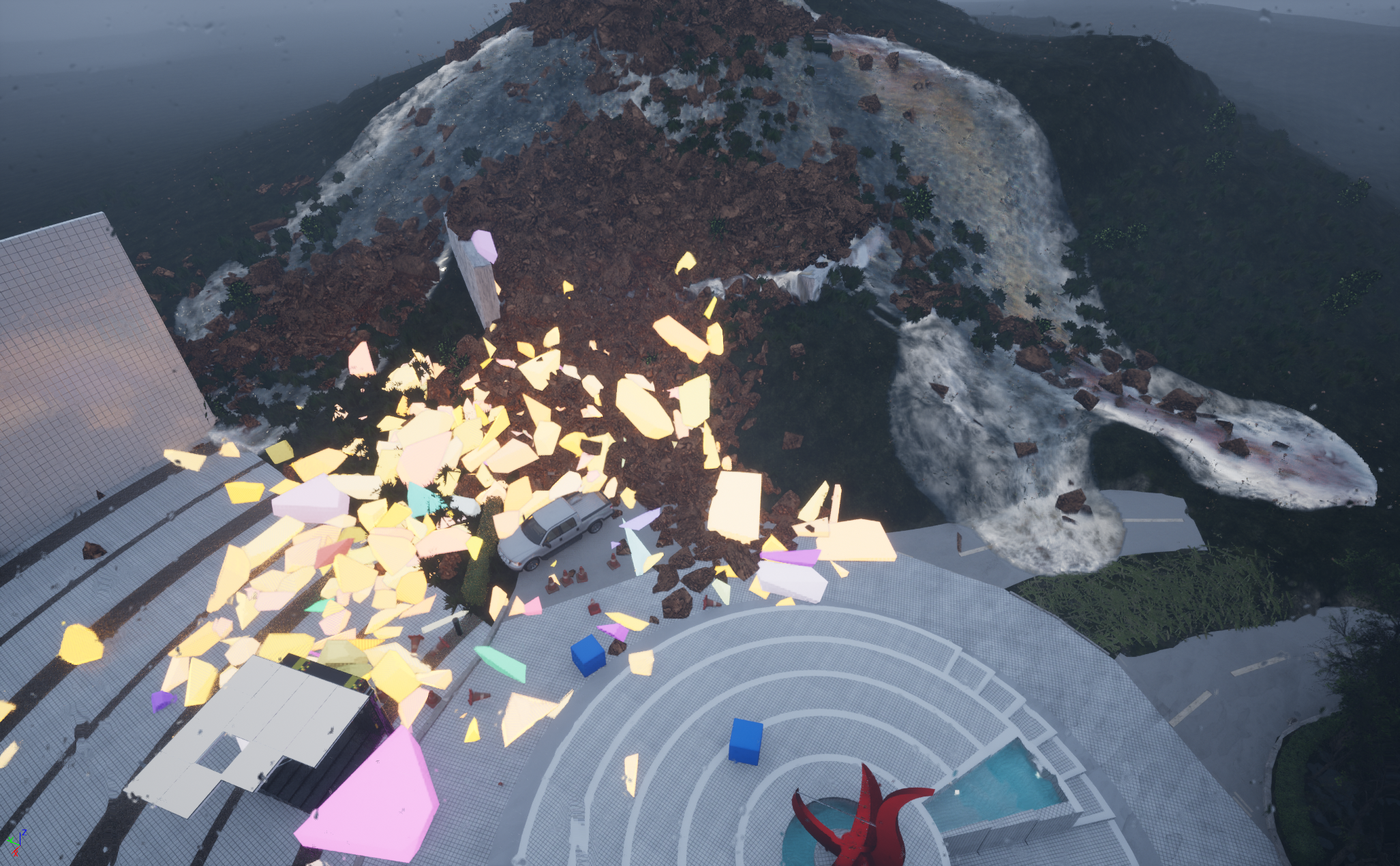
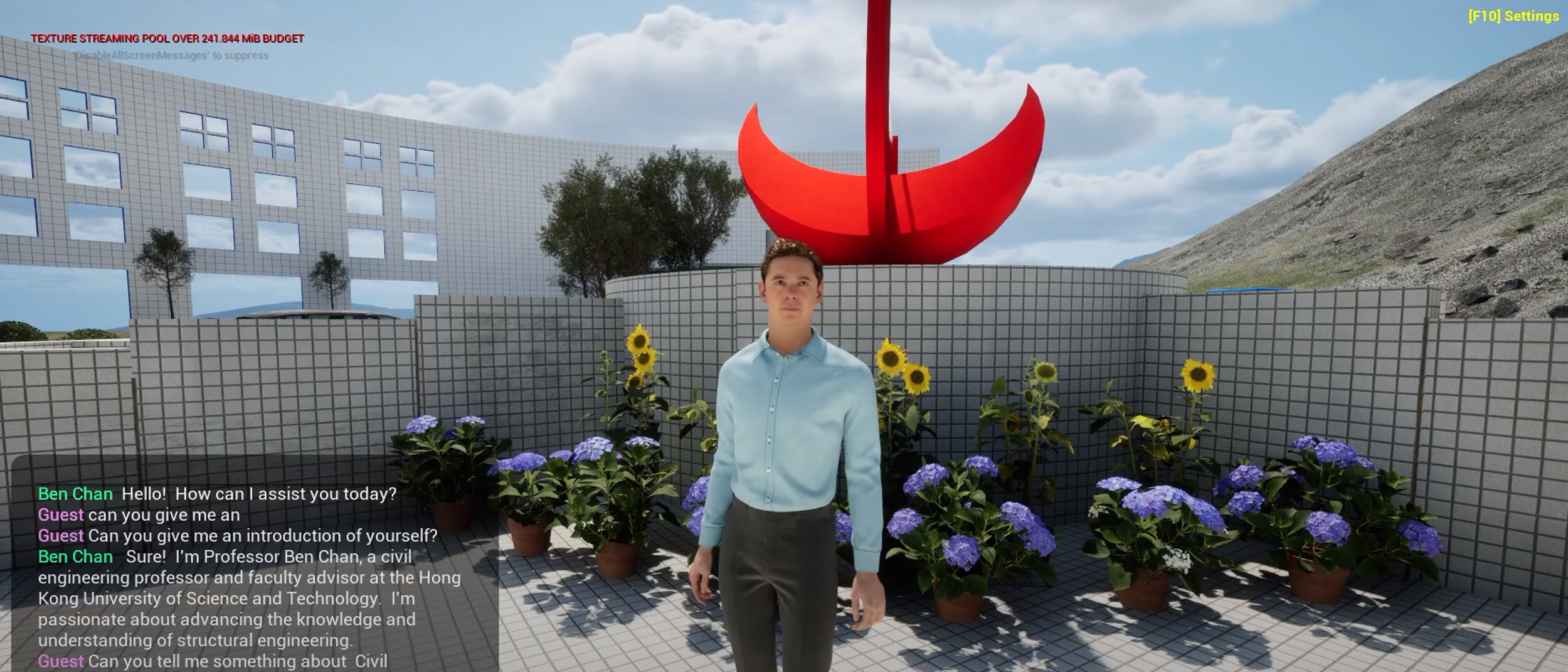
Immersive design simulation tools powered by AI
In another course focused on creativity, my students engage in virtual design and production. They use AI tools to generate complex 3D models from simple text or image prompts, bypassing the steep technical learning curve of traditional modeling software. This frees them to devote their cognitive energy to creative thinking, narrative development, and integrating their designs with other advanced technologies like motion capture and building for the metaverse.
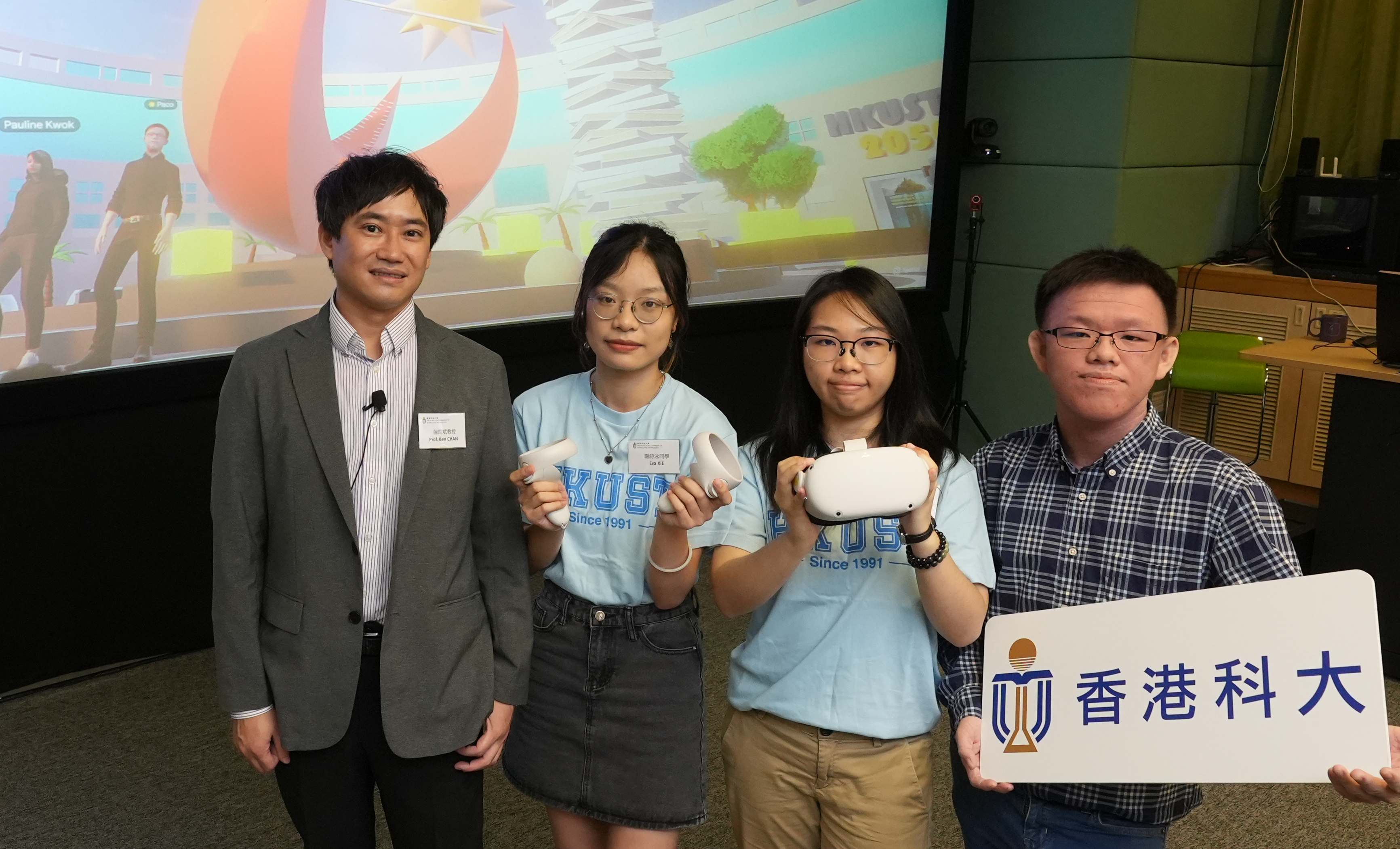
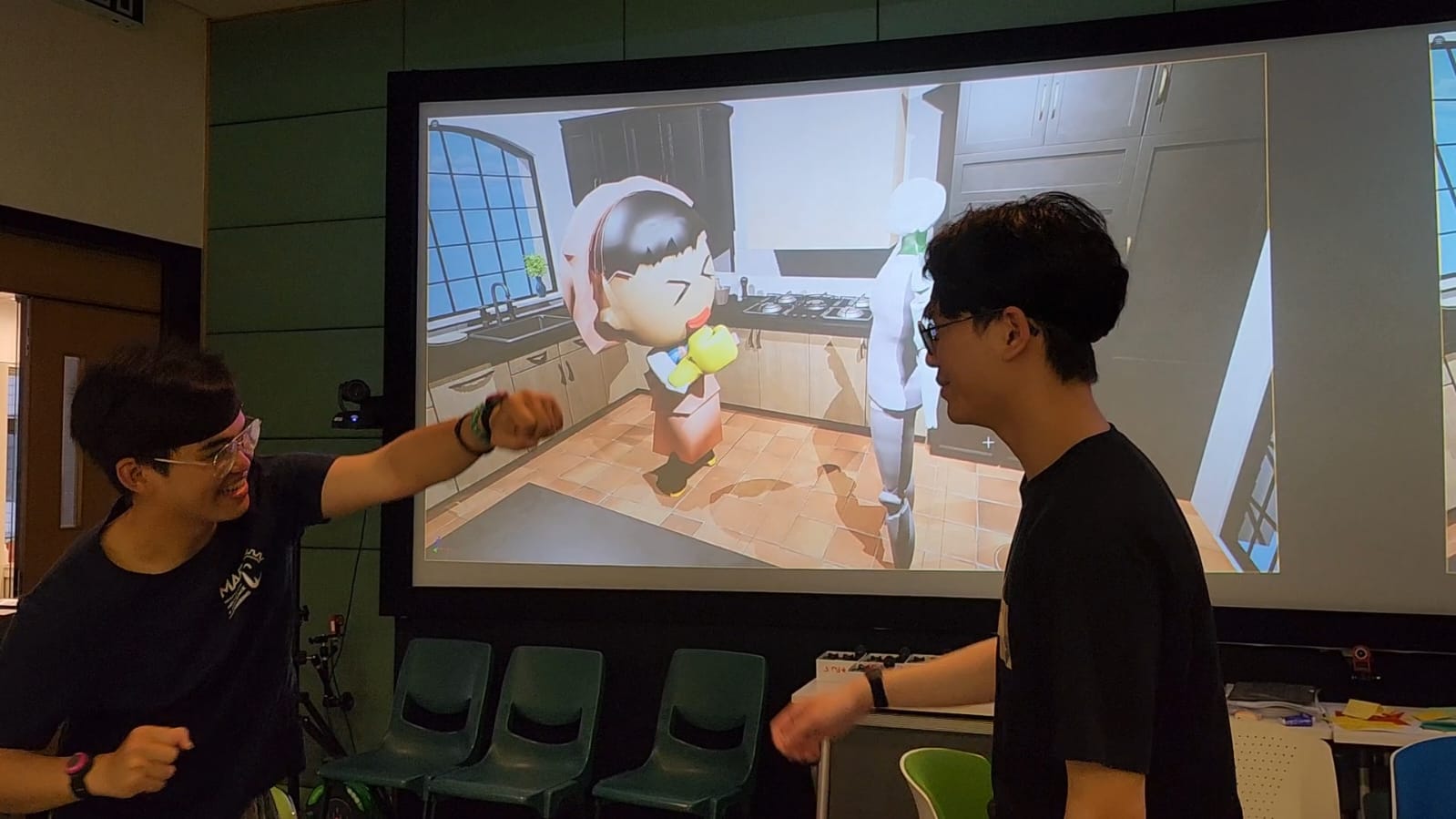
Vibe 3D Modelling in Creativity Course
In both cases, AI automates the rote, allowing students to move from knowing that to knowing how and, ultimately, knowing why.
Step 3: From ChatGPT to Holistic AI Fluency
The third, and most overlooked, aspect of this reboot is our narrow definition of “AI literacy.” The current discourse is almost entirely consumed by Generative AI. This focus is myopic. If our students only understand the interface of a chatbot but not the architecture of intelligence, they will be unprepared for the next wave of industrial and scientific change.
True AI fluency requires a broader taxonomy. We must introduce students to the logic of Reinforcement Learning (RL) and Imitation Learning as frameworks for solving complex, dynamic problems. In an immersive context, this is particularly powerful. For example:
Reinforcement Learning (RL): Instead of just writing a policy memo on urban planning, a civil engineering student interacts with a digital twin of a city. An RL agent manages traffic flow during a simulated emergency evacuation. The student’s job is not to prompt the AI for an answer, but to understand and adjust the agent’s reward function: Why is it prioritizing highway speed over neighborhood clearance?
Imitation Learning: A robotics student “teaches” a virtual robotic arm a delicate assembly task by performing the action themselves in VR. In doing so, they deconstruct their own tacit knowledge and develop a deeper, embodied understanding of both the skill and the AI’s learning mechanism.
This is the difference between using AI as a time-saver and partnering with AI to solve the engineering challenges of the future.
Conclusion: The Immersive, Intelligent Academy
The future of higher education is not a sterile video call with a chatbot. It is immersive, embodied, and intellectually demanding. By leveraging AI to automate the rote, we reclaim the classroom for the uniquely human endeavors of analysis, creation, and ethical deliberation.
The “reimagination” of education is inevitable, and we are in the throes of that transition. We face critical questions: What should we teach? How do we assess higher-level thinking while maintaining fairness? Where do we find the talent to teach this new curriculum? An AI-ready curriculum must empower students to work with AI, not be overpowered by it. It must:
- Acknowledge and Integrate: Actively bring AI to the table. Instructors should craft and provide AI resources (like NotebookLM, AI Tutors, or simulation platforms) to lift the cognitive floor for all students.
- Re-evaluate Outcomes: Reconsider program and course learning outcomes to focus on durable, transferable skills over transient technical knowledge.
- Enable Problem-Solving: Teach students to use a spectrum of AI skills to solve practical problems, rather than merely using AI to complete assignments.
Our goal is not to graduate students who can prompt an AI better than their peers. Our goal is to graduate critical thinkers who can diagnose the limitations of that AI, navigate the complexity it cannot parse, and lead with the empathy and ingenuity it cannot replicate. That is the value proposition of the human mind in an age of intelligent machines, and it is the standard to which we must now teach.