
Why Join Bioengineering at HKUST’s CBE Department?

|
|
Prof. Terence WONG is an Associate Professor and Undergraduate Programs Coordinator of the Department of Chemical and Biological Engineering (CBE). He is also the Associate Director of two research centers at HKUST, namely the HKUST Research Center for Medical Imaging and Analysis and the Collaborative Center for Medical and Engineering Innovation. His research focuses on the integration of imaging technology with artificial intelligence to improve healthcare services. For example, he founded a medtech start-up company, PhoMedics Limited, aiming to improve the healthcare system and patient care through innovative technology. PhoMedics is one of the first recipients of the Innovation and Technology Commission’s “RAISe+ Scheme”. |
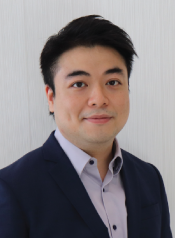
By Prof. Terence Wong
If you’re passionate about solving real-world biomedical challenges, the Bioengineering major at HKUST’s CBE Department offers a unique opportunity to develop cutting-edge technologies that directly impact patient care—from your undergraduate years forward.
Consider this: a decade ago, my vision was to create imaging devices that could transform how doctors detect cancer. Today, that research has evolved into breakthrough technologies being tested in hospitals, and a medtech start-up, PhoMedics Limited, that is revolutionizing rapid tissue diagnosis. This journey—from fundamental research to commercialization—is exactly what you can pursue in our program.
Our program bridges the gap between academic innovation and real-world impact through three pillars:
1. Cutting-edge research that matters: You’ll work alongside faculty developing the latest technology in respective bioengineering fields, ranging from intelligent imaging and sensing systems, molecular targeting for drug delivery, and big data analytics. Taking my lab as an example, our recent breakthroughs in slide-free histological imaging—enabling rapid cancer diagnosis without staining—represent the kind of transformative work you could contribute to during your time here. Students have already won prestigious awards, including HKUST President’s Cup honors and international innovation competitions.
2. Entrepreneurial ecosystem: Unlike traditional programs, our CBE bioengineering students don’t just publish papers as researchers—they commercialize ideas. Through tremendous efforts, my team at PhoMedics Limited received Hong Kong’s RAISe+ Scheme recognition from the Innovation and Technology Commission, which is one of the biggest funding schemes in Hong Kong to support cutting-edge research that has a high impact on society. This is one of the solid evidence showing the high translational value of our work. You’ll learn how to take discoveries from the lab to the clinic, positioning yourself for ventures that improve healthcare systems globally.
3. Alignment with HKUST’s third medical school: Finally, it comes to what excites us most. HKUST is establishing its third medical school with technological innovation and AI integration at its core. This isn’t a coincidence. Our bioengineering program has spent years training students in precisely the skill set the medical school needs—AI-powered biomedical imaging, computational diagnostics, and intelligent device design. Once the medical school is ready, as a bioengineering student, you’ll have natural pathways to collaborate with medical faculty, access clinical translation opportunities unavailable at other institutions, and participate in shaping how AI transforms medicine in Asia and beyond.
The next decade will see AI reshape biomedical diagnostics. The tools you’ll develop in our program are not hypothetical. Hospitals will have the chance or are already adopting these technologies. Students who graduate from our program are positioned to lead this transformation, whether through academia, industry, or start-ups.
Join us. Transform healthcare. Let’s build the biomedical technologies of tomorrow together!