Artificial Intelligence

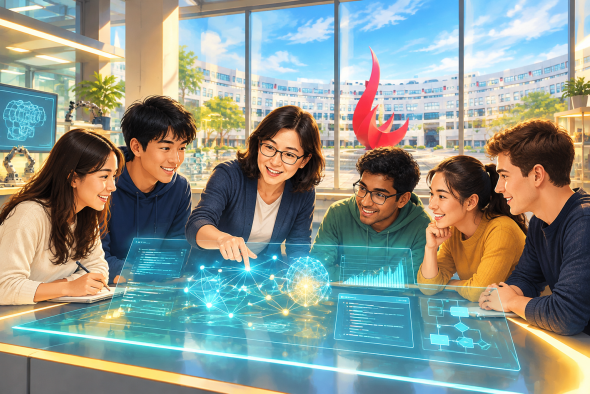
Engineering education in the AI era should help students to become engineers who can use AI thoughtfully, question its outputs when evidence is unclear, and take responsibility for the systems they design.
Engineering education in the AI era should help students to become engineers who can use AI thoughtfully, question its outputs when evidence is unclear, and take responsibility for the systems they design. 
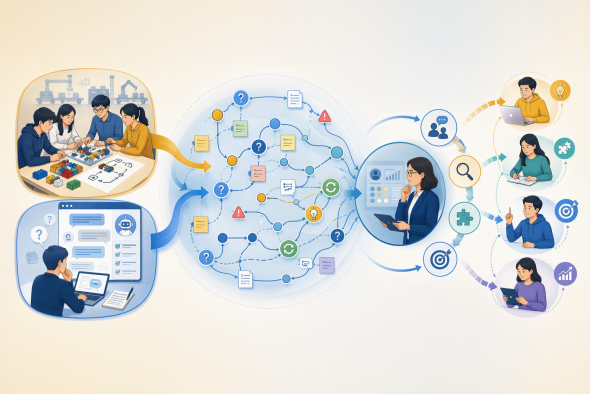
AI supports personalized teaching by helping educators see students’ learning more clearly and choose the next teaching move with greater precision.
AI supports personalized teaching by helping educators see students’ learning more clearly and choose the next teaching move with greater precision. 
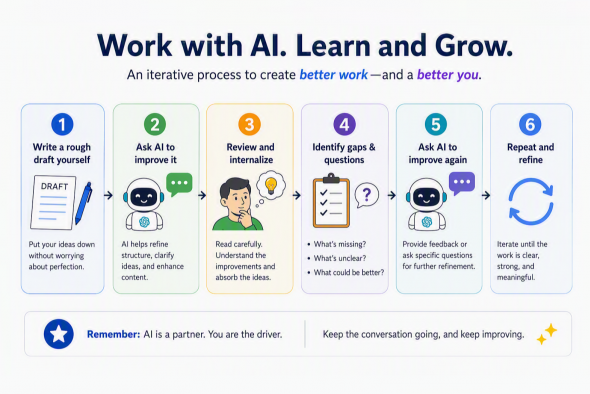
In their iterative dialogue with AI, students begin with an initial draft, evaluate AI-generated suggestions, identify weaknesses, refine their ideas, and repeat the process several times.
In their iterative dialogue with AI, students begin with an initial draft, evaluate AI-generated suggestions, identify weaknesses, refine their ideas, and repeat the process several times. 
Prof. Gao Yang with a model of the first-generation Hong Kong Operation Robot, a novel multifunctional lunar surface robot being designed and developed by the HKUST-led InnoHK Hong Kong Space Robotics and Energy Centre (HKSREC) for the nation’s lunar exploration mission.
Prof. Gao Yang with a model of the first-generation Hong Kong Operation Robot, a novel multifunctional lunar surface robot being designed and developed by the HKUST-led InnoHK Hong Kong Space Robotics and Energy Centre (HKSREC) for the nation’s lunar exploration mission. 
The research team is led by Prof. Chen Hao (second left), Assistant Professor in the Department of Computer Science and Engineering (CSE), in collaboration with Prof. Terence Wong (second right), Associate Head and Associate Professor in the Department of Chemical and Biological Engineering, along with team members: CSE PhD students Ma Jiabo (first right) and Li Wenqiang (first left).
The research team is led by Prof. Chen Hao (second left), Assistant Professor in the Department of Computer Science and Engineering (CSE), in collaboration with Prof. Terence Wong (second right), Associate Head and Associate Professor in the Department of Chemical and Biological Engineering, along with team members: CSE PhD students Ma Jiabo (first right) and Li Wenqiang (first left). 
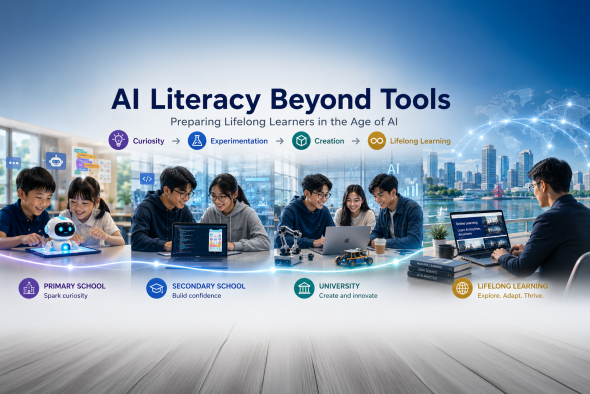
Building an AI literacy ecosystem: Students benefit most when learning opportunities are connected across different stages of education and supported by pathways for continued exploration.

Building an AI literacy ecosystem: Students benefit most when learning opportunities are connected across different stages of education and supported by pathways for continued exploration. 

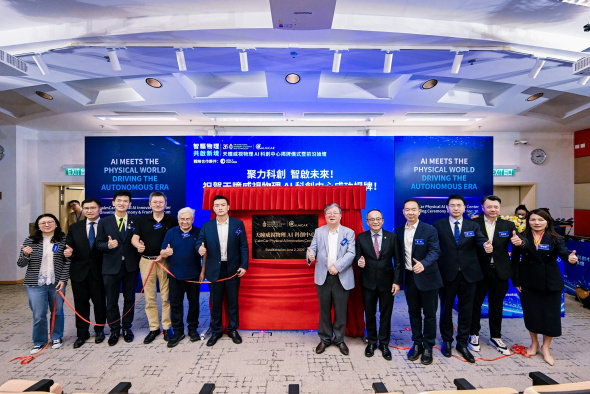
The HKUST-CalmCar Physical AI Innovation Center inauguration ceremony
The HKUST-CalmCar Physical AI Innovation Center inauguration ceremony 
Ushering in a New Era of Physical Intelligence
Integrating AI in STEAM activities for primary and secondary school students on STEAM Day@HKUST 2026
Integrating AI in STEAM activities for primary and secondary school students on STEAM Day@HKUST 2026 
Ctrl+Alt+Del: Rebooting Education for the AI Age