
Prof. GAO Yang’s High-Flying Mission to Advance Space Exploration

Reaching for the Moon is exactly how the School of Engineering AI robotics expert has spent her career. Now she is helping to launch the University and Hong Kong as an international hub for pioneering space robotics and mission development.
When Prof. GAO Yang wakes every morning and switches on her computer for work, it is with joy not dread that she approaches each day. “I look forward to it as I really enjoy what I do,” the Department of Mechanical and Aerospace Engineering professor said. Not surprising perhaps when what she is doing is literally out of this world – discovering and developing the future of Moon and other cosmic endeavors as a globally leading space AI roboticist.
Rocketing forward
It has been a particularly exhilarating time recently, with Hong Kong’s first astronaut Dr. LAI Ka-Ying taking off as part of the crew of China’s Shenzhou-23 in late May, a rocket launch headed for the Tiangong Space Station that Prof. Gao witnessed firsthand at the Jiuquan Satellite Launch Center. Earlier the same month, the cargo spacecraft Tianzhou-10 successfully arrived at the Space Station carrying a payload including MUSICO (Multi-Spectral Imaging Carbon Observatory), an interdisciplinary joint project* led by HKUST under the University’s Space Science and Technology Institute (SSTI), which Prof. Gao co-directs with payload specialist Prof. SU Hui, Department of Civil and Environmental Engineering. The Observatory, a world first, is a lightweight high-resolution high-precision greenhouse gas point-source detector that can accurately measure carbon dioxide (CO2) and methane (CH4) from space. Astronaut Lai has since successfully assembled and installed MUSICO, which commenced operations in early July.
* Jointly developed with Lingnan University, Hong Kong Baptist University, and the Chinese Academy of Sciences Changchun Institute of Optics, Fine Mechanics and Physics, with funding from ITC, HKSAR Government.
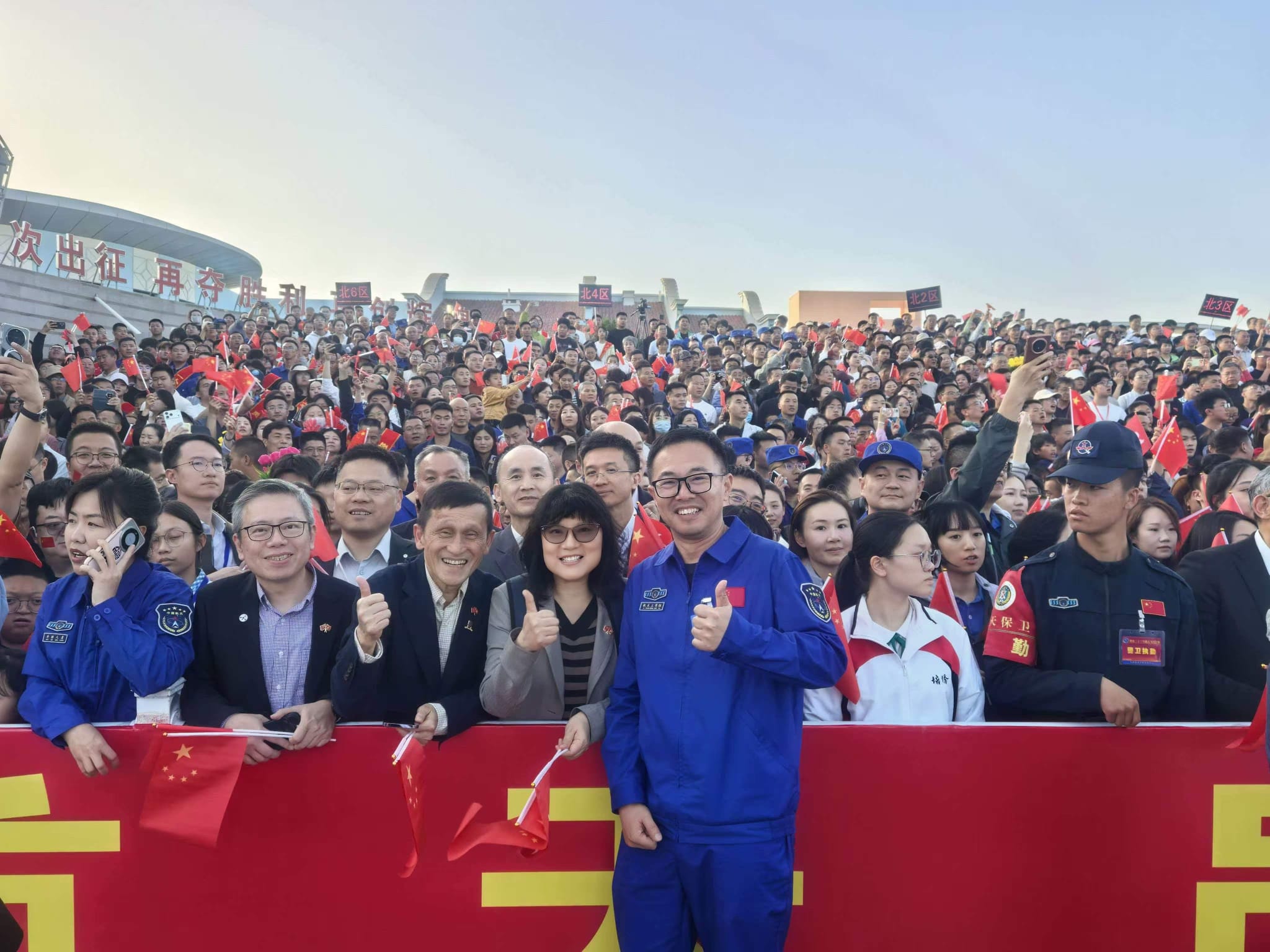
Prof. Gao witnesses firsthand the launch of Shenzhou-23 at the Jiuquan Satellite Launch Center on May 24.
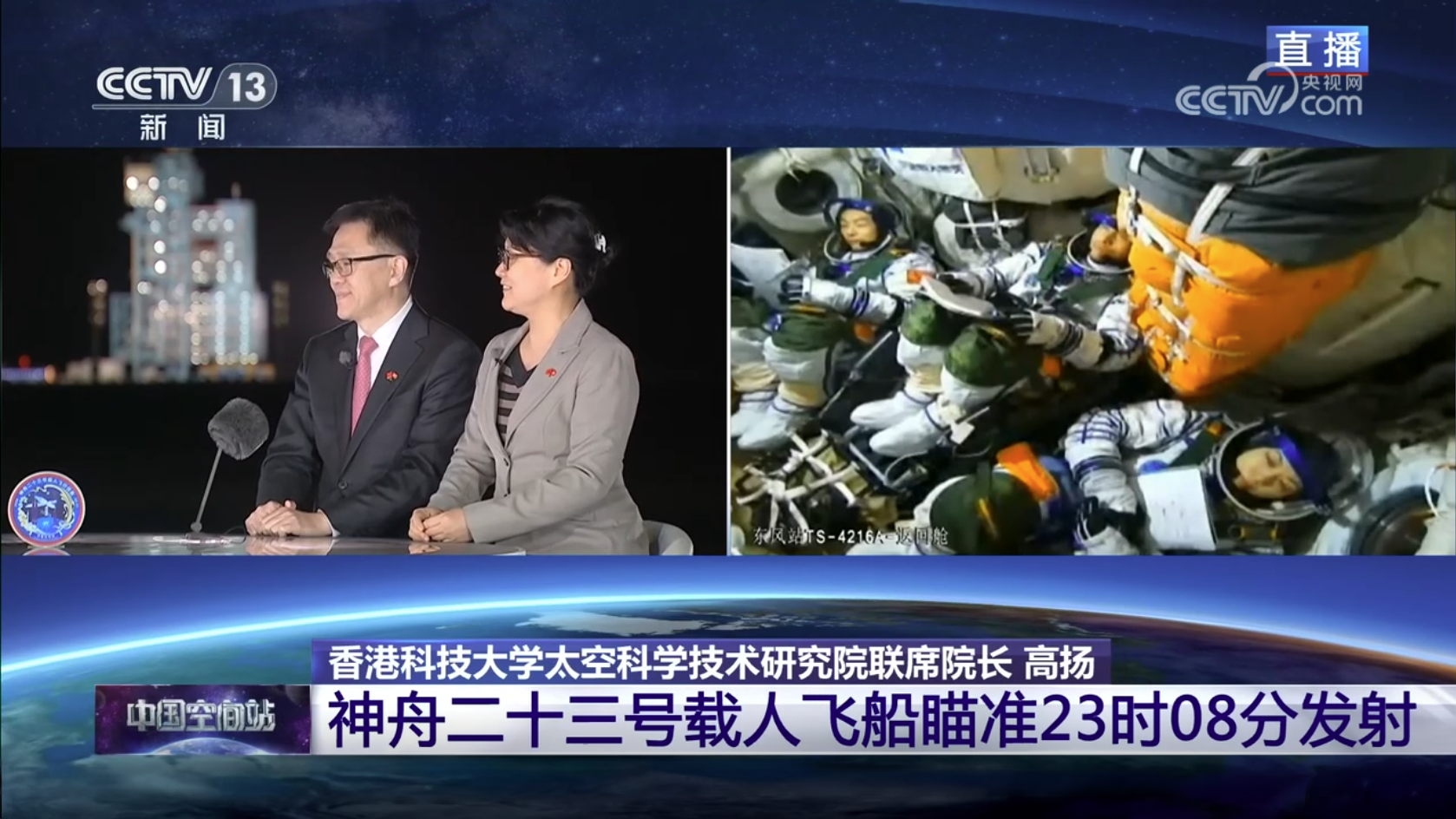
Prof. Gao and Prof. Sun Dong, Secretary for Innovation, Technology and Industry of the HKSAR Government, being interviewed on a live CCTV news program at the launch site before the liftoff.
SSTI is just one of Prof. Gao’s multiple space-related posts since joining the School of Engineering (SENG) in mid-2025. Prior to this, she spent more than 20 years in the UK as Founding Head of the award-winning Space Technology for Autonomous & Robotic Systems Laboratory (STAR-LAB) at the Surrey Space Centre, University of Surrey, and at King’s College London as Head of the Centre for Robotics Research. One year on at HKUST, she is steering a trio of high-flying research centers, each in its own way seeking to put Hong Kong at the international forefront of space technology. The HKUST-led Hong Kong Space Robotics and Energy Centre (HKSREC), under the HKSAR Government’s flagship InnoHK initiative, aims to establish the city as a leading international hub for space research and collaboration. SSTI is driving University research, communication and connectivity with space stakeholders from industry to the public around the world. The Center for AI Robotics in Space Sustainability (CAIRSS) serves as a base for her own research group of doctoral students and post-docs to advance key space environmental matters, such as debris removal.
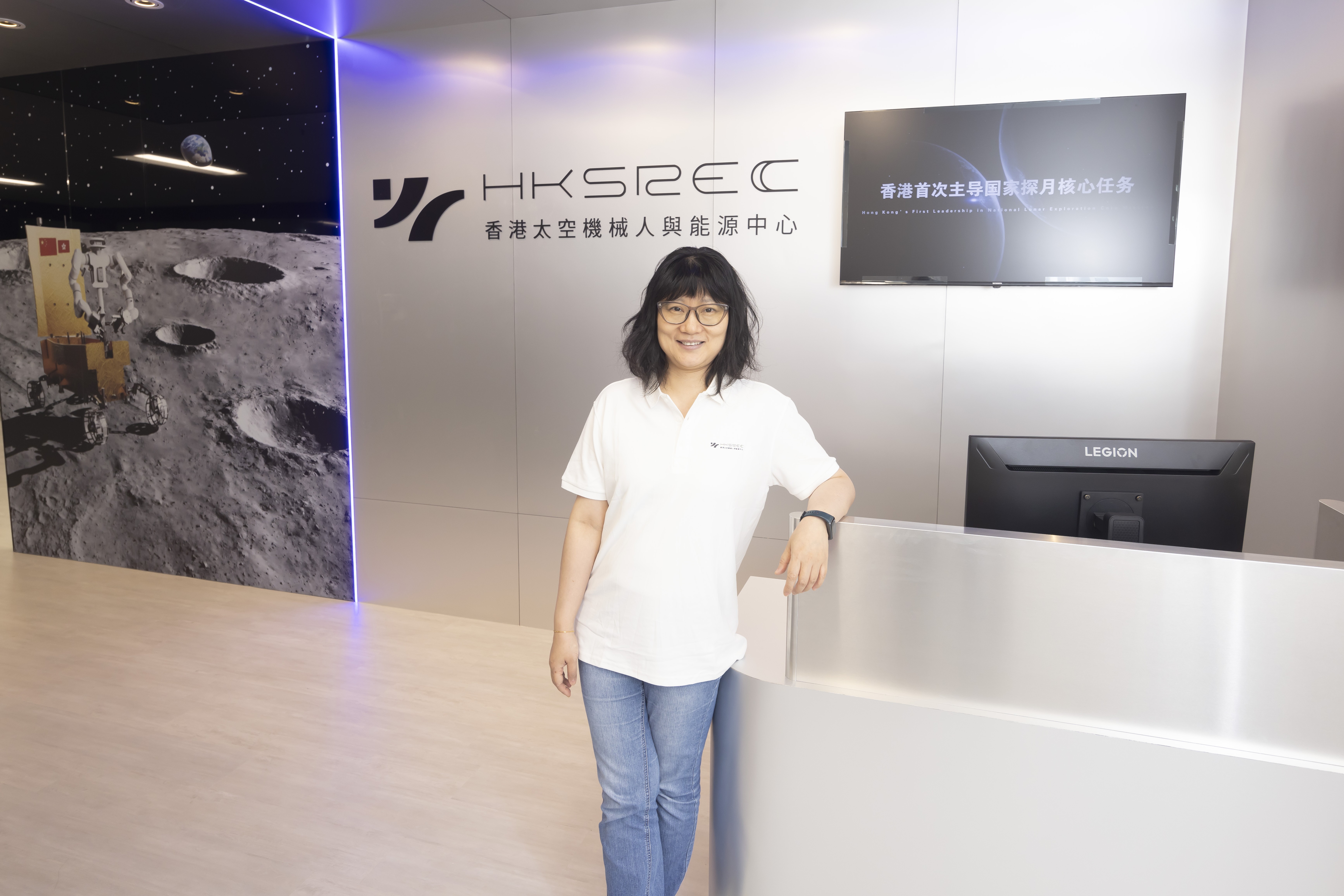
Steering the landmark Hong Kong Operation Robot project as head of the HKSREC.
However, the vast scope of responsibilities in these different roles is not daunting to Prof. Gao, an expert in robotic sensing, perception, navigation guidance control, and biomimetic mechanisms (where systems found in Nature serve as inspiration) for space applications and other extreme environments. “I never tell myself something should be easy,” she said. “No, I always tell myself something should be hard, challenging. That’s what makes it interesting. That’s why it deserves effort.”
So, whether a drill for digging into extraterrestrial surfaces, devising algorithms to improve hardware performance on “spacecraft” (all space vehicles whether in orbit or for surface exploration), or real-world mission development for the European Space Agency’s Lunar Volatile and Mineralogy Mapping Orbiter (VMMO), the UK’s MoonLITE/MoonRaker, and China’s Chang’E-3, Prof. Gao has successfully contributed. At the same time, she has guided students in the three “Rs” of rigor, resourcefulness, and respect for scientific discovery; and research labs in creating their own identity and high-quality outputs.
Working in the field and on actual missions over the past two decades has also meant Prof. Gao became an “eyewitness” and participant in the evolution of spacecraft autonomy, from onboard decision-making in response to changing scenarios (adaptive capability) to working out how a spacecraft can be given a goal and be capable of planning how to achieve this (“full autonomy”). “It was tough, challenging, as space is not a tolerant environment,” she said. “Things have to work. The knowledge transfer and materialization of much of the technology took a long time. But I’m also really grateful because it enabled me to comprehensively understand space centers and how different segments are designed and connected to make a mission work.”
Moon shot for Hong Kong
Informed by such insights, Prof. Gao regards the Hong Kong Operation Robot project being spearheaded by the HKSREC for the nation’s lunar exploration mission as an amazing opportunity to develop not only a landmark spacecraft but Hong Kong’s aerospace economy capabilities overall. The pioneering robot will be equipped with dual robotic arms – a global first in deep space ventures – to deploy and install instruments. It will be able to collect lunar surface samples, as well as use its solar panels as a mobile charging station for other equipment. Moreover, to handle the formidable landscape of the Moon, the robot’s design encompasses real-time perception of the lunar terrain. For example, it seeks to be capable of autonomous path planning and have the capacity to operate under extreme temperature fluctuations without satellite navigational support. In addressing these stringent needs, the research team is devising an AI-powered operational framework integrating machine learning, ground stations, and the robot, with autonomy levels adjusted based on actual conditions to deliver unprecedented situational awareness and adaptability.
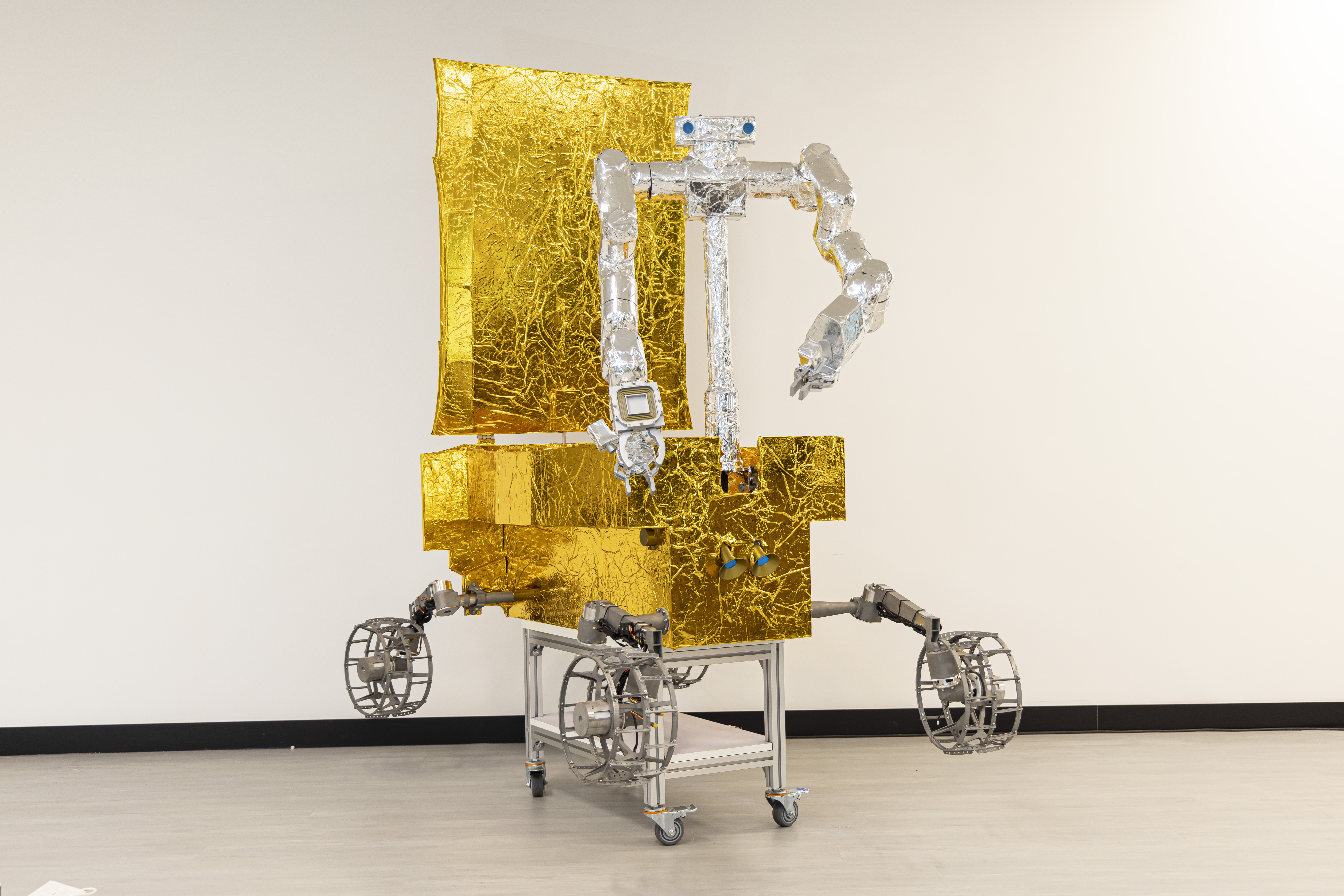
The robot’s design must include real-time perception to cope with the Moon’s highly challenging terrain.
“Why do I think it is so incredible compared to what might have existed before?” Prof. Gao said. “The project calls for the creation of a spacecraft with its own identity and it’s being led by Hong Kong, a first for the city. Through the development of such a complete spacecraft system, it allows Hong Kong and the consortium that works on it to fully grasp the whole process of spacecraft design and development. It involves understanding the ways to engage with suppliers above and below you in the supply chain, a chance you only get to learn if you are the lead. For Hong Kong to have a center of this caliber is extraordinary. I feel very honored to lead this center.”
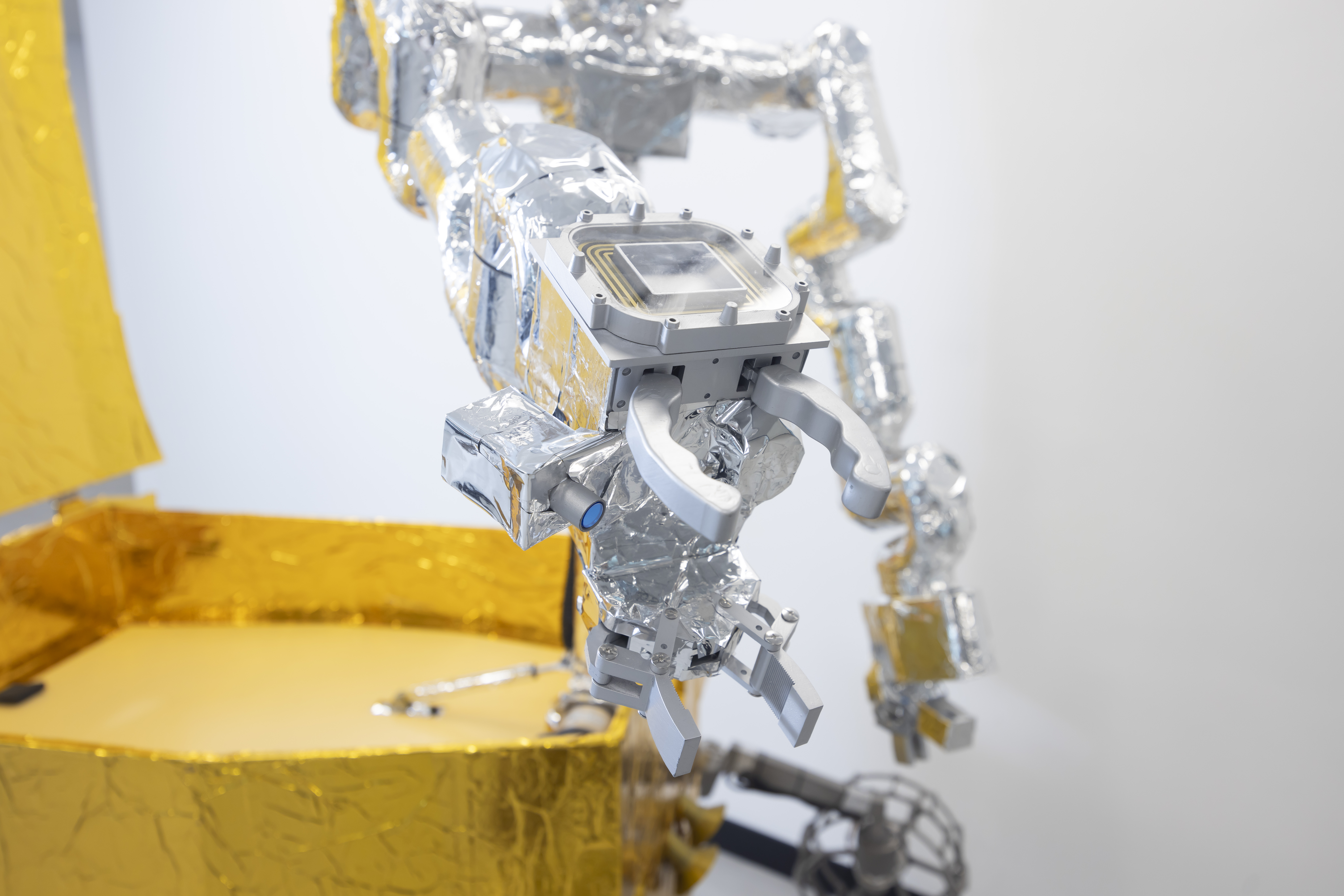
The pioneering dual robotic arms, a global first for deep space missions.
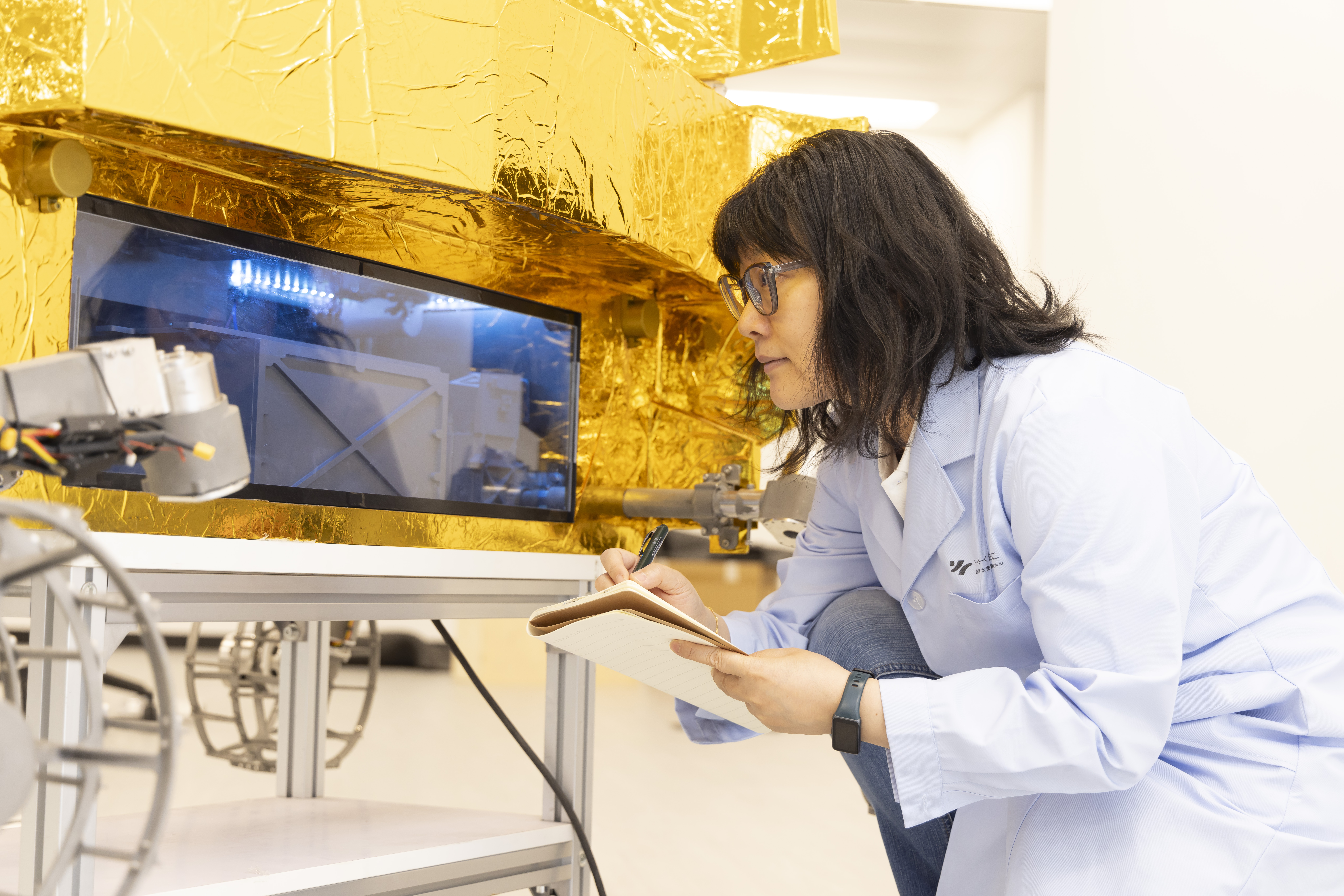
Prof. Gao sees building the lunar surface robot as an amazing opportunity to develop both a landmark spacecraft and Hong Kong’s aerospace economy capabilities.
Trajectory into robotics
Born in Jinan, the capital of Shandong Province, Prof. Gao was interested in fixing household electronic devices from an early age. When offered an undergraduate scholarship in Electrical and Electronic Engineering from esteemed Nanyang Technological University in Singapore, she chose to go there, achieving first-class honors in her BEng degree in 2000. With the digital world on the rise in the late 1990s, opportunities were burgeoning, she noted. Fortuitously and equally important to her, the triple E field was her passion. “It was a priority for me to do what I was personally interested in.”
Taking after her logical engineer father but gaining a more creative, spontaneous sense of the world from her journalist mother, she determined to continue her studies, achieving her PhD in AI robotics at the same university in 2003. With her thesis drilling deep into different machine learning algorithms, she concluded through analysis that despite their different approaches, fuzzy logic and neural networks could be mathematically identical with similar functionalities, making foundational contributions to the field.
Following graduation, she was awarded a prestigious Singapore Millennium Foundation postdoctoral scholarship to move the findings toward application in intelligent and autonomous vehicles. It proved a valuable step to using her knowledge to impact the world, underpinning her evolution into an independent researcher with her own group. Prof. Gao explained: “It prepared me to start to think: ‘Yes, this is cool, interesting. But to sustain itself, you need to show it’s actually useful.’ It gave me the confidence to embark on an academic career.”
By then it was 2004 and in a happy coincidence of timing, the Surrey Space Centre was looking for next-generation engineers who could move the renowned microsatellite institution to readiness for a new space age. In particular, it needed a technical lead to develop a significant European Space Agency-funded project and create a roadmap for exploring how AI and robotics could be applied to space applications over the decades to come. Prof. Gao was the perfect fit.
High-velocity achiever
From that point on, robotics in space and for industry applications in extreme terrestrial environments became her research focus, with Prof. Gao thriving in the developing field and securing numerous recognitions. As a rising star, she was named among Times Higher Education’s list of the UK’s top 10 young leading academics making significant waves in their respective fields in 2008. Currently, the productive academic has co-authored nearly 200 papers, serves as Editor-in-Chief of Wiley’s Journal of Field Robotics, is an emeritus co-chair of the IEEE-RAS Technical Committee on Space Robotics, and an elected fellow of the Institute of Engineering and Technology (IET) and Royal Aeronautical Society (RAeS).
At the start of 2026, Prof. Gao was appointed the IEEE Robotics and Automation Society’s inaugural Distinguished Lecturer in Space Robotics, involving invited lectures at IEEE events, chapters, and student branches globally and sharing of leading research with the robotics community. Encouraged while in the UK to write for the public about developments in her field, she has also published many articles on space-related topics – “and I am happy to do this”. “Society wants to hear from us, our perspectives. People are very curious about what we do.” In line with this, she recently published a newspaper commentary in the Hong Kong Economic Times on the space economy and Hong Kong’s national and international strategic positioning. As a leading female space scientist, she has further served as a United Nations Space4Women Program mentor and was recently named among the Global 200 Women Power Leaders of 2026 in the category of Space Robotics and Autonomous Systems by White Page International, a global consultancy.
Inspiring next-generation stars
As an educator at HKUST, Prof. Gao is driving forward the next generation of talents, supervising final-year Mechanical and Aerospace Engineering undergraduate projects while her research students come from a variety of engineering and science fields. In addition, the latter will be collaborating with King’s students she is still co-supervising, with plans to jointly develop a lunar terrain simulator capable of supporting development of robotic autonomous navigation on the Moon. Indeed, partnerships across borders have been a natural element of her previous work and a motivating factor for her. “Another beauty of space is it really allows international collaboration. People talk to each other as it is challenging business,” she said.
Boosting the space economy
Looking ahead, she believes the Moon will now be the first step rather than Mars, that in the next five years or so, humans will land on the Moon again, followed by construction of infrastructure mostly by automated machines. “AI will play a huge role,” she foresees, given the inhospitable environment for humans. Moving from government-paid missions to commercially driven ventures will be a significant signal of development too. It is then that she sees cost-effectiveness and competition will start to kick in, driving new innovation in a similar way to the SpaceX satellite business transformation.
As an early proponent of space-based solar energy farms – at the time an idea in search of an application – one development she is especially enthusiastic about is in-orbit solar-powered data centers, seeing this as a fantastic way to remove land-gobbling terrestrial infrastructure to a different realm. “Start with data centers and then perhaps factories with fully automated, 24/7 systems operated by robots can go,” Prof. Gao said. Another exciting prospect is that space’s microgravity can spur and enable the use of new materials.
First, though, there is a need for industry to get on board for funding and commercialization, she said. Helping to initiate such conversations, at the end of April, the HKUST-led HKSREC, under Prof. Gao’s directorship, held a major summit. The international “Leading Space Intelligence: Into the Future” brought together government, industry, academia, research institutions, and investors for in-depth discussions on space technology research, cross-regional collaboration, and commercial aerospace applications. The event turned the spotlight toward Hong Kong as a cutting-edge space technology polestar. In addition, it concluded with the launch of the Beijing-Shanghai-Hong Kong Innovation Hub on Space Intelligence, marking the start of a deep collaboration between the three cities that has already brought the rollout of a flagship project. Funded by industry (first phase HK$46 million), the goal is to develop novel robotic arm technology for satellite servicing and in-orbit demonstration by 2029.
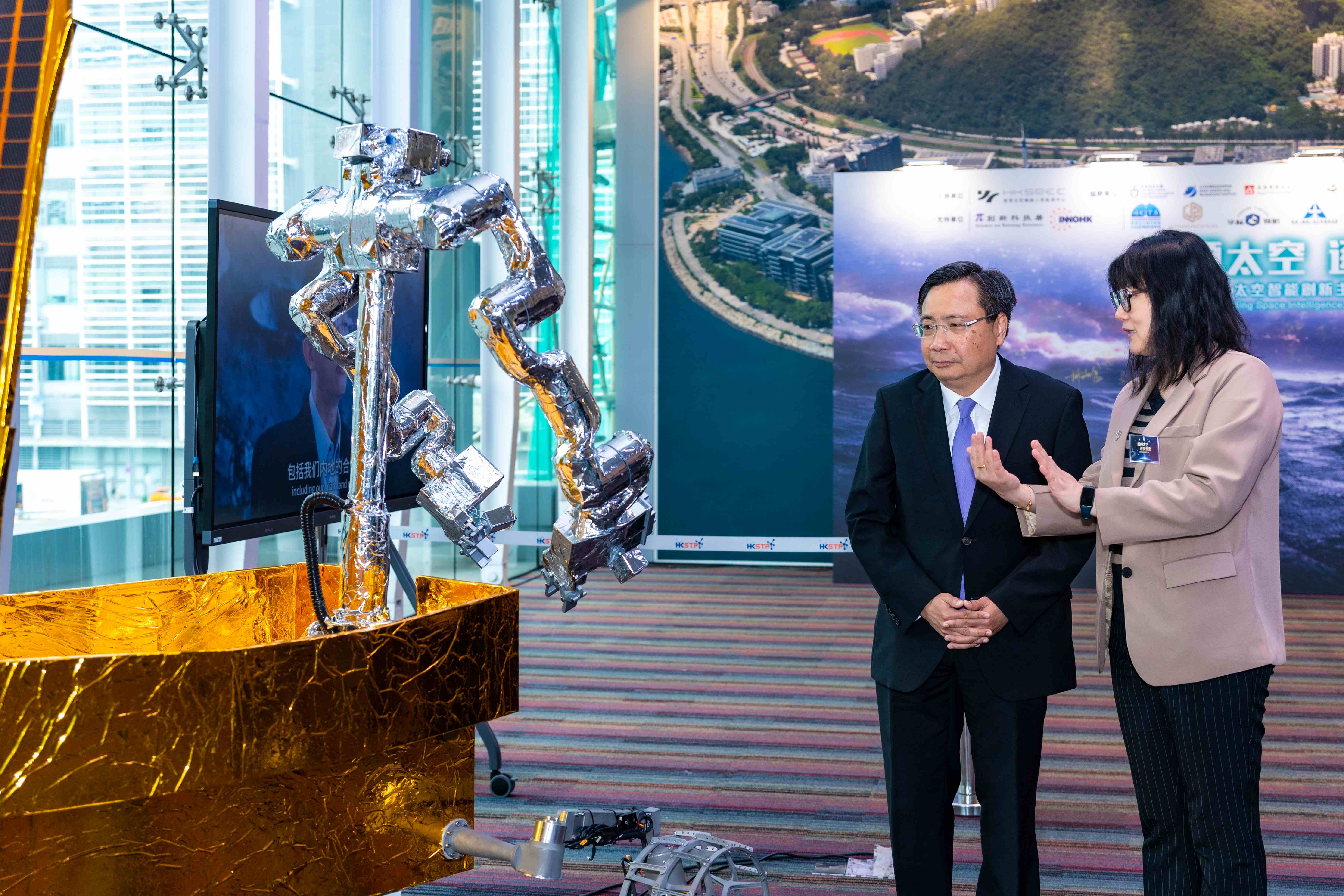
Prof. Gao briefs Mr. Ivan Lee Kwok-Bun, Commissioner for Innovation and Technology of the HKSAR Government, on the first-generation Hong Kong Operation Robot during the Leading Space Intelligence: Into the Future event.
Keeping grounded
Meanwhile, as more regular space travel starts to move up terrestrial agendas, Prof. Gao’s passion for and enjoyment of space technology keeps her firmly anchored to Earth. “I think sending my robots and machines into space and the safeguarding of these missions are my priorities at the moment. Personally, I’m not desperate to go myself. I guess in my lifetime I’ll see space tourism take off. But it will probably take longer to set up permanent residence for regular people, rather than professional astronauts, on the Moon.”