Co-Intelligence Education: Preparing Engineers for the AI–Robot Era
|
|
Prof. WANG Yu-Hsing, Professor of the Department of Civil and Environmental Engineering (CIVL), was appointed the Director of the Center for Engineering Education Innovation (E2I) on January 1, 2026. Before leading E2I, he served as Associate Dean of Engineering (Undergraduate Studies) from 2022 to 2025 and Associate Head of the CIVL Department from 2018 to 2021. He is the Founder and Director of the Data-Enabled Scalable Research Laboratory (DESR Lab). The DESR Lab focuses on Human–Robot–AI symbiosis for next-generation smart and resilient cities, as well as Green AI initiatives that advance environmental protection, conservation, and ecological rehabilitation—particularly in arboriculture and horticulture. |
By Prof. Wang Yu-Hsing
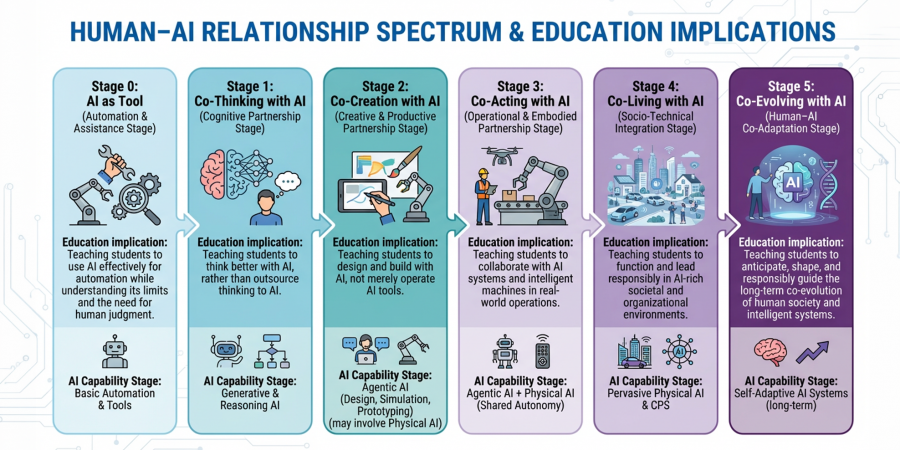
Artificial intelligence is no longer merely a tool. It is increasingly becoming a collaborator, an autonomous agent, and an embodied force within physical systems. As AI integrates into robotics, infrastructure, engineering design, and complex decision-making, it is reshaping not only industries but the very nature of engineering practice.
For universities, the question is no longer simply whether to teach AI. The more fundamental challenge is how to prepare our students for a future in which humans, AI agents, and physical systems operate within deeply interconnected ecosystems. In this evolving landscape, technical competence alone is insufficient. Engineers must be equipped to exercise sound judgment, think critically under uncertainty, and act responsibly in partnership with intelligent systems.
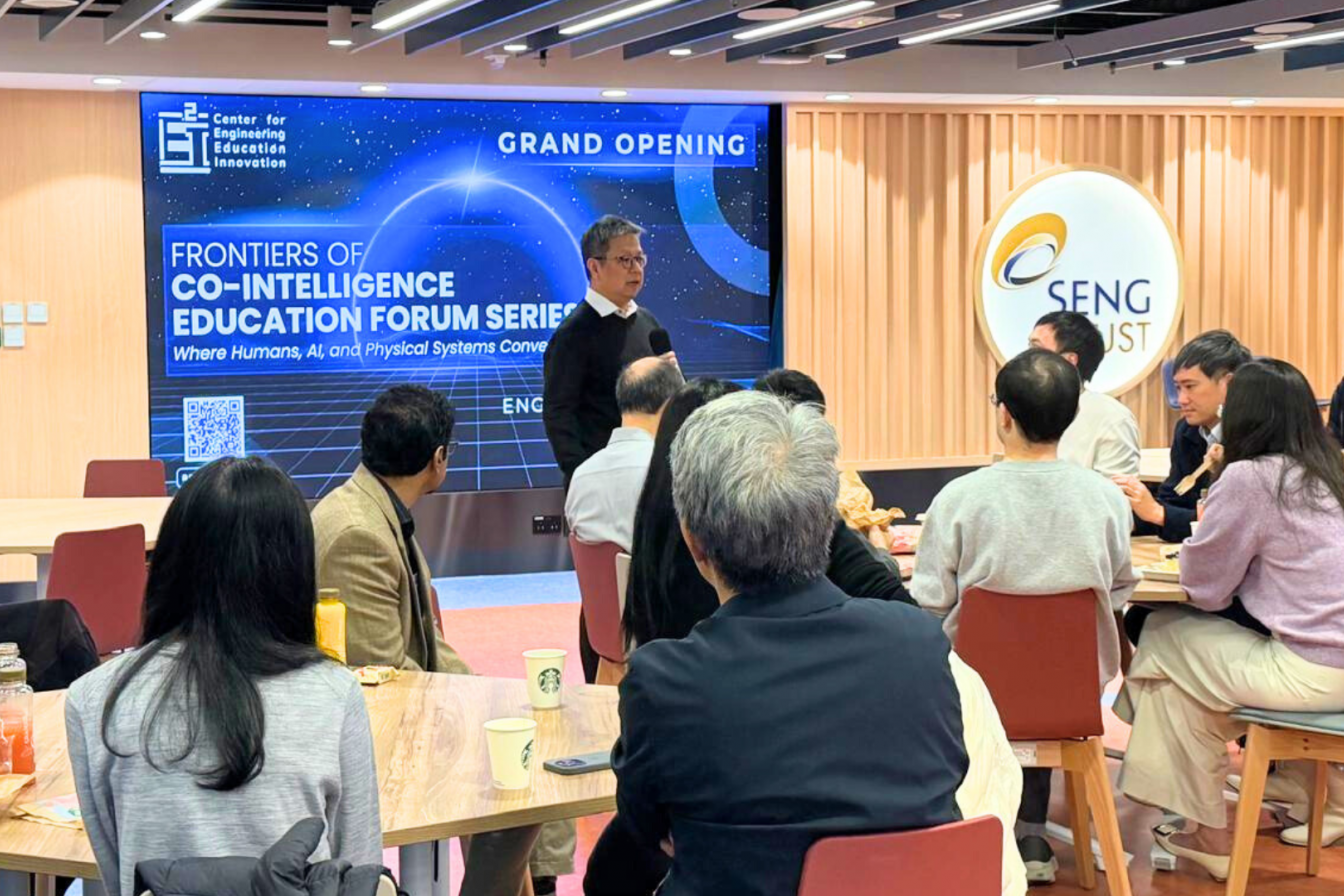
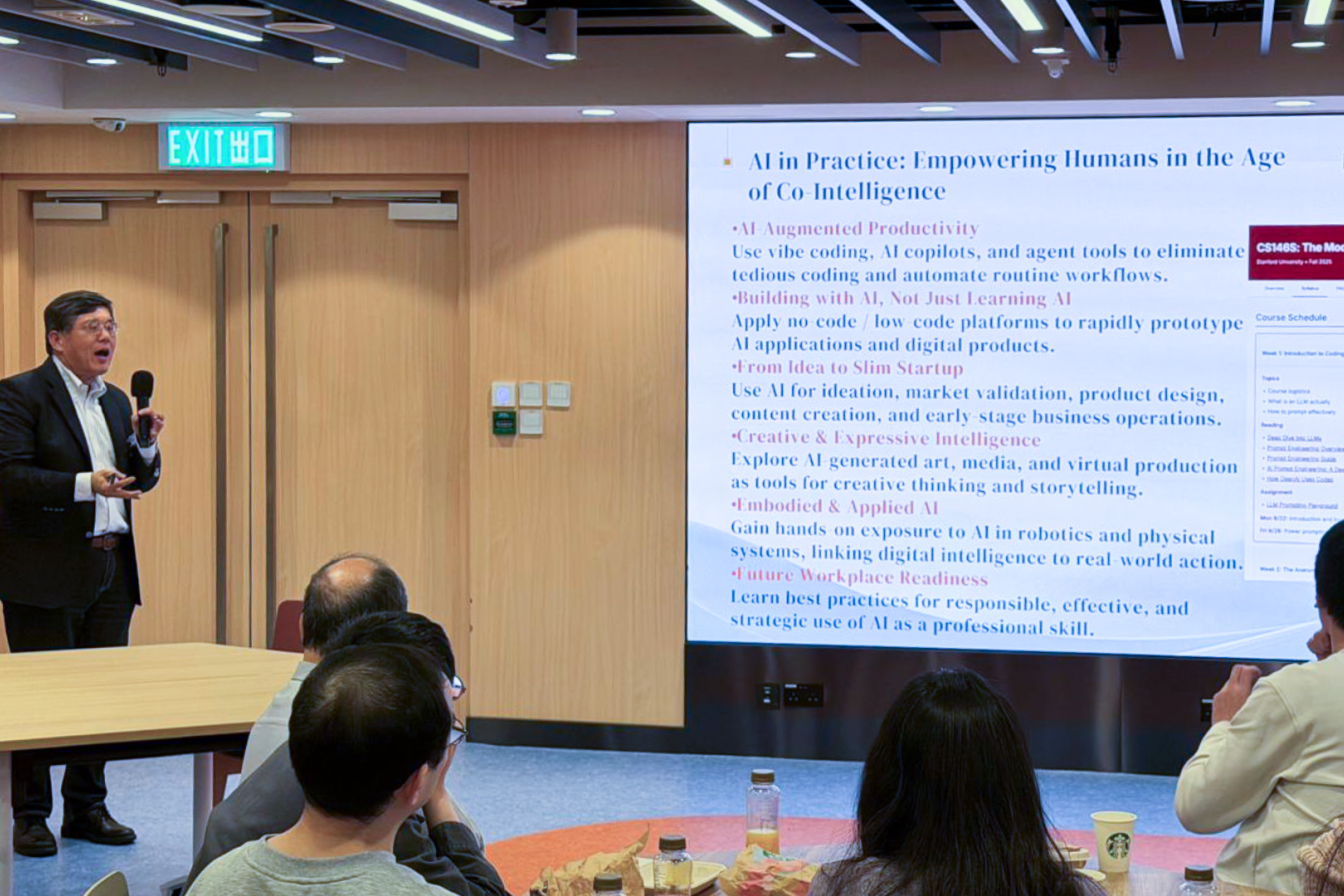
At the Center for Engineering Education Innovation (E2I), we are advancing a strategic vision of Human–AI Agent–Physical System Co-Intelligence. This vision framed the opening session of the Frontiers of Co-Intelligence Education Forum Series, launched on February 12 at the Engineering Commons as the first in a sustained monthly series. The forum convened faculty members to examine how teaching, assessment, and curriculum design must evolve in response to the convergence of human intelligence, AI agents, and embodied systems.
To translate this vision into action, E2I is transforming the conventional Maker Space (USEL Lab) into a next-generation Physical AI Lab. This initiative represents more than a facility enhancement; it signals a strategic shift in educational philosophy. The new lab will integrate rapid prototyping, embedded systems, AI co-thinking environments, and embodied experimentation. Its purpose is to ensure that AI education is grounded in authentic engineering practice, where digital intelligence is directly linked to physical design, testing, and responsible deployment. In addition, E2I is planning to launch the AI Fluency Summer Institute as a new outreach initiative to strengthen foundational AI education beyond the university. The Institute will cultivate critical, responsible AI fluency among high school teachers and students.
Educating future high-impact engineers in the era of co-intelligence
A central question raised during the forum was not simply how to teach AI, but what kind of engineers will shape the future.
As AI systems become more capable and deeply embedded in society, impact will no longer be defined by technical proficiency alone. Future high-impact engineers must possess AI fluency—the ability to think with AI rather than merely operate tools. They must develop systems thinking, recognizing interactions, constraints, and trade-offs across complex environments. They must integrate domain expertise with AI capabilities, whether in civil engineering or other fields. Above all, they must exercise sound judgment under uncertainty, demonstrate ethical and societal awareness, and be capable of orchestrating humans, AI agents, and physical systems.
Cultivating these traits requires more than inserting AI components into existing courses. During the forum, we revisited a foundational principle: education operates as a layered system. At its base lie enduring purposes—deep understanding, critical judgment, ethical responsibility, and purposeful action. These are the invariants. Above them are enduring competencies such as systems thinking and informed decision-making. Only at the surface do we encounter rapidly evolving technologies—the variants.
In periods of rapid technological acceleration, it is easy to focus on tools. Yet the decisive question is not which platform we adopt, but which foundational layer we strengthen.
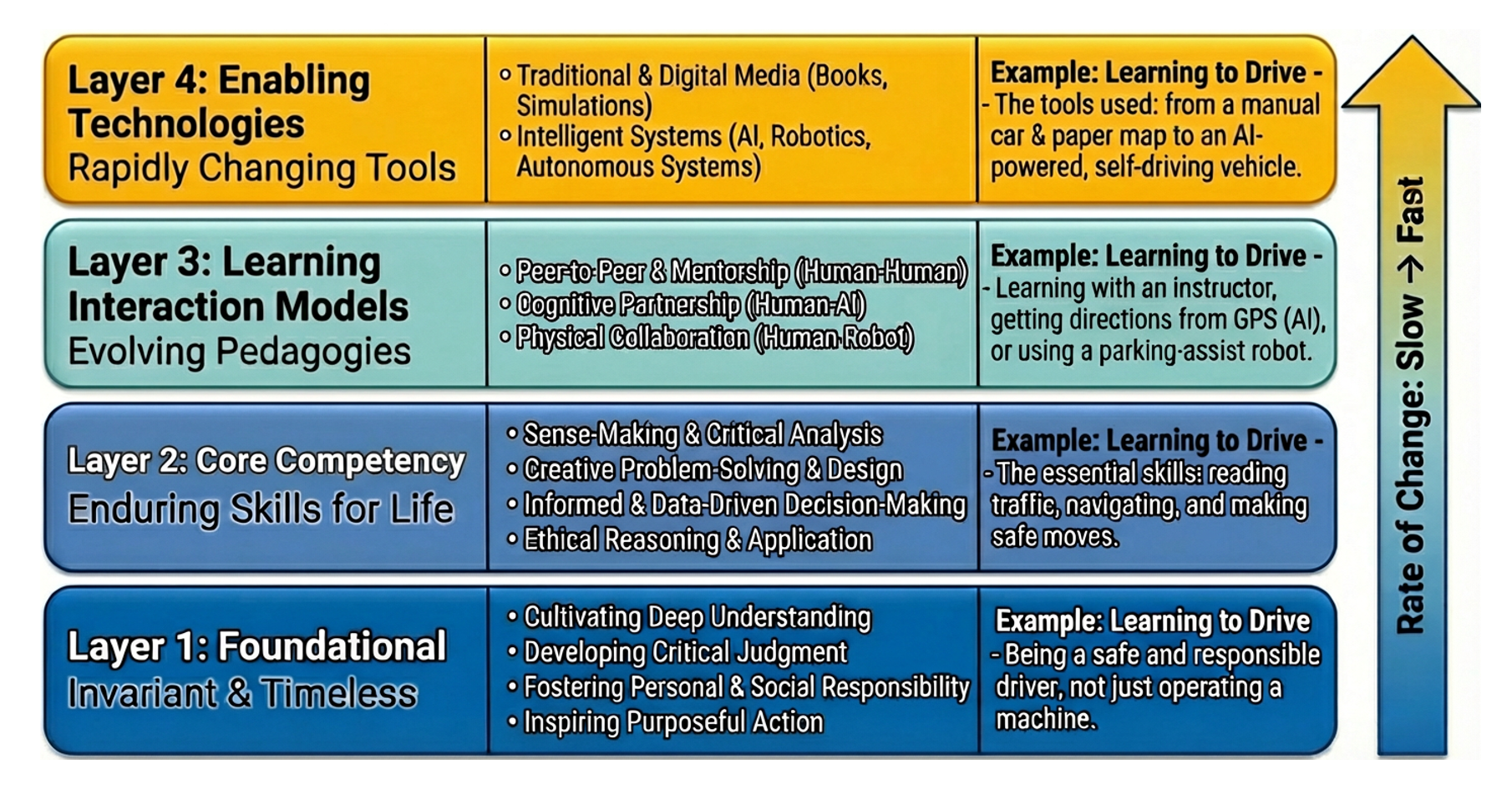
AI literacy enables students to use tools. AI fluency strengthens judgment. It develops the capacity to interrogate AI outputs, detect bias and uncertainty, integrate disciplinary knowledge with machine reasoning, and assume responsibility for consequential decisions. As AI grows more powerful, human agency becomes more—not less—important. Co-intelligence education is therefore not about adapting to technology. It is about preparing leaders who can responsibly shape the future of human–AI–physical system collaboration.
The forum: a collective reflection on institutional transformation
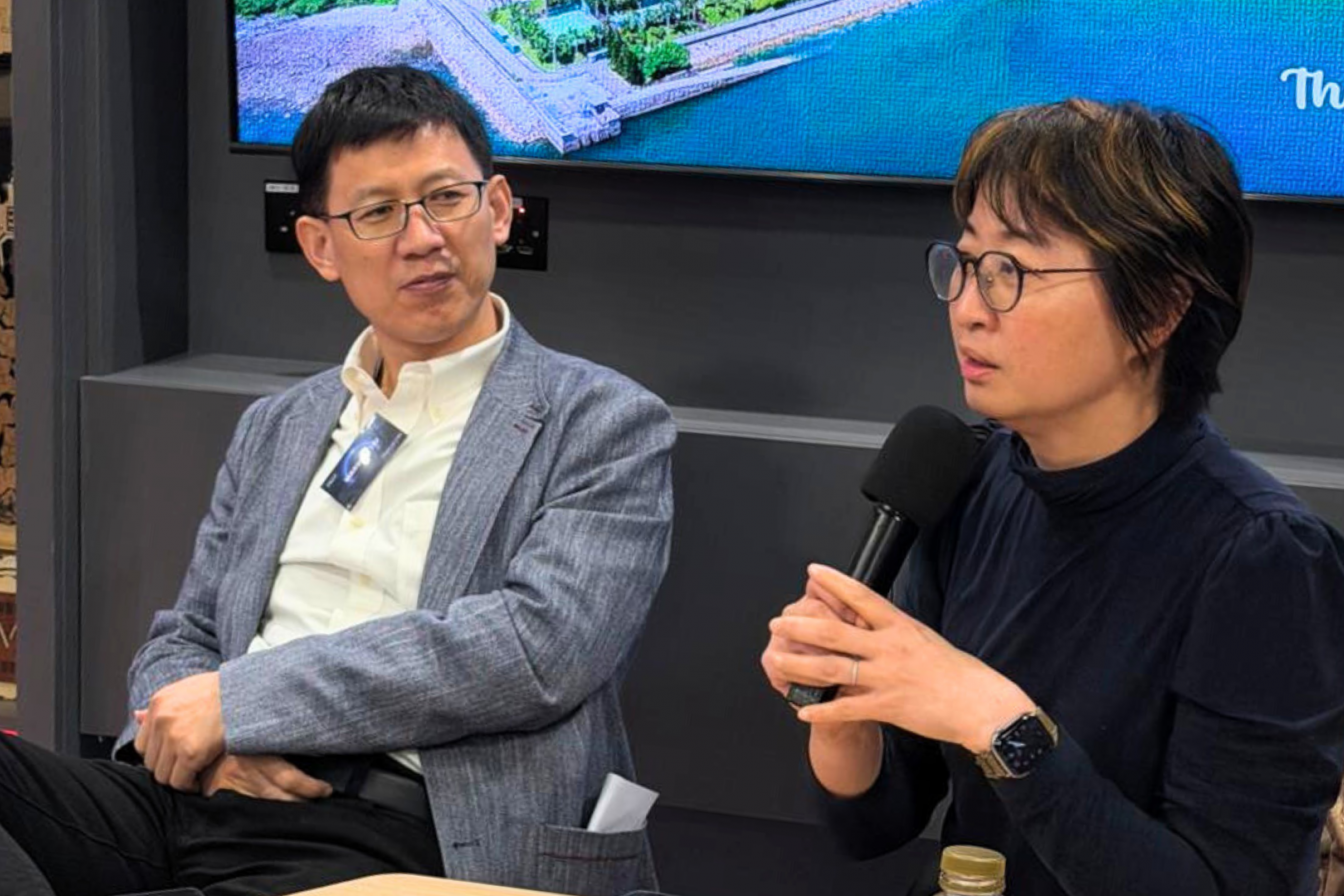
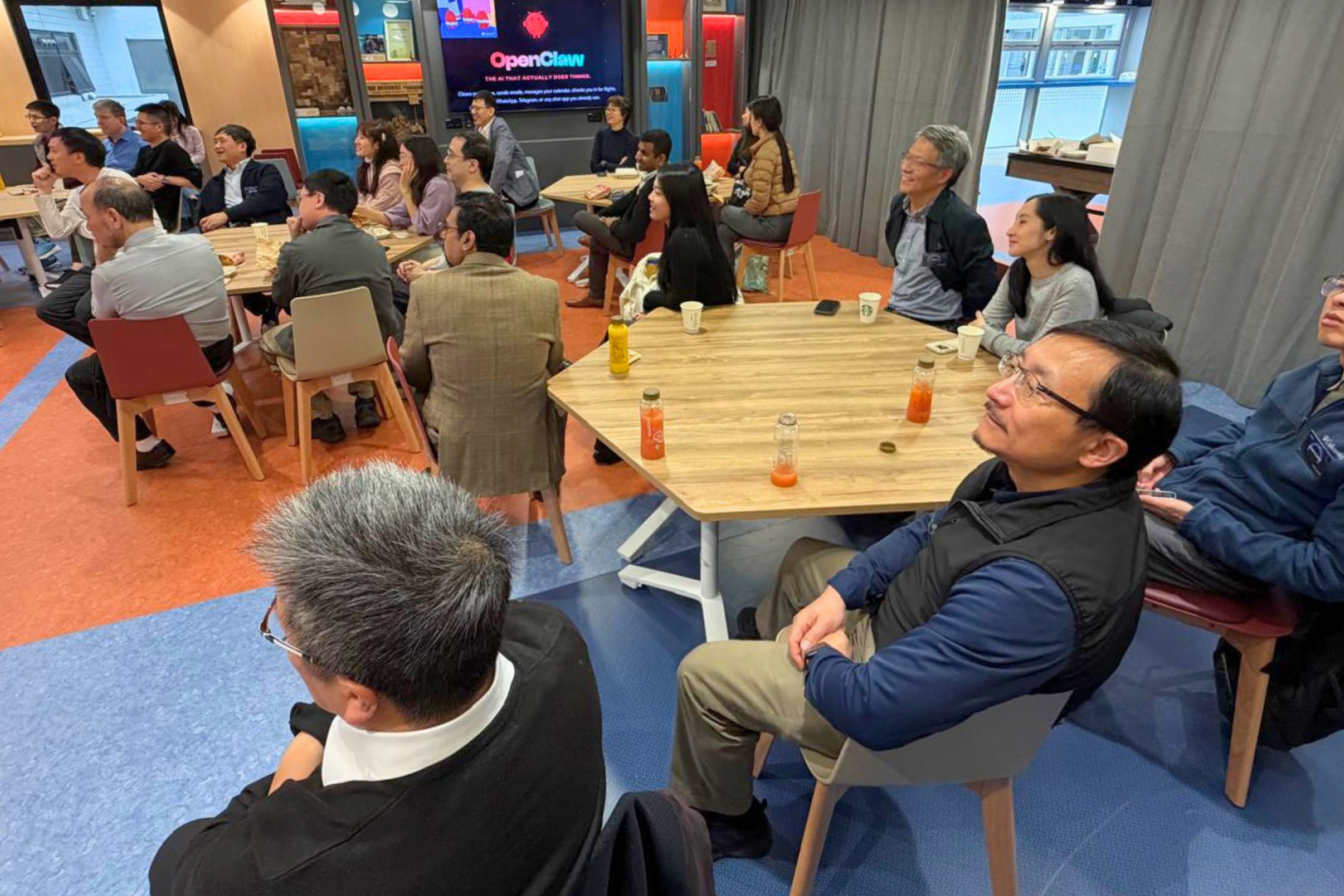
The February 12 forum evolved into a substantive and forward-looking dialogue on the future of engineering education. Participants examined how rapidly AI tools are reshaping learning environments and student expectations. Rather than framing this shift as a challenge to be resisted, the discussion emphasized the importance of thoughtful institutional adaptation.
Assessment reform emerged as a strategic priority. When AI systems can generate technically correct outputs instantaneously, educational value must be anchored in evaluating reasoning processes, decision frameworks, and ethical considerations. The emphasis must shift from product alone to process, from correctness alone to judgment.
Participants also underscored the need for deeper curriculum alignment. Integrating AI meaningfully into engineering education requires more than adding isolated components. It demands prioritizing higher-order capabilities—problem framing, critical inquiry, systems integration, and ethical reasoning—so that graduates are prepared to operate within complex, AI-enabled environments.
The discussion made clear that the current moment represents not merely the adoption of new tools, but a broader institutional inflection point: an opportunity to redefine the value proposition of engineering education in an era of distributed intelligence.
A shared responsibility
Engineering has always carried profound societal responsibility. Today, engineers design not only infrastructure and energy systems, but also intelligent systems that influence governance, economic activity, and daily life.
This expanded responsibility requires a corresponding evolution in education.
The Frontiers of Co-Intelligence Education Forum Series marks the beginning of a sustained institutional commitment to this transformation. As AI continues to evolve, so too must our educational philosophy, pedagogical approaches, and assessment frameworks.
We are in a serious business, education.
Through Human–AI Agent–Physical System Co-Intelligence, we aim to prepare our students not merely to adapt to technological change, but to lead responsibly in shaping the future of intelligent systems and society.