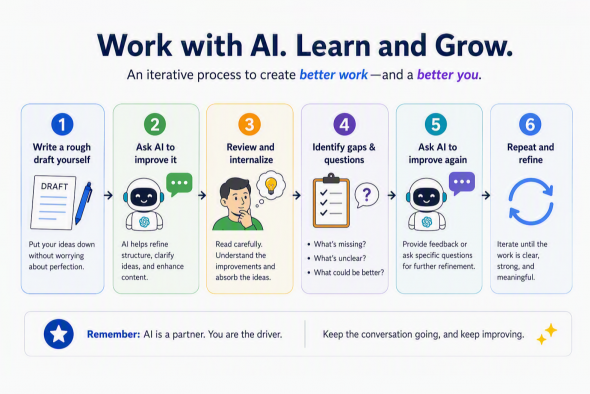
In their iterative dialogue with AI, students begin with an initial draft, evaluate AI-generated suggestions, identify weaknesses, refine their ideas, and repeat the process several times.
Prof. Gao Yang with a model of the first-generation Hong Kong Operation Robot, a novel multifunctional lunar surface robot being designed and developed by the HKUST-led InnoHK Hong Kong Space Robotics and Energy Centre (HKSREC) for the nation’s lunar exploration mission.
The research team is led by Prof. Chen Hao (second left), Assistant Professor in the Department of Computer Science and Engineering (CSE), in collaboration with Prof. Terence Wong (second right), Associate Head and Associate Professor in the Department of Chemical and Biological Engineering, along with team members: CSE PhD students Ma Jiabo (first right) and Li Wenqiang (first left).
Toward Faster and More Cost-Effective Pathology Diagnosis
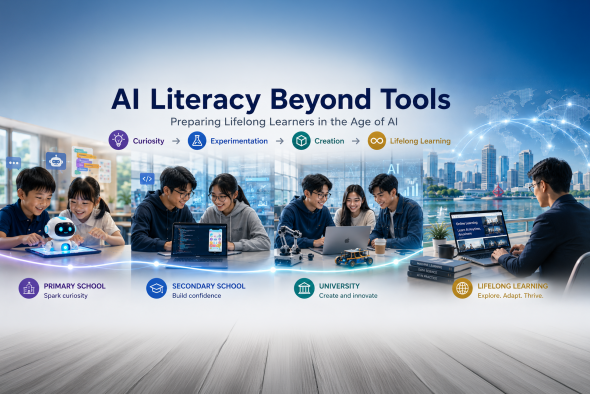
Building an AI literacy ecosystem: Students benefit most when learning opportunities are connected across different stages of education and supported by pathways for continued exploration.
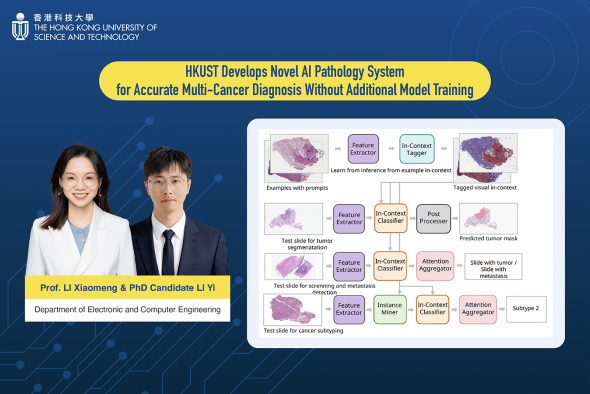
Prof. Li Xiaomeng (left), Assistant Professor from the Department of Electronic and Computer Engineering and Associate Director of Center for Medical Imaging and Analysis at HKUST, together with her student Li Yi, a PhD candidate from the Department of Electronic and Computer Engineering, develop the novel AI pathology system PRET.
Enhancing Flexibility and Efficiency of AI-Assisted Medical Care