SENG News

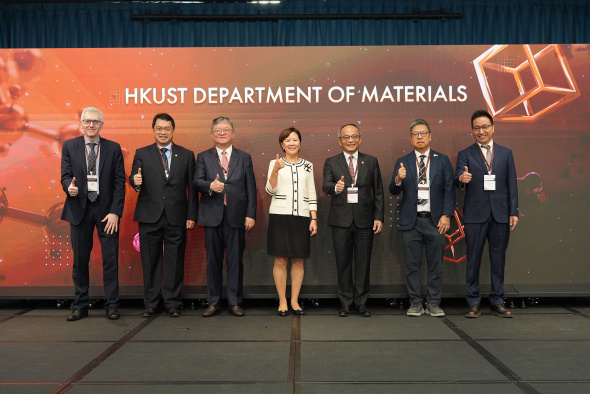
(From left) Prof. Antonio Facchetti, Dr. William M W Mong Professor of Nanotechnology of HKUST; Prof. John Kwong, Vice-President for Development of HKUST; Prof. Guo Yike, Provost of HKUST; Prof. Nancy Ip, President of HKUST; Prof. Tim Cheng Kwang-Ting, Vice-President for Research and Development of HKUST; Prof. Hong K. Lo, Dean of Engineering at HKUST; and Prof. Zhou Yuanyuan, Acting Head of MAT at HKUST, attends the Establishment Ceremony of MAT.
(From left) Prof. Antonio Facchetti, Dr. William M W Mong Professor of Nanotechnology of HKUST; Prof. John Kwong, Vice-President for Development of HKUST; Prof. Guo Yike, Provost of HKUST; Prof. Nancy Ip, President of HKUST; Prof. Tim Cheng Kwang-Ting, Vice-President for Research and Development of HKUST; Prof. Hong K. Lo, Dean of Engineering at HKUST; and Prof. Zhou Yuanyuan, Acting Head of MAT at HKUST, attends the Establishment Ceremony of MAT. 
Leveraging Three Research Pillars to Foster Interdisciplinary Innovation and Nurture Future Talent

Engineering education in the AI era should help students to become engineers who can use AI thoughtfully, question its outputs when evidence is unclear, and take responsibility for the systems they design.
Engineering education in the AI era should help students to become engineers who can use AI thoughtfully, question its outputs when evidence is unclear, and take responsibility for the systems they design. 
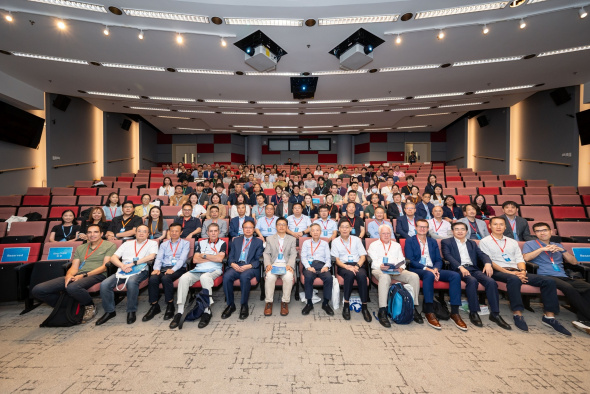
Prof. Nancy Ip (center), President of HKUST; Ms. Mable Chan (5th left), Secretary for Transport and Logistics of the HKSAR Government; Prof. Guo Yike (5th right), Provost of HKUST; Prof. Tim Cheng (4th left), Vice-President for Research and Development, HKUST; Prof. Hong K. Lo (3rd left), Dean of Engineering, HKUST; Prof. Xu Ruina (1st left), Dean, Department of Energy and Power Engineering, Tsinghua University; Prof. Martin Buist (2nd left), Deputy Dean (Education), College of Design and Engineering, Natio
Prof. Nancy Ip (center), President of HKUST; Ms. Mable Chan (5th left), Secretary for Transport and Logistics of the HKSAR Government; Prof. Guo Yike (5th right), Provost of HKUST; Prof. Tim Cheng (4th left), Vice-President for Research and Development, HKUST; Prof. Hong K. Lo (3rd left), Dean of Engineering, HKUST; Prof. Xu Ruina (1st left), Dean, Department of Energy and Power Engineering, Tsinghua University; Prof. Martin Buist (2nd left), Deputy Dean (Education), College of Design and Engineering, National University of Singapore; Prof. Julien Epps (4th right), Dean of Engineering, The University of New South Wales; Prof. Young-Oh Kim (3rd right), Dean, College of Engineering, Seoul National University; Prof. Louis Ge (2nd right), Associate Dean, College of Engineering, NTU Taiwan University; and Prof. Tomonori Nagayama (1st right), Professor, Department of Civil Engineering, The University of Tokyo, officiate at the opening ceremony. 
Exploring the Future of Engineering Education and Research in the AI Era
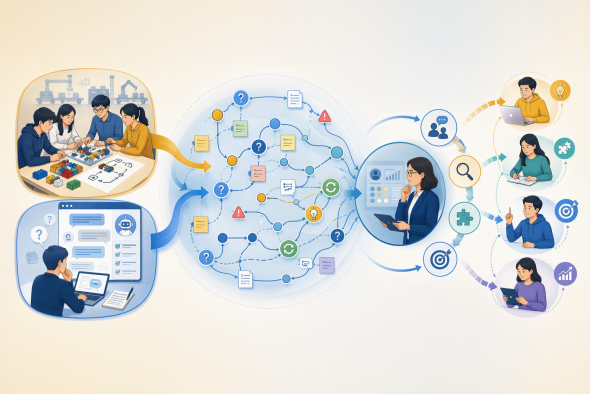
AI supports personalized teaching by helping educators see students’ learning more clearly and choose the next teaching move with greater precision.
AI supports personalized teaching by helping educators see students’ learning more clearly and choose the next teaching move with greater precision. 
The International Electrochemistry Summit 2026 cum Post-Conference Satellite Meeting of the 77th Annual Meeting of ISE, and 9th Young Academy of Sciences Summit (YASS) Sub-Conference was held over three consecutive days at HKUST, attracting approximately 300 participants in person.
The International Electrochemistry Summit 2026 cum Post-Conference Satellite Meeting of the 77th Annual Meeting of ISE, and 9th Young Academy of Sciences Summit (YASS) Sub-Conference was held over three consecutive days at HKUST, attracting approximately 300 participants in person.  
Accelerating the Development of Next-Generation Energy Storage Technologies
HKUST in collaboration with the Working Group on Developing Low-altitude Economy under the HKSAR Government and the Greater Bay Area Low Altitude Economy Alliance, hosted the thematic forum titled “Future of Low Altitude Economy – An Inter-City Dialogue (Commercialization and Standardization)”. Pictured are Ms. Mable Chan (front row, fifth left), Secretary for Transport and Logistics of the HKSAR Government; Prof. Nancy Ip (first row, fourth right), President of HKUST; the Hon. Elizabeth Quat (first row, fo
HKUST in collaboration with the Working Group on Developing Low-altitude Economy under the HKSAR Government and the Greater Bay Area Low Altitude Economy Alliance, hosted the thematic forum titled “Future of Low Altitude Economy – An Inter-City Dialogue (Commercialization and Standardization)”. Pictured are Ms. Mable Chan (front row, fifth left), Secretary for Transport and Logistics of the HKSAR Government; Prof. Nancy Ip (first row, fourth right), President of HKUST; the Hon. Elizabeth Quat (first row, fourth left), Legislative Council Member of the HKSAR and Founding President of the Greater Bay Area Low Altitude Economy Alliance, and Prof. Tim Cheng (first row, third right), Vice-President for Research and Development of HKUST, together with other distinguished guests. 
Gathering Global Leaders from Government, Industry, and Academia to Advance the Low-Altitude Economy Ecosystem
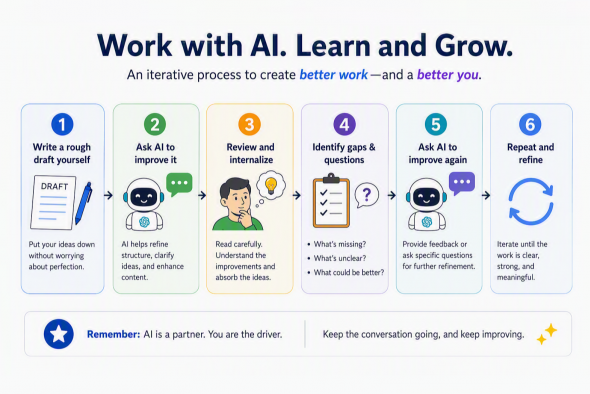
In their iterative dialogue with AI, students begin with an initial draft, evaluate AI-generated suggestions, identify weaknesses, refine their ideas, and repeat the process several times.
In their iterative dialogue with AI, students begin with an initial draft, evaluate AI-generated suggestions, identify weaknesses, refine their ideas, and repeat the process several times. 
Integrating AI into the design thinking model
Integrating AI into the design thinking model 
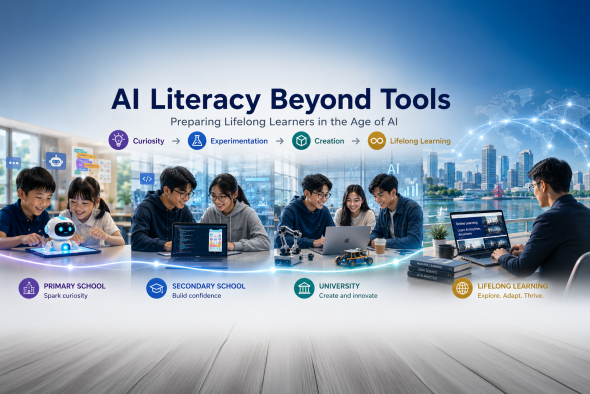
Building an AI literacy ecosystem: Students benefit most when learning opportunities are connected across different stages of education and supported by pathways for continued exploration.
Building an AI literacy ecosystem: Students benefit most when learning opportunities are connected across different stages of education and supported by pathways for continued exploration. 
The IEEE 2026 Finals of the International Youth IC Challenge (China) and the Inaugural International IC Innovation and Education Forum were held at HKUST on May 17, 2026. The gathering attracted distinguished educators, leading chip experts, and school leaders from across China and overseas, fostering vibrant exchanges across academia, industry, and education sectors.