
HKUST Engineering Develops Breakthrough High‑Efficiency, Low‑Cost Wastewater Treatment Technology
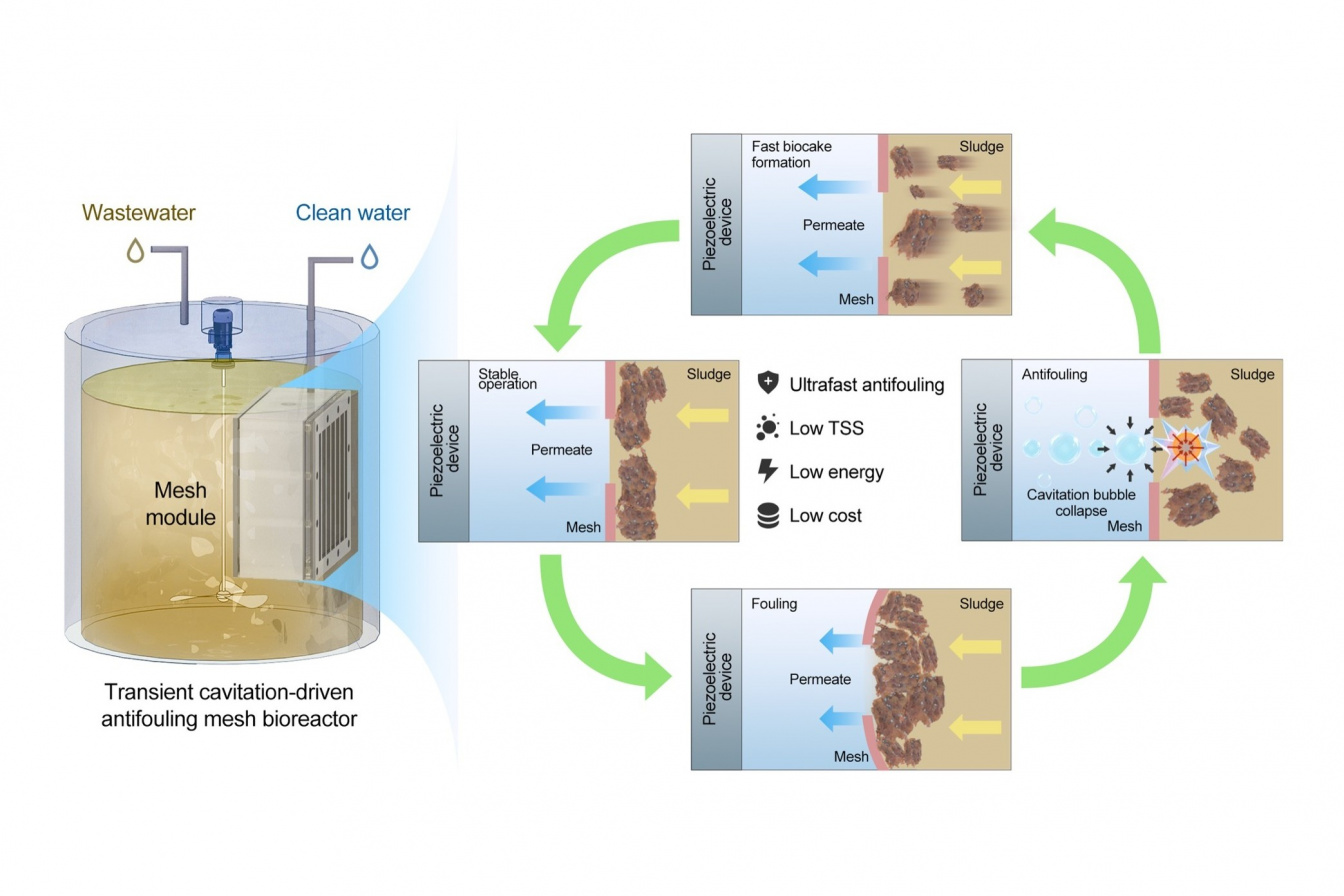
The Hong Kong University of Science and Technology (HKUST) research team has developed a groundbreaking wastewater treatment technology that integrates a mesh bioreactor with an ultrasound-induced transient cavitation cleaning mechanism. The system can complete mesh cleaning within 3.8 seconds under anaerobic conditions and achieves 10-20 times higher flux than conventional membrane bioreactors (MBRs). The technology operates efficiently with substantially lower energy consumption, produces treated effluent surpassing international and local discharge standards, and reduces the cost of treating each cubic metre of wastewater to 50% of conventional MBRs, offering a sustainable solution for both municipal and industrial wastewater treatment.
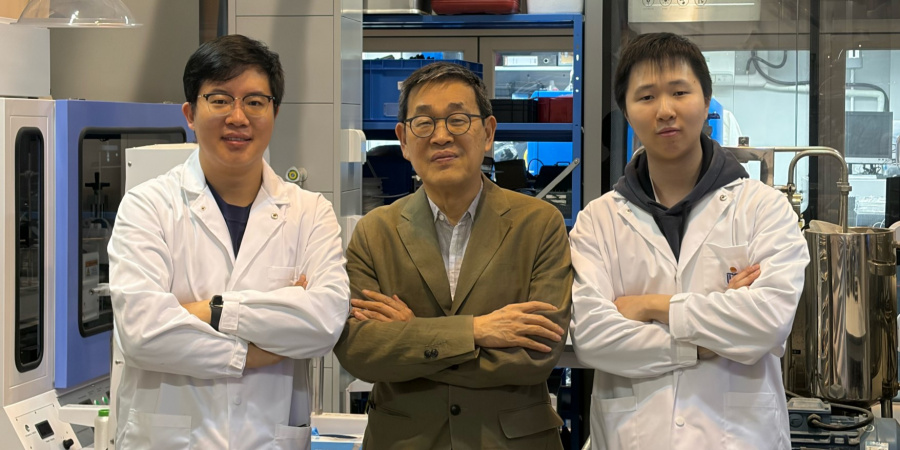
The research was led by Prof. CHEN Guanghao, Chair Professor of the Department of Civil and Environmental Engineering at HKUST, together with Dr. GUO Hongxiao, Postdoctoral Fellow and Mr. LUO Yu, PhD student in the same department. The study, titled “Transient cavitation enables ultrafast fouling removal in mesh bioreactors for efficient sludge–liquid separation during wastewater treatment”, was published in the journal Nature Water.
Conventional secondary wastewater treatment worldwide commonly relies on MBR systems, where aerobic or anaerobic microorganisms degrade organic matter in wastewater. Under the Hong Kong Drainage Services Department standards, the total suspended solids (TSS) of secondary-treated effluent must reach 30 mg/L or below. While MBRs are effective in separating suspended biomass from water, they face persistent membrane fouling, requiring regular cleaning and membrane replacement, leading to high operational costs.
The HKUST team designed a mesh bioreactor (MeBR) using 10-200 μm mesh material to achieve separation mainly through a biocake layer that self-forms on the mesh from retained solids and microbial biomass. The technology incorporates piezoelectric ultrasound transducers that generate cavitation of microbubbles, which rapidly form and collapse to remove fouling from the mesh surface. This mechanism enables complete cleaning within 10 seconds under aerobic conditions, and as quickly as 3.8 seconds under anaerobic conditions when treating domestic wastewater.
Key breakthroughs of the system include:
- Each square metre of mesh can process 148-307 L m−2 h−1, achieving 10-20 times the flux of conventional MBRs while maintaining mesh integrity over long-term operation.
- The treated effluent maintains a TSS below 20 mg/L, outperforming Hong Kong’s 30 mg/L standard and meeting discharge requirements in approximately 75% of the global population.
- The system requires only 2.5-47 Wh/m³, significantly reducing overall operational expenditure.
The first author of the paper and PhD student at HKUST Mr. Luo Yu explained, “Across 120 days of continuous filtration tests and an additional 21‑day trial using real municipal wastewater, the meshes retained their structural integrity. Although minor physical changes—such as variations in pore size and surface roughness—were observed after long-term operation, they did not compromise the mechanical stability of the meshes, demonstrating the system’s durability.”
Dr. Guo Hongxiao, corresponding author added, “The technology enables the mesh to operate stably at ultrahigh fluxes that far exceed those of typical MeBRs and reach 10-20 times those of conventional MBR systems, without any additional cleaning requirements. The ultrahigh fluxes also reduce the biocake reformation period to under 10 minutes, overcoming a long-standing challenge and ensuring stable effluent quality during continuous operation.”
Prof. Chen Guanghao, corresponding author, stated, “Cities worldwide are facing increasing pressures from climate change, rising energy costs and growing wastewater loads. Treating more wastewater with fewer resources is becoming a universal challenge. This technology demonstrates that high‑flux treatment can be achieved while still meeting stringent global discharge standards, potentially easing the burden on existing facilities and offering a more flexible solution for densely populated cities. Based on current analyses, the system can reduce the treatment cost by approximately US$0.05 per cubic metre of wastewater resulting in significant cumulative benefit. Ultimately, our goal is to deliver research that creates real and meaningful value for society.”
About The Hong Kong University of Science and Technology
The Hong Kong University of Science and Technology (HKUST) (https://hkust.edu.hk/) is a world-class university known for its innovative education, research excellence, and impactful knowledge transfer. With a holistic and interdisciplinary pedagogy approach, HKUST was ranked 6th in the QS Asia University Rankings 2026, 3rd in the Times Higher Education’s Young University Rankings 2024, and 19th globally and 1st in Hong Kong in the Times Higher Education’s Impact Rankings 2025. Thirteen HKUST subjects were ranked among the world’s top 50 in the QS World University Rankings by Subject 2025, with “Data Science and Artificial Intelligence” coming in 17th worldwide and first in Hong Kong. Our graduates are highly competitive, consistently ranking among the world’s top 30 most sought-after employees. In terms of research and entrepreneurship, over 80% of our work was rated “internationally excellent” or “world leading” in the Research Assessment Exercise 2020 of the Hong Kong’s University Grants Committee. As of July 2025, HKUST members have founded over 1,900 active start-ups, including 10 Unicorns and 17 exits (IPO or M&A).
(This news was originally published by the HKUST Global Engagement and Communications Office here.)