

Building the Future of Low-Altitude Mobility: The Vision of the Low-Altitude Economy
|
|
Prof. Mo LI is a Professor in the Department of Computer Science and Engineering. He is also the Director of the Low Altitude Economy Research Center. He has been internationally recognized for his research in wireless and mobile computing. Over the past few years, he has developed numerous methods, techniques, and systems resulting in top journal and conference publications that received over 10,000 citations. Currently, he is the chair of ACM SIGMOBILE and has been the editor-in-chief of ACM Transactions on Internet of Things since 2024. He is an ACM Distinguished Member and IEEE Fellow. |

By Prof. Mo Li
The Low-Altitude Economy (LAE) envisions an integrated airspace ecosystem where drones, eVTOLs (electric vertical take-off and landing aircraft), and related technologies safely and efficiently serve both industry and everyday life. Its goal is to unlock new economic value by connecting low-altitude air operations with smart infrastructure, digital management systems, and sustainable mobility solutions.
Driving innovation through Low Altitude Economy Research Center (LAERC)
LAERC leads Hong Kong’s transformation toward this vision by fostering innovation and cross-disciplinary collaboration. Currently, LAERC brings together about 30 faculty members from a wide range of disciplines, including Mechanical and Aerospace Engineering, Computer Science, Civil and Environmental Engineering, Business, and Public Policy.
The center advances aerial control technologies and engineering planning to enhance perception, control, and safety in drone-based services. This includes research on airspace design, route optimization, and service planning that incorporate micro-weather data and real-time mobility management. Beyond aircraft systems, LAERC also develops the digital backbone needed for a thriving low-altitude ecosystem. Its research spans sensing and communication technologies, data management, artificial intelligence (AI), cybersecurity, and networking—all essential for safe and seamless low-altitude operations. Through these efforts, HKUST provides critical data and insights that promote sustainable growth and help shape policies and regulations to accelerate the development of the LAE industry.
Building the infrastructure for aerial innovation
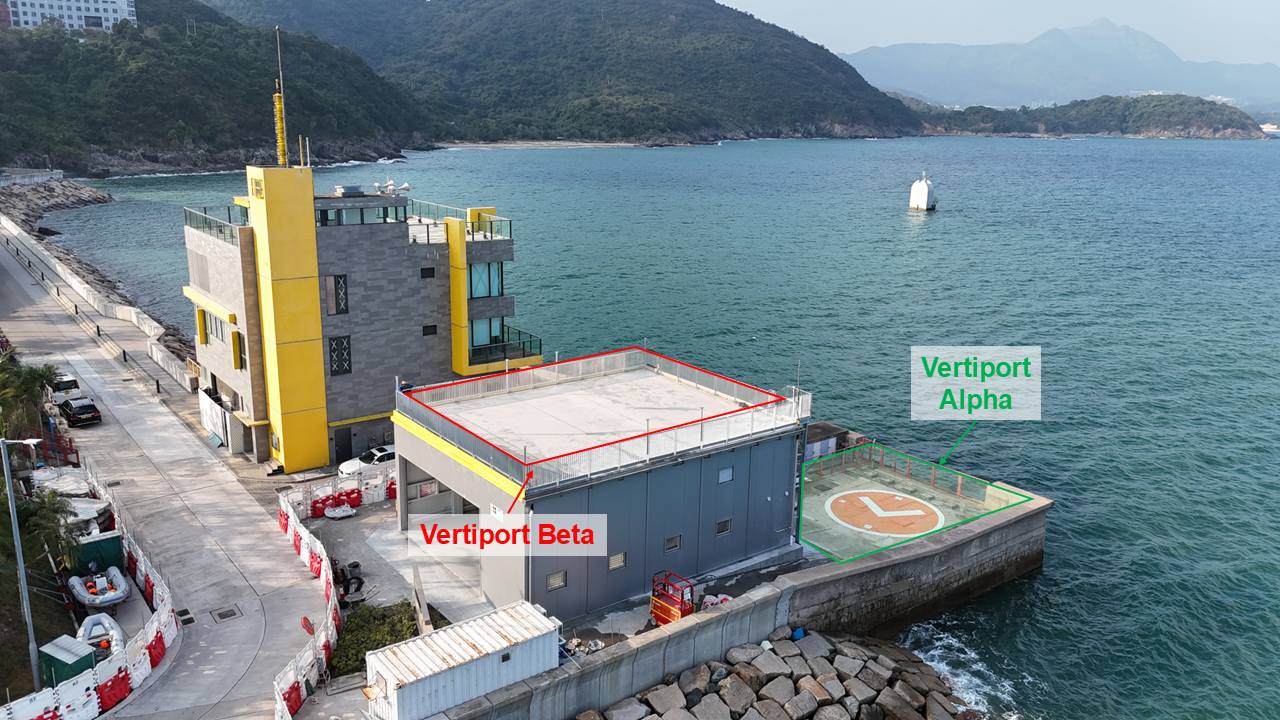
With strong support from the University, dedicated LAE facilities are being developed to support ongoing research activities. Two vertiports, named Vertiport Alpha and Vertiport Beta, are being constructed near the HKUST Pier. These facilities will serve as key experimental platforms for testing and demonstration.
Vertiport Beta, in particular, is being developed into an advanced automated take-off and landing hub. It will support unmanned aerial vehicle (UAV) operations such as autonomous take-off and landing, as well as automated payload handling. These facilities will play a critical role in LAE initiatives like emergency response and time-critical delivery services—enhancing both the efficiency and reliability of future aerial mobility solutions.
From sandbox to sky: pilot projects in action
LAERC is also supporting several pilot projects, including a series of LAE Sandbox projects launched with the backing of the Hong Kong Government. These projects aim to test and demonstrate technologies that will shape the city’s low-altitude future.
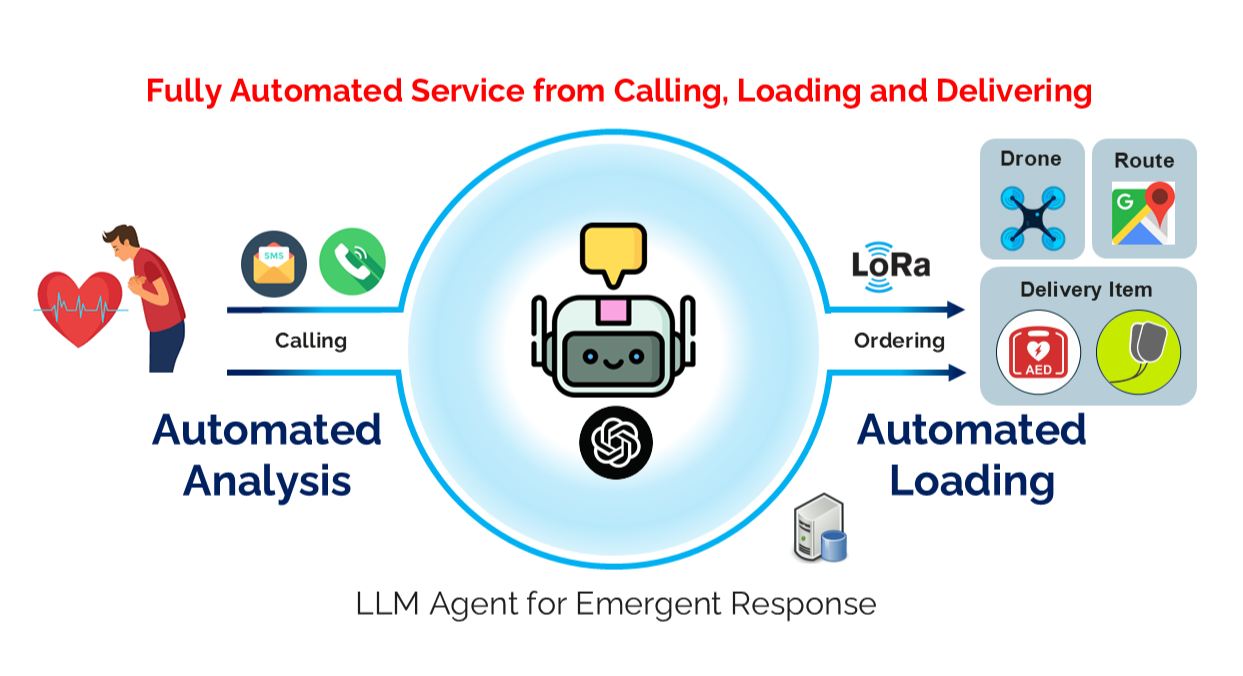
One highlight is AeroRelief, a UAV-based emergency response system designed for time-critical missions. The goal is simple yet transformative: deliver lifesaving medical supplies much faster than traditional means, especially in areas where ambulances take too long to arrive.
Here’s how it works: when someone in distress sends their location by SMS, an AI system automatically interprets the message, identifies the type of emergency, and selects the appropriate medical kit—such as an AED for cardiac arrest or an EpiPen for severe allergic reactions. A nearby drone is then launched immediately, flying directly to the person and delivering the kit within minutes. A journey that might take 40–50 minutes by road can be reduced to around 10 minutes by air—often the difference between life and death.
As one of the first projects approved under Hong Kong’s LAE Regulatory Sandbox, AeroRelief is more than an academic prototype—it’s a real-world step toward using drones safely and legally for emergency response. By combining drones, AI, and simple communication tools, the project shows how technology can bring timely help to anyone, anywhere.
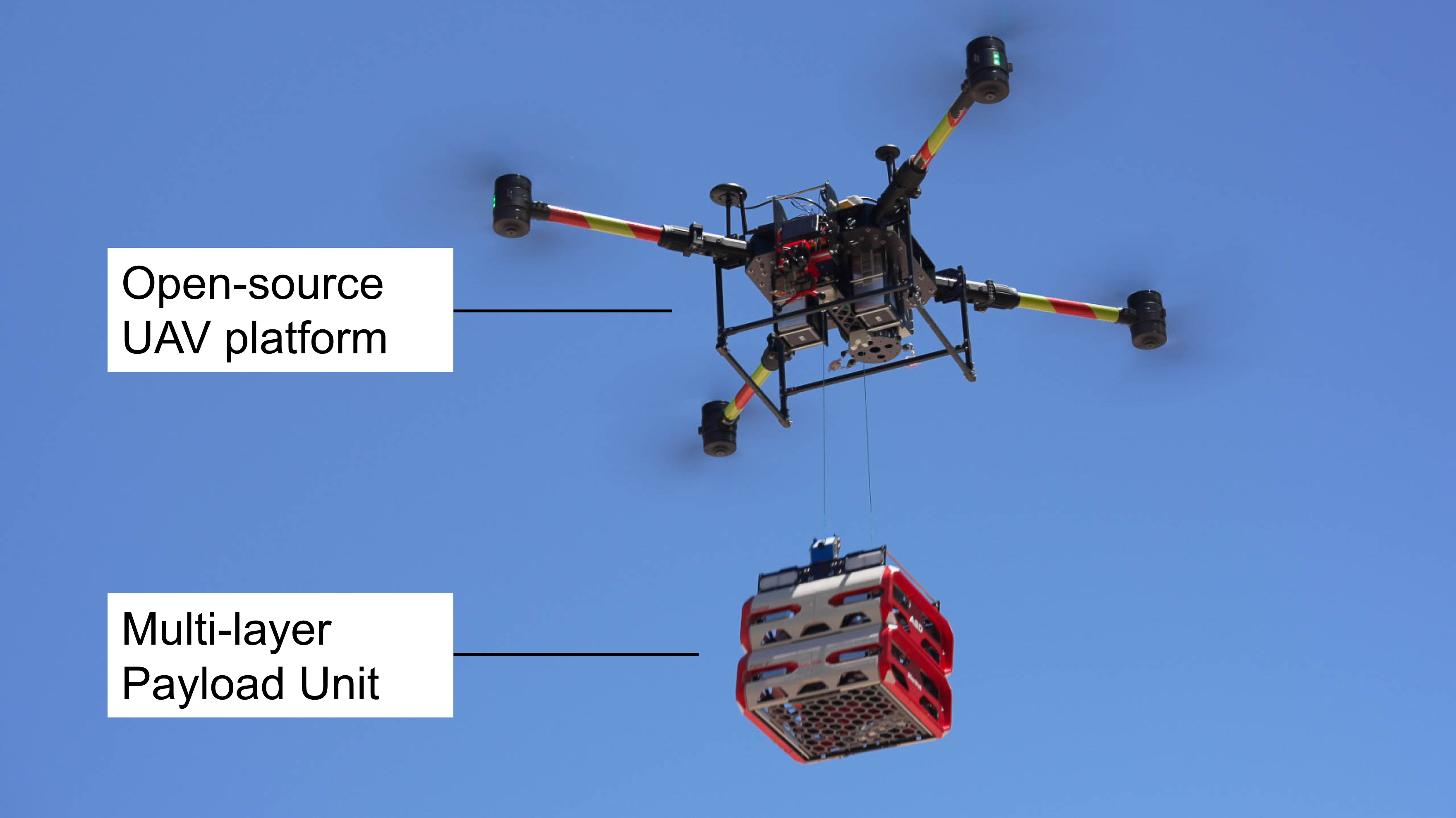
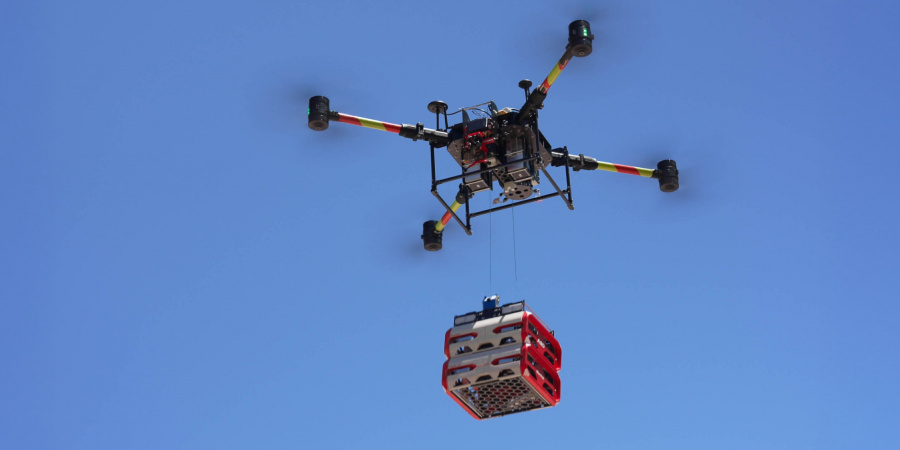
Winch-down operation to deliver critical payloads without requiring drone landing.
In addition, LAERC is advancing other projects such as drone noise measurement, air-sea coordinated cruising, and ultra-long-range wireless communication for UAV control and remote identification—key areas for improving urban integration and operational reliability.
Join us: turning vision into reality
We invite students and engineers—from undergraduates to seasoned professionals—who are passionate about UAV systems, wireless communication, and AI to join our growing community. Whether you’re looking for a Final Year Project (FYP), a research internship, or a research and development job position, LAERC offers a unique platform where you can bridge the gap between theory and real-world applications.