
SENG News

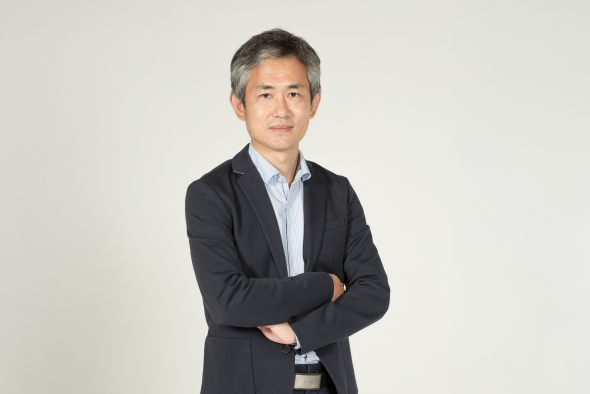
A research team led by Prof. Qu Jianan, Professor of the Department of Electronic and Computer Engineering, School of Engineering, HKUST, has introduced a groundbreaking technique that can capture high-resolution images of the awake mice brain in a near non-invasive manner. The advancement promises deeper insights into human brain function in both healthy and diseased conditions.
A research team led by Prof. Qu Jianan, Professor of the Department of Electronic and Computer Engineering, School of Engineering, HKUST, has introduced a groundbreaking technique that can capture high-resolution images of the awake mice brain in a near non-invasive manner. The advancement promises deeper insights into human brain function in both healthy and diseased conditions. 
Igniting Passion for Engineering Among Future Innovators
Group photo of the research team: Prof. Abhishek K. Srivastava (second right), corresponding author of the study; Liao Zebing (center), PhD student and first author of the study; as well as co-authors including postdoctoral fellow Dr. Maksym Prodanov (first right), PhD students Mallem Kumar (second left) and Song Jianxin (first left). Mr Liao holds a red emitting QR-LED sample.
Group photo of the research team: Prof. Abhishek K. Srivastava (second right), corresponding author of the study; Liao Zebing (center), PhD student and first author of the study; as well as co-authors including postdoctoral fellow Dr. Maksym Prodanov (first right), PhD students Mallem Kumar (second left) and Song Jianxin (first left). Mr Liao holds a red emitting QR-LED sample. 
Prof. Sherry Chen Xian (left), The Hong Kong University of Science and Technology, and Dr. Zhang Chenbo (right), Tongji University, developed FerroAI, a deep learning model that can produce phase diagrams for ferroelectric materials in just 20 seconds. Their findings represent a significant advancement in AI-driven ferroelectric materials research.
Prof. Sherry Chen Xian (left), The Hong Kong University of Science and Technology, and Dr. Zhang Chenbo (right), Tongji University, developed FerroAI, a deep learning model that can produce phase diagrams for ferroelectric materials in just 20 seconds. Their findings represent a significant advancement in AI-driven ferroelectric materials research. 
Artificial Intelligence Empowers Ferroelectric Materials Research
Prof. Fu Lin is recognized for his outstanding contributions to education, research and service in the profession of aeronautics and related engineering sectors.
Prof. Fu Lin is recognized for his outstanding contributions to education, research and service in the profession of aeronautics and related engineering sectors. 
Contributions in Aerospace Engineering
(From left) Chan Cho-Hon, Chau Tsz-Lam, Lee Sing-Chun, Li Ka-Yan, and Teng Zhaohan (Photo credit: HKIE)
(From left) Chan Cho-Hon, Chau Tsz-Lam, Lee Sing-Chun, Li Ka-Yan, and Teng Zhaohan (Photo credit: HKIE) 
Prof. Shen Yajing (left) and Prof. Wang Jiguang (right)
Prof. Shen Yajing (left) and Prof. Wang Jiguang (right) 
From a curious child taking apart bicycles to an accomplished researcher helping paralyzed patients regain control of their environment, Prof. Wang Yiwen represents the best of what happens when natural talent meets purposeful determination and meaningful mentorship.
From a curious child taking apart bicycles to an accomplished researcher helping paralyzed patients regain control of their environment, Prof. Wang Yiwen represents the best of what happens when natural talent meets purposeful determination and meaningful mentorship. 
(圖示一)在多模態指令生成任務中,DreamOmni2能基於圖片中的實體進行圖像生成,例如提取圖一的畫作掛在臥室牆上,將圖二盤子的材質套用在圖三的水杯,並將水杯放置在桌子上,以生成符合用家要求的新圖像。