

Prof. Stephane REDONNET Bridges Fundamental and Applied Research in Fluid Mechanics and Acoustics

To Prof. Stephane REDONNET, scientific research is a personal as much as a professional journey, which calls not only for rigor and inventiveness, but also authenticity and boldness. A latecomer to academia, he brings his significant background in aerospace research, as well as the life experiences gained from his unconventional path.
Growing up in the South Pacific
Tahiti, a tiny island in a remote corner of the South Pacific, is famous for its black pearls and tribal tattoos – both famed signatures of French Polynesia. People there enjoy life so much that the Tahitian language has no future tense – they always live in the present and never worry about tomorrow. It was against this primeval and easy-going background that Prof. Redonnet grew up – just to realize that a relaxed life could never quench his thirst for knowledge.
Higher education and career in France
As Tahiti did not have much to offer in terms of higher education back then, at the age of 18, he flew to France and settled on his own some 18,000 km away from his family. There, he pursued a dual master’s degree in applied mathematics and mechanical engineering at the ENSEIRB-MATMECA engineering school of Bordeaux University, which he graduated with honors.
He then conducted his PhD at the French national Aerospace Research Center (ONERA), focusing on the mitigation of aeronautic noise, which constitutes the main showstopper to the air traffic expansion due to the increasingly stringent regulations on environmental noise. He tackled this problem by leveraging computational aeroacoustics (CAA) – a then emerging research domain that fitted perfectly his multi-facetted training in fluid mechanics, acoustics, and computational sciences.
Right after defending his PhD, Prof. Redonnet was offered a permanent position at ONERA – a not-so-often opportunity at that time – which he was bold enough to decline for taking a sabbatical year, which he spent in a tiny, remote Polynesian island (Huahine), reconnecting with his family after almost a decade away. When asked about this non-conventional move, he answers candidly, “Life is a personal – as much as a professional – journey, which calls for bold decisions to be made, sometimes.”
Yet, stepping back and zooming out proved rightful. A year later, Prof. Redonnet joined back ONERA, which he then served for the 15+ following years. There, he conducted activities and endorsed responsibilities that gradually increased in spectrum and intensity, relating to scientific research (technical expertise, scientific advisory), project management (research projects, business partnerships) and international affairs (scientific cooperation, governance concertation). As such, he was involved in various large-scale initiatives gathering major stakeholders of aerospace research worldwide, spanning industry, academia, and official bodies. For instance, he collaborated extensively with industry (e.g. Airbus, SAFRAN, and Rolls-Royce) through both national and European projects. “ONERA bridges upstream and downstream research pertaining to aerospace,” Prof. Redonnet explains. “ONERA conducts research that the aerospace industry does not have the capacity – nor the institutional mission – to address, which is however needed for their products to remain competitive in the long run.” Research-wise, he focused primarily on the prediction of aircraft (but also rocket) noise, leveraging the so-called sAbrinA CAA software he had developed in his PhD years, which was then transferred to some industry partners like Airbus. “This software was – and is still – extensively used within national and European projects focused on aircraft noise mitigation,” he notes with pride.
Although extremely fulfilling and rewarding, these years spent working with and for industry gradually led him to aspire conducting more fundamental research. Thus, he once again stepped out of his comfort zone, leaving ONERA temporarily to join the US National Aeronautics and Space Administration (NASA). He spent one year and a half as a Visiting Scientist at NASA Langley Research Center in Virginia, teaming up with researchers from the NASA Computational AeroSciences branch to develop computational techniques geared to the prediction of aircraft noise. As a by-product of this endeavor, three long-lasting collaborations were subsequently established between NASA and ONERA, which all pertained to the mitigation of aircraft noise whereas focusing each on a specific topic, namely, airframe noise mitigation, noise absorbing materials characterization, and noise sources localization.
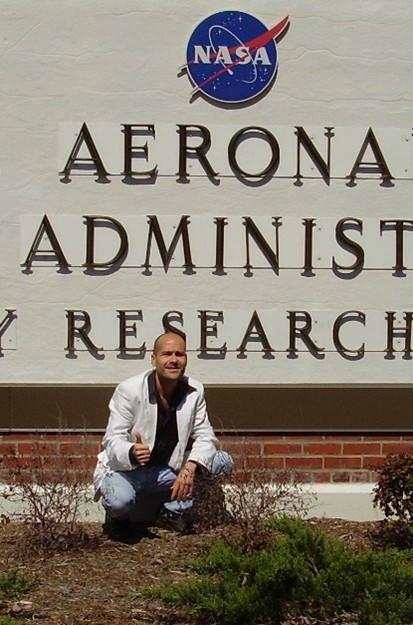
(Left) Prof. Redonnet working as Visiting Scientist in NASA Langley Research Center in 2009.
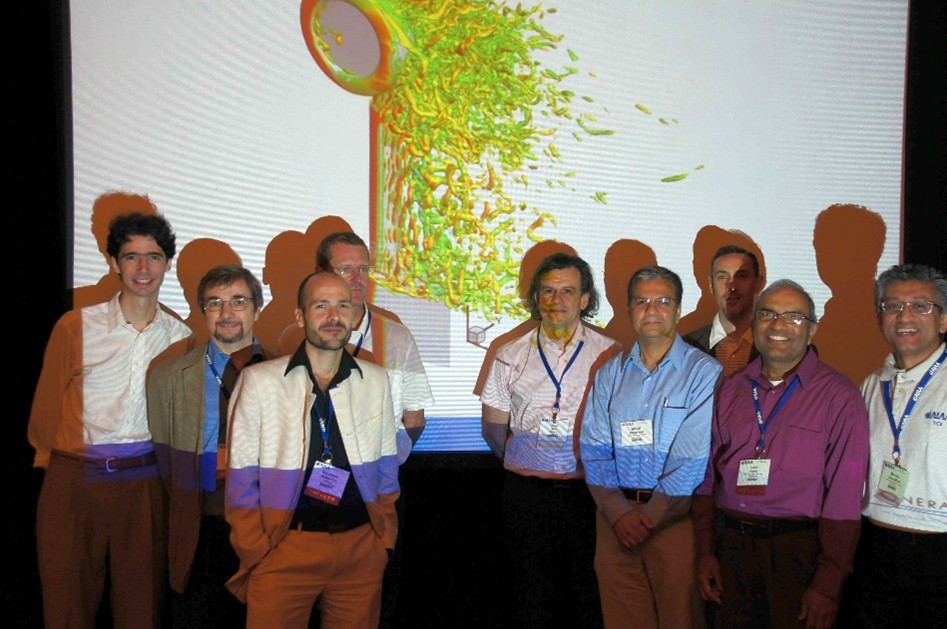
(Right) Prof. Redonnet (front row, first left) and the scientists involved in the NASA-ONERA cooperation on airframe noise in 2012.
Once back to ONERA, he took up more senior roles, as scientific advisor of ONERA’s Aeroacoustics Department, scientific board member of ONERA’s Fluid Mechanics & Energetic Branch, and chairman of the French national efforts devoted to the numerical simulation of aeronautic noise. Concurrently, he got his Professorship Accreditation (the French so-called “Habilitation”, equivalent to UK’s DSc), which constitutes the highest academic degree above PhD, requires proven records of internationally recognized scholarship, and is a prerequisite for teaching at a university in France and several other European countries.
As if this was not enough, Prof. Redonnet then pivoted once more, leaving temporarily his hard-core scientific research to join ONERA’s International Affairs Directorate, where he spent two years fostering international cooperation, such as overseeing all scientific partnerships between ONERA and North America (US, Canada), as well as contributing actively to a high-level governance concertation between the European Union (EU) and five EU-third countries (US, China, Russia, Canada, and Japan) for international cooperation in aviation research. When asked about this other 180° turn, he says, “Having now lived and worked in four continents out of five, I can say that I am truly a citizen of the world, i.e. I have this strong international spirit in me. Besides, I spent most of my career cooperating with scientists from everywhere, as aircraft noise mitigation not only is a non-competitive topic, but it is simply too big for one institution or one country alone to tackle. Therefore, switching to international affairs came very naturally to me, and it offered me the opportunity to make more impact to the aerospace research.” Among the most notable outcomes of his time in this position, NASA and ONERA established a collaboration focused on the reduction of sonic boom by supersonic aircraft (read more from the NASA press release in July 2018), which was followed by a renewed cooperation on the topic of aircraft icing.
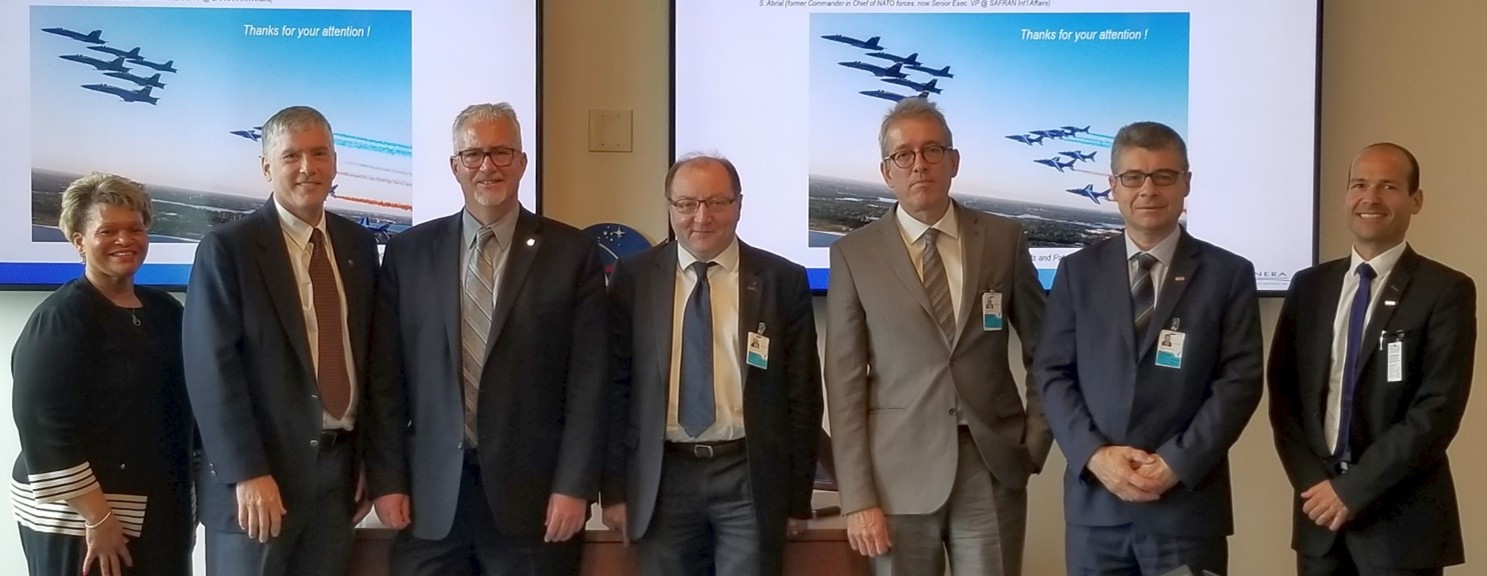
Prof. Redonnet (first right) fostering international collaboration back in 2018, here during a high-level concertation between the top management of NASA Langley Research Center and ONERA, which led to a NASA-ONERA collaboration focused on mitigating sonic boom by supersonic aircraft.
Interestingly, it is this international mindset that pushed him to then make an even bolder move, namely, to leave France and start again from scratch abroad – which led him to HKUST. “When I reflect on my life and career trajectory, I realize that I am not someone who aspires to a linear path. Rather, I am a risk-taker who is always hungry for new challenges, instead of wallowing in my comfort zone,” he muses. “My life in France was what a lot of people would aspire for, that is, a very comfortable life with a rewarding, highly secure job. But, somehow, I found it too comfortable,” he adds. “Too much comfort slowly kills you, in the long run. Curious minds like me need to be intellectually stimulated and personally challenged all the time. This is exactly what I found at HKUST,” he concludes.
Joining HKUST
Prof. Redonnet joined HKUST in January 2019 as Assistant Professor in the Department of Mechanical and Aerospace Engineering. As a faculty member, he conducts fundamental and applied research in aerodynamics and acoustics for the aerospace and energy sectors (aircraft/drones, wind turbines). He also develops and teaches courses at undergraduate and postgraduate levels, covering a range of subjects such as aircraft design, aircraft structures, aircraft performance and stability, aerospace engineering laboratories, and fluid mechanics. Since joining HKUST, Prof. Redonnet was elected a Fellow of the Royal Aeronautical Society (world’s only professional membership association dedicated to the aerospace and aviation industry), as well as a Senior Member of the American Institute of Aeronautics and Astronautics (world’s largest network for aerospace research).
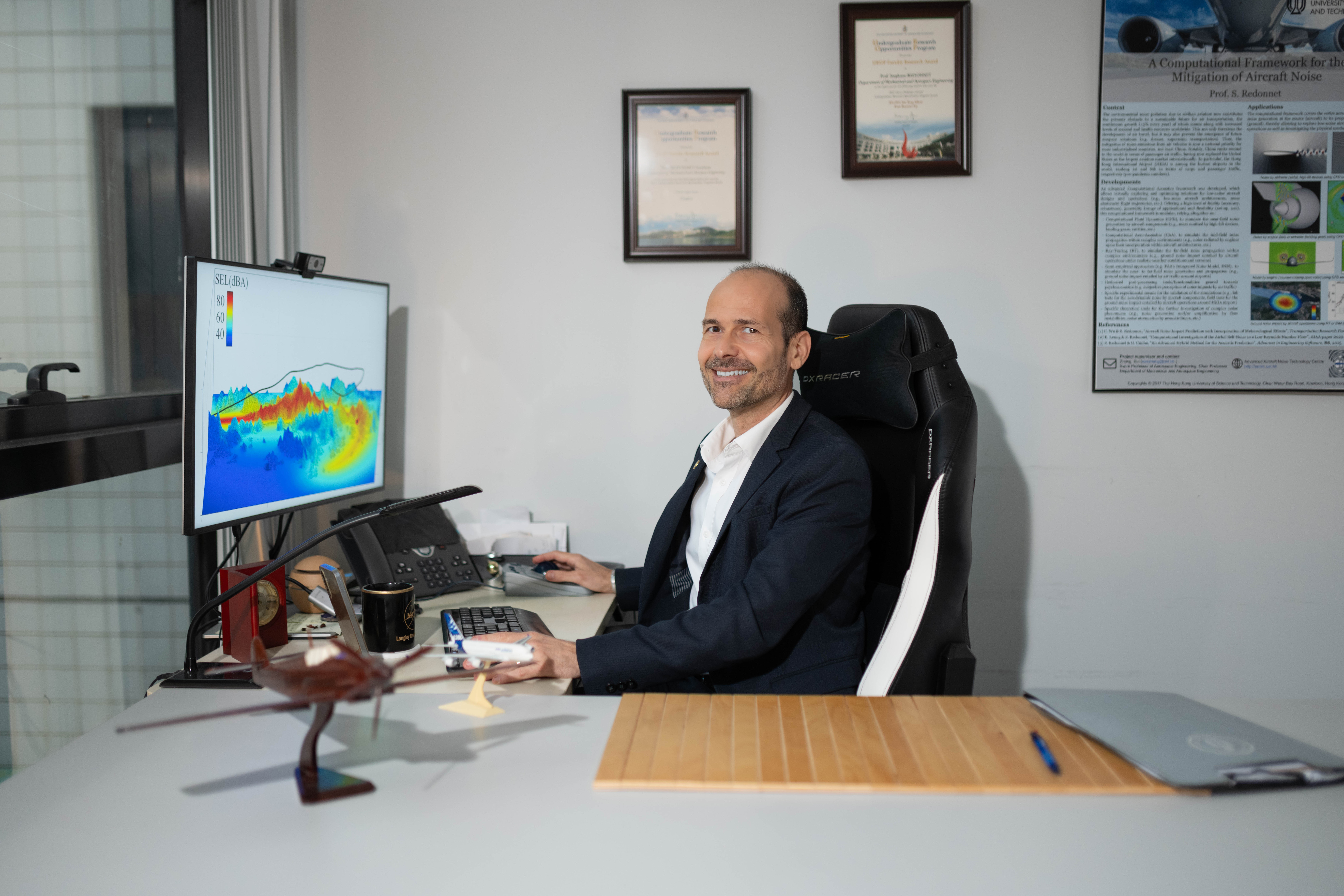
Prof. Redonnet at work in his office.
Doing research at HKUST
At HKUST, Prof. Redonnet broadened his research horizons. When starting from scratch in academia, it would have been easier for him to stay in his comfort zone by sticking solely to his background expertise (computational aeroacoustics). Instead, he opted for expanding his research perimeter, for instance by going beyond just aeroacoustics, by engaging as much in experimental activities as in computational ones, and by tapping into the wind energy sector besides the aerospace one, etc. A few years and a lot of sweat down the road, he is thrilled to now tackle very different research topics encompassing multiple disciplines (aerospace, energy, sport science) whilst deploying diverse investigation means, many of which he and his research group built from scratch (computational tools, experimental apparatuses). This was solely made possible by the academic freedom that HKUST offers to its faculty, which he is very grateful for.
Prof. Redonnet is still heavily focused on the topic of aircraft noise mitigation, which is critical for Hong Kong. Not only is Hong Kong the 6th densest city globally, but its international airport (HKIA) is among the 10 busiest airports in the world, with many of its residential areas being impacted by aeronautical noise. Worst, to cope with the foreseen growth of air traffic in Hong Kong, HKIA is currently expanding though the development of its three-runway system (3RS). Although it does not operate at full capacity yet, HKIA’s 3RS already raised concerns about the increased aeronautical noise impacting Hong Kong residents, some of which are alerting the community – up to reach out Prof. Redonnet directly. In that regard, Prof. Redonnet and his research group are investigating the noise impact of air traffic operations in Hong Kong, thanks to dedicated computational frameworks and experimental protocols they developed.
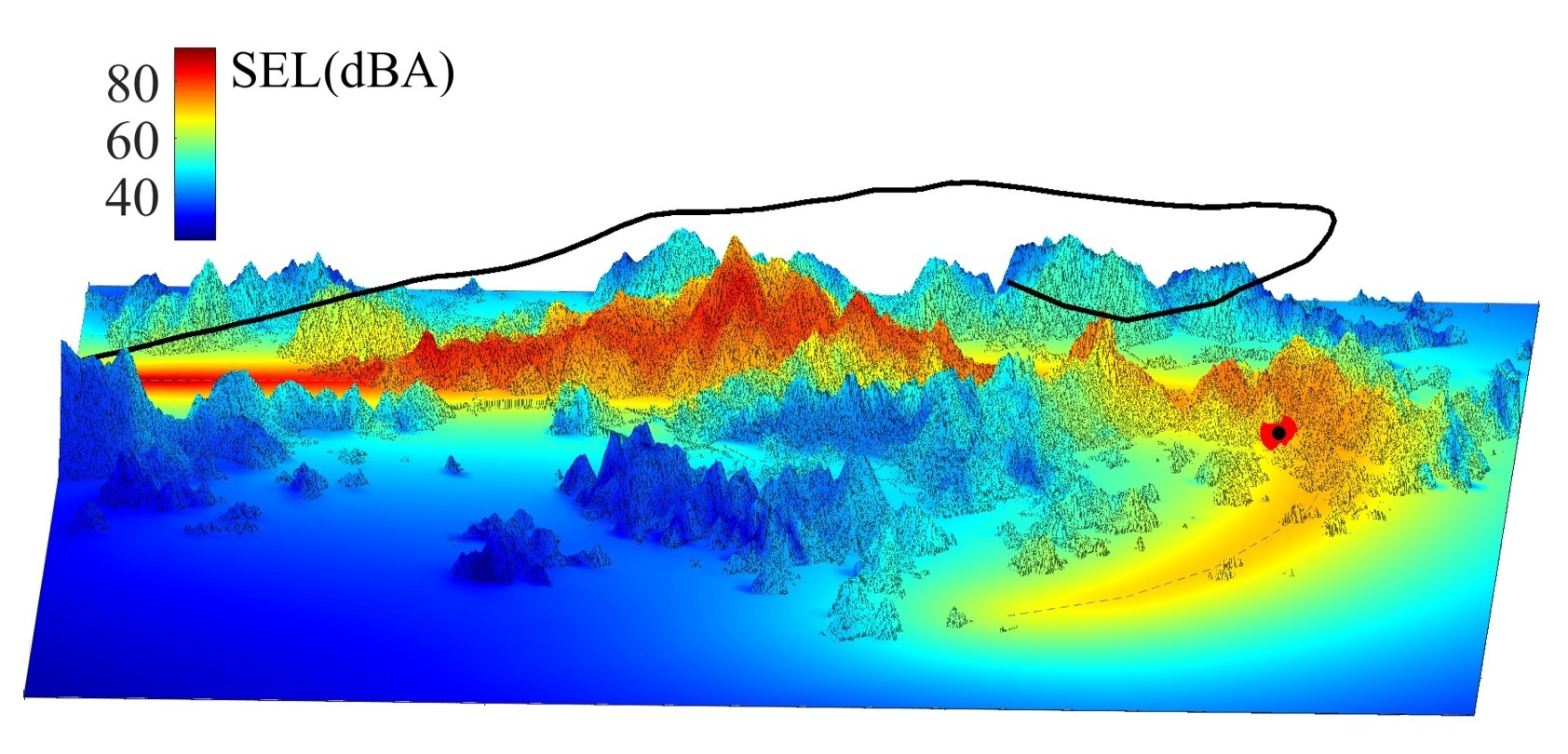
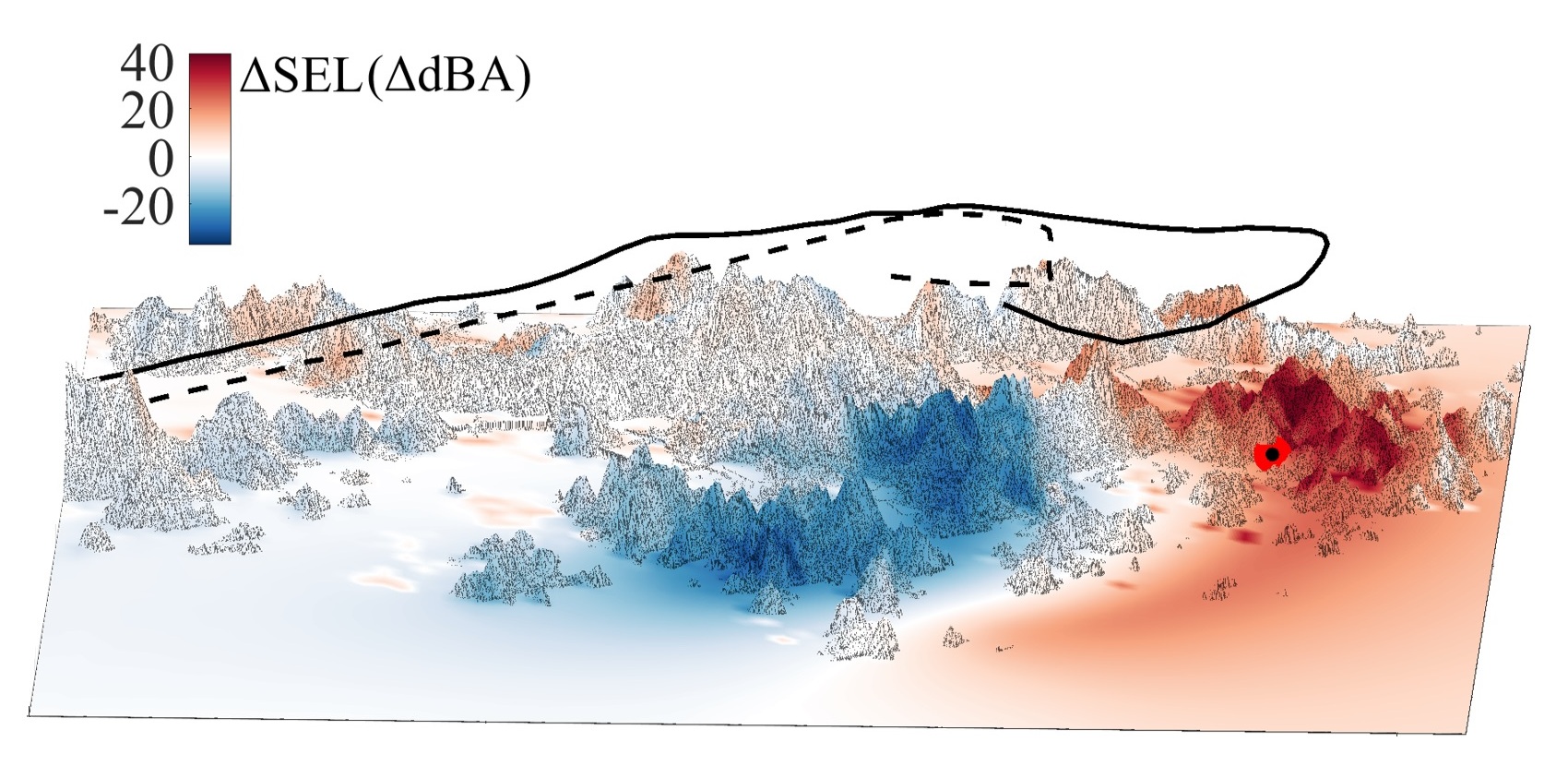
Numerical simulation of the noise impact (Sound Exposure Level, SEL) entailed by an A330 aircraft approaching HKIA under the 3RS configuration (left), and difference with the pre-3RS era (right). The corresponding flight trajectories are depicted in black solid and dashed lines, whereas the black/red dot indicates the investigated area (Sai Kung’s Wong Keng Tei district, whose resident complained about excessive aircraft noise). This computational action was conducted within the PhD framework of Dr. Wu Chunhui, then a PhD student and now a postdoctoral researcher in Prof. Redonnet’s group.
Prof. Redonnet also works extensively on the topic of wind energy, striving to both improve the aerodynamic efficiency and reduce the acoustic annoyance of wind turbine blades. In that regard, Prof. Redonnet and his research group are investigating diverse concepts of flow control, either passive or active, which they assess from both an aerodynamic and an acoustic standpoint whilst deploying – and sometimes developing – advanced investigation means, whether experimental or computational.
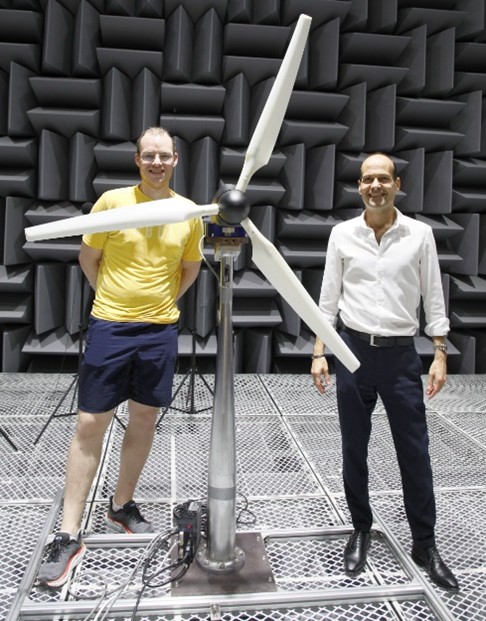
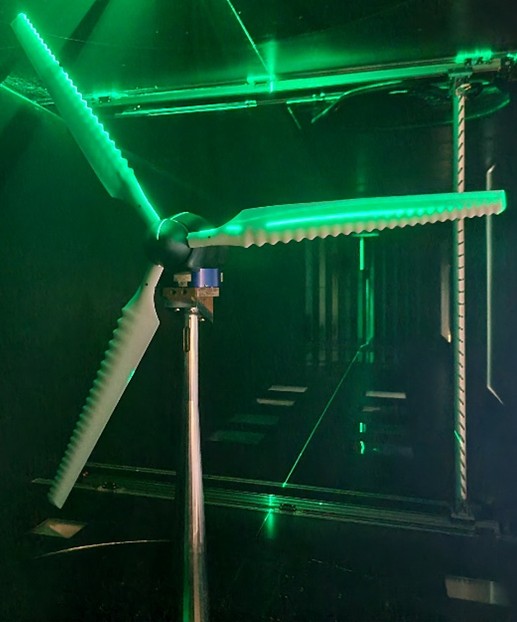
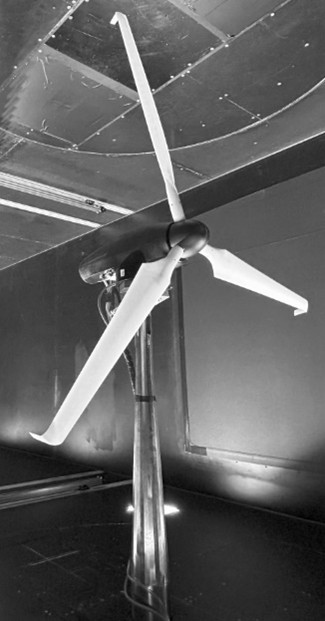
Experimental characterization of the aerodynamic and acoustic benefits offered by wind turbine blades equipped with passive flow concepts (leading-edge serrations [center picture] and blade-tip [right picture]). These experimental actions were performed within the PhD frameworks of Dr. Thomas Schmidt and Yeung Siu-Ting, both under the supervision of Prof. Redonnet. Left picture: Dr. T. Schmidt and Prof. Redonnet beside the small-scale, instrumented wind turbine rig they developed on purpose.
Prof. Redonnet’s eagerness to explore new research domains is stronger than ever, as is his collaborative spirit. Since joining HKUST, he has teamed up with multiple partners to tackle other research topics, many were new to him. Among other things, he works on the conceptual exploration and aero-structural optimization of transonic aircraft, collaborating with researchers from Beihang University (BUAA). He also focuses on sport engineering, studying for instance the hydrodynamics and biomechanics of dragon-boating, for which he has initiated cooperation with sport science experts from Ecole Centrale de Nantes in France. On a less technical front, he has teamed up with academics from HKUST’s Division of Public Policy and Division of Environment and Sustainability to develop a multi-faceted framework for assessing low-carbon technologies from a socio-economic-technical standpoint, which they are currently applying to both wind energy and green building technologies.
Teaching at HKUST
To Prof. Redonnet, teaching should not be “second only” to research, especially in a top-notch university as HKUST is. “The daunting expectations placed on us, faculty members, to also excel at other things (e.g. publications, grants) should not eclipse the fact that our prime duty is to teach, and to teach well,” he says. He personally takes this educational mission at heart.
When asked about his teaching and mentoring philosophy, Prof. Redonnet says, “I stick to my two core principles, which stem from my professional background, namely, a deep-rooted belief in scientific excellence, that is ‘science does not compromise’, and a strong sense of the reality principle, that is ‘engineering is where science meets reality’.”
“In practice, teaching gets down to an interesting problem of signal processing,” he adds. “It entails making sure that the receiver – here, each student – gets all of the signal that is sent by the emitter – here, the instructor. Sometimes, students seem to get it, but they actually don’t. Yet with experience, I can tell from their eyes when they do not fully understand. In which case, I explain again. The emitter must be receptive too.”
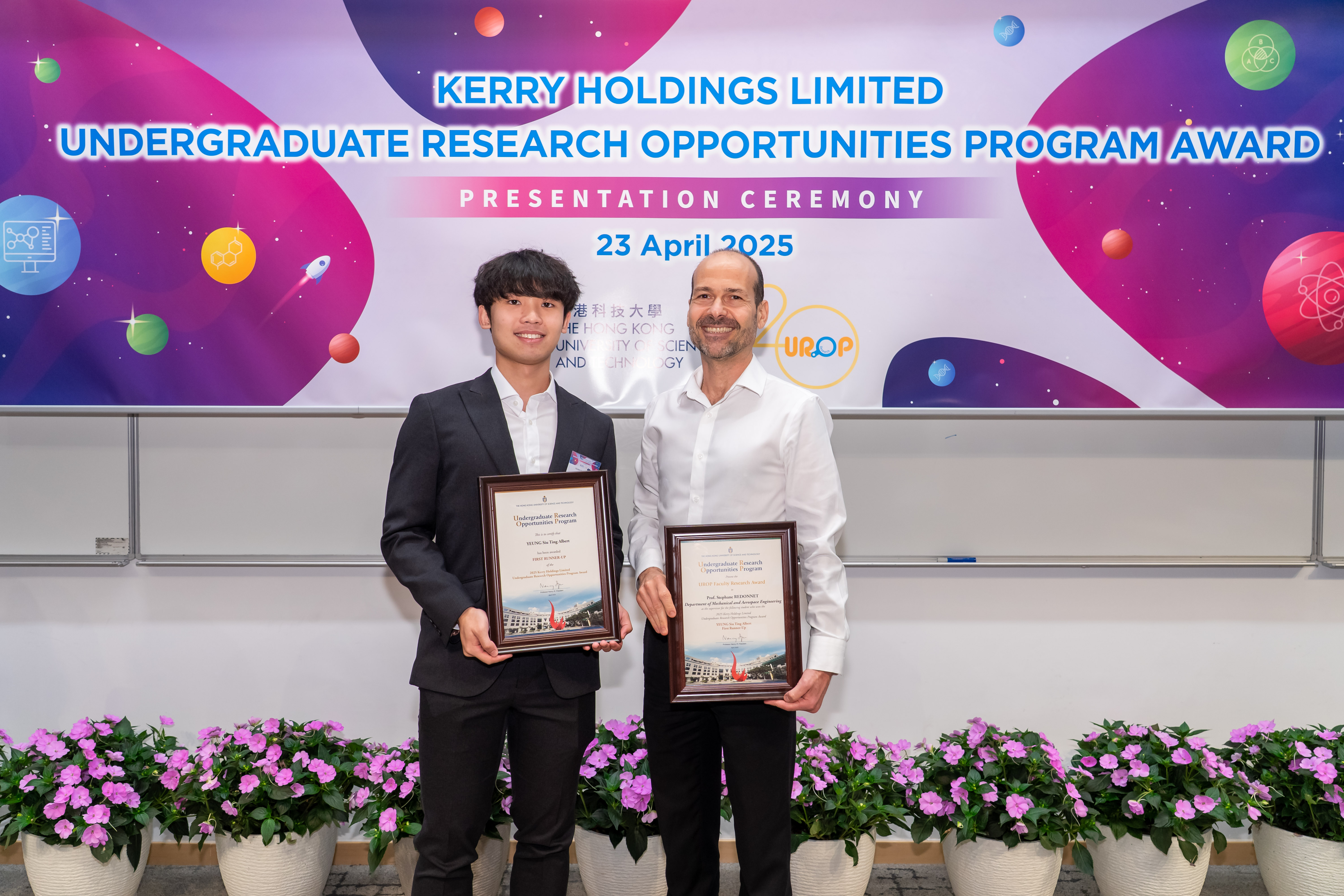
In 2023, Prof. Redonnet was bestowed the School of Engineering Teaching Excellence Appreciation Award, in recognition of his continuous excellence in undergraduate teaching. Besides, he received two UROP Faculty Research Awards from HKUST’s Undergraduate Research Opportunities Program (UROP) for mentoring undergraduate students in research projects. “To be honest, I was rather surprised yet deeply honored to receive these awards, as I see myself as just another teacher,” he said humbly. “I was equally surprised by the many positive comments that I got from the students over the years, especially considering that I am known to be rather strict when it comes to the coursework.”
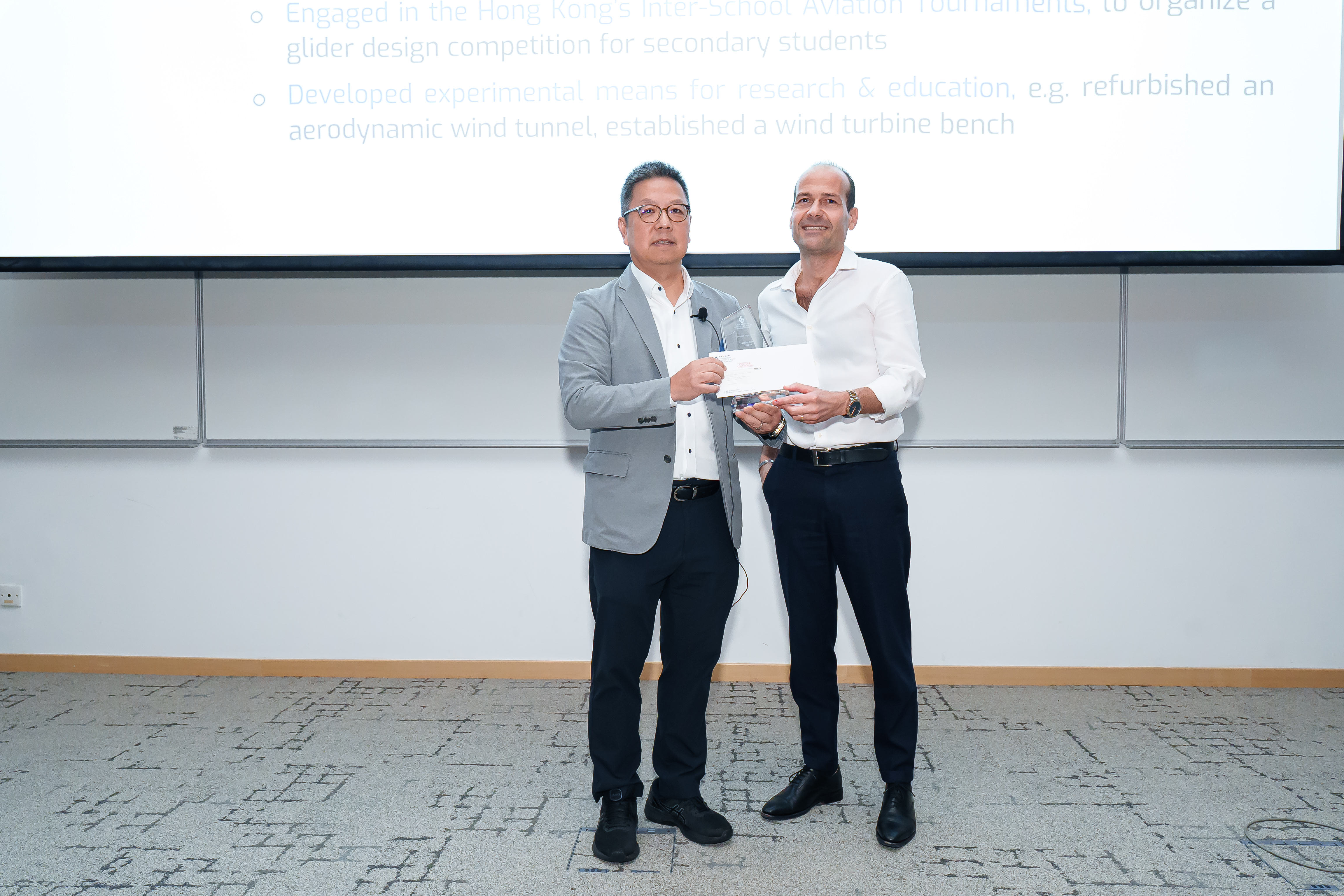
(Left) Prof. Redonnet received the School of Engineering Teaching Excellence Appreciation Award from the Dean of Engineering Prof. Hong K. Lo in 2023.
(Right) He also twice won a UROP Faculty Research Award in 2023 and 2025 (pictured with his then UROP – and now PhD – student Yeung Siu-Ting).
Advice for students
When asked for advice to students, he says, “Students should strive to muscle-up their brain as much as their body. As they enter in their last years of brain plasticity, they still have a chance to rightfully shape their neural pathways, which shall then give them an edge for the rest of their life. Thus, they should stay away from all distractions that weaken the brain power (especially digital ones), and instead, embrace the hardship of learning and mastering hard-core science, theories, and abstract concepts. This is what university is all about: to grow as an individual, beyond than just learning stuff.”
He also adds, “Over the years, I noticed first-hand that many students face a huge amount of stress because of the peer pressure, which social media amplify even more. I always advise them to resist such a peer pressure, whether it is by listening more to their inner self, or by keeping in mind that the people around do not actually pay so much attention to them, as everybody is busy enough living one’s life.”
He concludes, “Throughout the years, I realized the profundity of that ancient Greece’s aphorism quoted by Socrates ‘Know thyself’. Self-awareness is the key to staying true to oneself, and to be brave enough to follow one’s path, whatever the odds. This makes life more meaningful in the long run.”