
SENG News

HKUST in collaboration with the Working Group on Developing Low-altitude Economy under the HKSAR Government and the Greater Bay Area Low Altitude Economy Alliance, hosted the thematic forum titled “Future of Low Altitude Economy – An Inter-City Dialogue (Commercialization and Standardization)”. Pictured are Ms. Mable Chan (front row, fifth left), Secretary for Transport and Logistics of the HKSAR Government; Prof. Nancy Ip (first row, fourth right), President of HKUST; the Hon. Elizabeth Quat (first row, fo
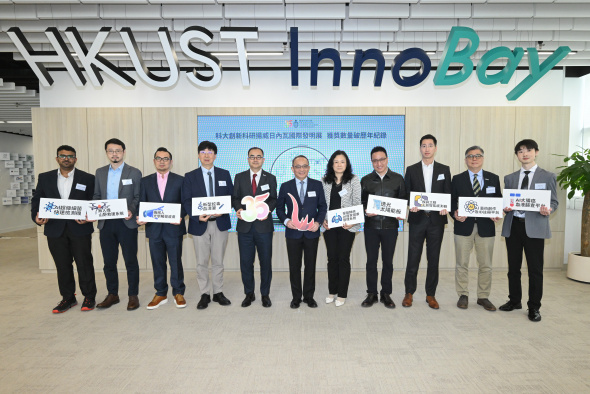
HKUST in collaboration with the Working Group on Developing Low-altitude Economy under the HKSAR Government and the Greater Bay Area Low Altitude Economy Alliance, hosted the thematic forum titled “Future of Low Altitude Economy – An Inter-City Dialogue (Commercialization and Standardization)”. Pictured are Ms. Mable Chan (front row, fifth left), Secretary for Transport and Logistics of the HKSAR Government; Prof. Nancy Ip (first row, fourth right), President of HKUST; the Hon. Elizabeth Quat (first row, fourth left), Legislative Council Member of the HKSAR and Founding President of the Greater Bay Area Low Altitude Economy Alliance, and Prof. Tim Cheng (first row, third right), Vice-President for Research and Development of HKUST, together with other distinguished guests. 
Gathering Global Leaders from Government, Industry, and Academia to Advance the Low-Altitude Economy Ecosystem
HKUST has received a generous donation from NetDragon to establish the “NetDragon Professorship in Medical Technology” at the School of Engineering, supporting the University in advancing research excellence. Witnessed by Prof. Nancy Ip, President of HKUST (first left), and Dr. Liu Dejian, Chairman and Executive Director of NetDragon (first right), the agreement was signed by Prof. Charles Ng, Vice-President for Institutional Advancement of HKUST (second left), and Dr. Simon Leung, Vice Chairman and Executi
HKUST has received a generous donation from NetDragon to establish the “NetDragon Professorship in Medical Technology” at the School of Engineering, supporting the University in advancing research excellence. Witnessed by Prof. Nancy Ip, President of HKUST (first left), and Dr. Liu Dejian, Chairman and Executive Director of NetDragon (first right), the agreement was signed by Prof. Charles Ng, Vice-President for Institutional Advancement of HKUST (second left), and Dr. Simon Leung, Vice Chairman and Executive Director of NetDragon (second right). 
Spearheading Medical-Engineering Integration and Translating Research into Real-World Impact
HKUST proposes the “Reasoning-Empowered Task-Oriented Communication” framework, equipping AI agents with autonomous logical reasoning capabilities to determine what information to share, when to communicate, and why information exchange is necessary. The research team includes Prof. Khaled B. Letaief (front row, center), Prof. Zhang Jun (front row, left), Prof. Song Shenghui (front row, right), Dr. Wang Zixin (back row, right), Xie Songjie (back row, first left) and Li Hongru (back row, second left).
HKUST proposes the “Reasoning-Empowered Task-Oriented Communication” framework, equipping AI agents with autonomous logical reasoning capabilities to determine what information to share, when to communicate, and why information exchange is necessary. The research team includes Prof. Khaled B. Letaief (front row, center), Prof. Zhang Jun (front row, left), Prof. Song Shenghui (front row, right), Dr. Wang Zixin (back row, right), Xie Songjie (back row, first left) and Li Hongru (back row, second left). 
Reasoning-Empowered Communication Framework Enables AI Agents to Collaborate at Scale
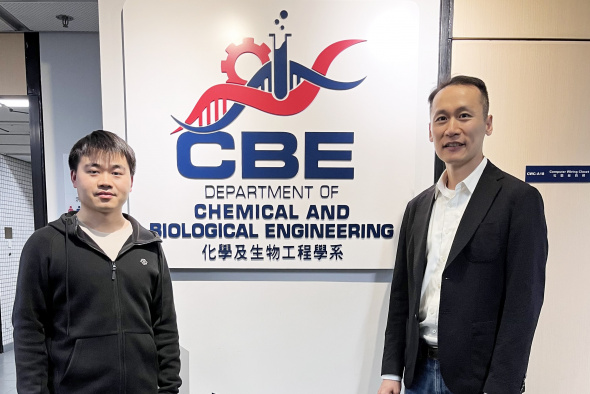
A research team led by Prof. Hsing I-Ming (center), Professor of the Department of Chemical and Biological Engineering at HKUST, has developed TEMPO, a thermodynamically programmed one-pot CRISPR platform for rapid, point-of-care nucleic acid testing. Mr. Wu Xiaolong (third right) and Ms. Li Yanan (first left), PhD students from the Department of Chemical and Biological Engineering, are the co-first authors of this study.
A research team led by Prof. Hsing I-Ming (center), Professor of the Department of Chemical and Biological Engineering at HKUST, has developed TEMPO, a thermodynamically programmed one-pot CRISPR platform for rapid, point-of-care nucleic acid testing. Mr. Wu Xiaolong (third right) and Ms. Li Yanan (first left), PhD students from the Department of Chemical and Biological Engineering, are the co-first authors of this study. 
Offering a More Convenient Solution for Future Infectious Disease Surveillance and Genetic Screening
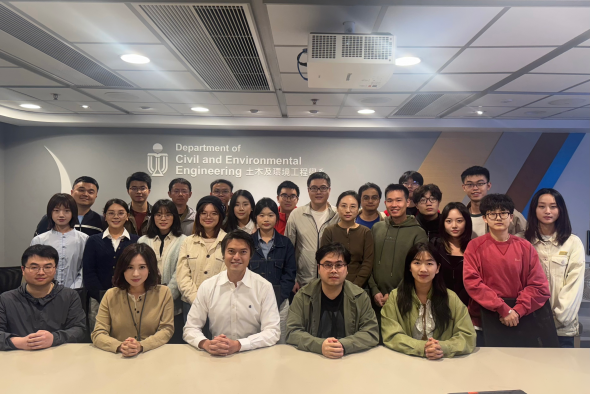
A large-scale international study led by Prof. Lu Mengqian, Professor of the Department of Civil and Environmental Engineering at HKUST, revealed that inter-city collaboration on emission reduction can improve overall sustainability performance by more than 10%.
A large-scale international study led by Prof. Lu Mengqian, Professor of the Department of Civil and Environmental Engineering at HKUST, revealed that inter-city collaboration on emission reduction can improve overall sustainability performance by more than 10%.  
Prof. Hong K. Lo (front left), Dean of HKUST School of Engineering, and Kevin O’Brien (front right), Chief Executive of Gammon Construction, sign the Memorandum of Understanding, witnessed by Ian Choy (back left), Executive Director (People & Culture) of Gammon Construction, and Prof. Jack Cheng (back right), Associate Head of the Department of Civil and Environmental Engineering of HKUST.
Prof. Hong K. Lo (front left), Dean of HKUST School of Engineering, and Kevin O’Brien (front right), Chief Executive of Gammon Construction, sign the Memorandum of Understanding, witnessed by Ian Choy (back left), Executive Director (People & Culture) of Gammon Construction, and Prof. Jack Cheng (back right), Associate Head of the Department of Civil and Environmental Engineering of HKUST. 
Spotlighting Entrepreneurial Success of SENG Alumni
The Young Scientist Award at IPS-25 recognizes Prof. Zhou Yuanyuan’s outstanding scientific achievements and emerging leadership in photochemical energy science and advanced photovoltaics. The honor reflects the impact of his research and its potential to accelerate the development of next-generation solar technologies for a sustainable energy future.
The Young Scientist Award at IPS-25 recognizes Prof. Zhou Yuanyuan’s outstanding scientific achievements and emerging leadership in photochemical energy science and advanced photovoltaics. The honor reflects the impact of his research and its potential to accelerate the development of next-generation solar technologies for a sustainable energy future. 
Recognizing Contributions to Photochemical Energy Science
In their iterative dialogue with AI, students begin with an initial draft, evaluate AI-generated suggestions, identify weaknesses, refine their ideas, and repeat the process several times.