Computer Science and Engineering

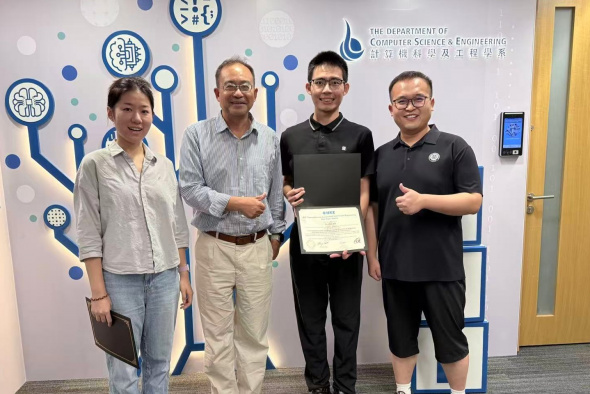
Prof. Qu Huamin (second left), PhD student and co-first author Shi Yuzhe (second right), and MPhil graduate Li Yanjia (first left), all from HKUST’s Department of Computer Science and Engineering, together with Prof. Ruan Lecheng (first right) of Peking University, corresponding author of the paper.
Prof. Qu Huamin (second left), PhD student and co-first author Shi Yuzhe (second right), and MPhil graduate Li Yanjia (first left), all from HKUST’s Department of Computer Science and Engineering, together with Prof. Ruan Lecheng (first right) of Peking University, corresponding author of the paper. 
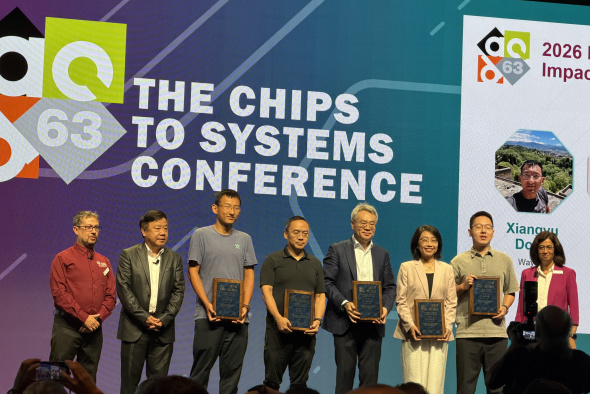
Prof. Xie Yuan (fourth left) and his former PhD students and collaborators received the prestigious 2026 ACM/IEEE A. Richard Newton Technical Impact Award in Electronic Design Automation at the 63rd Design Automation Conference, held in Long Beach, California, in July 2026.
Prof. Xie Yuan (fourth left) and his former PhD students and collaborators received the prestigious 2026 ACM/IEEE A. Richard Newton Technical Impact Award in Electronic Design Automation at the 63rd Design Automation Conference, held in Long Beach, California, in July 2026. 
Prof. Chen Hao (center), Assistant Professor of the Department of Computer Science and Engineering and the Department of Chemical and Biological Engineering and Director of the Collaborative Center for Medical and Engineering Innovation at HKUST, together with co-first authors Mr. HE Sunan (left) and Mr. NIE Yuxiang (right), both PhD students from the Department of Computer Science and Engineering, in collaboration with an international team, have developed the novel medical AI framework GSCo.
Prof. Chen Hao (center), Assistant Professor of the Department of Computer Science and Engineering and the Department of Chemical and Biological Engineering and Director of the Collaborative Center for Medical and Engineering Innovation at HKUST, together with co-first authors Mr. HE Sunan (left) and Mr. NIE Yuxiang (right), both PhD students from the Department of Computer Science and Engineering, in collaboration with an international team, have developed the novel medical AI framework GSCo. 
New GSCo Framework Significantly Improves Diagnostic Accuracy and Enables Low-Cost AI Model Development
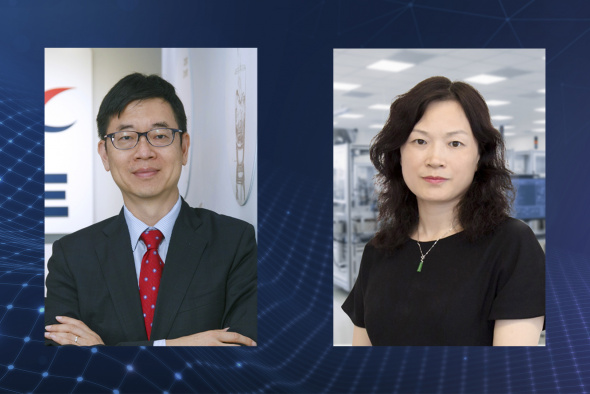
The projects led by Prof. Hsing I-Ming (left), Professor from the Department of Chemical and Biological Engineering; and Prof. Zhang Qian (right), Head of the Division of Integrative Systems and Design, and Chair Professor of the Department of Computer Science and Engineering, and Department of Electronic and Computer Engineering, have secured fundings from the RGC’s Strategic Topics Grant, marking the largest share among local universities.
The projects led by Prof. Hsing I-Ming (left), Professor from the Department of Chemical and Biological Engineering; and Prof. Zhang Qian (right), Head of the Division of Integrative Systems and Design, and Chair Professor of the Department of Computer Science and Engineering, and Department of Electronic and Computer Engineering, have secured fundings from the RGC’s Strategic Topics Grant, marking the largest share among local universities. 
The research team is led by Prof. Chen Hao (second left), Assistant Professor in the Department of Computer Science and Engineering (CSE), in collaboration with Prof. Terence Wong (second right), Associate Head and Associate Professor in the Department of Chemical and Biological Engineering, along with team members: CSE PhD students Ma Jiabo (first right) and Li Wenqiang (first left).
The research team is led by Prof. Chen Hao (second left), Assistant Professor in the Department of Computer Science and Engineering (CSE), in collaboration with Prof. Terence Wong (second right), Associate Head and Associate Professor in the Department of Chemical and Biological Engineering, along with team members: CSE PhD students Ma Jiabo (first right) and Li Wenqiang (first left). 
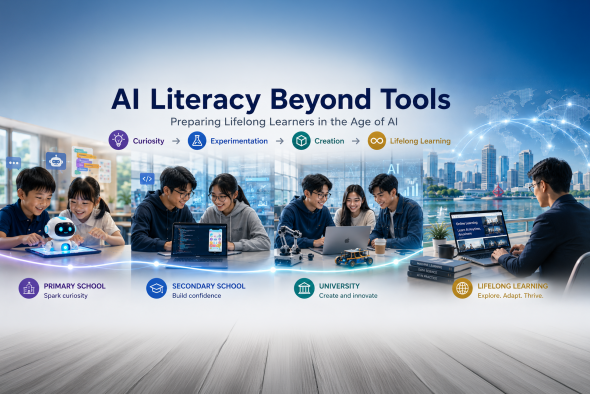
Building an AI literacy ecosystem: Students benefit most when learning opportunities are connected across different stages of education and supported by pathways for continued exploration.
Building an AI literacy ecosystem: Students benefit most when learning opportunities are connected across different stages of education and supported by pathways for continued exploration. 
Empowering I&T Rising Stars to Drive Social Change Through Innovation
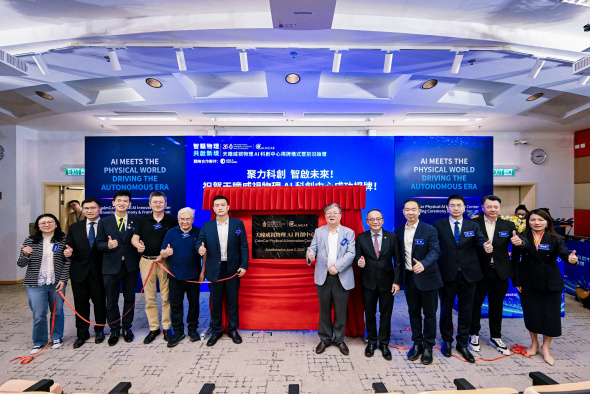
The HKUST-CalmCar Physical AI Innovation Center inauguration ceremony
The HKUST-CalmCar Physical AI Innovation Center inauguration ceremony 
Ushering in a New Era of Physical Intelligence
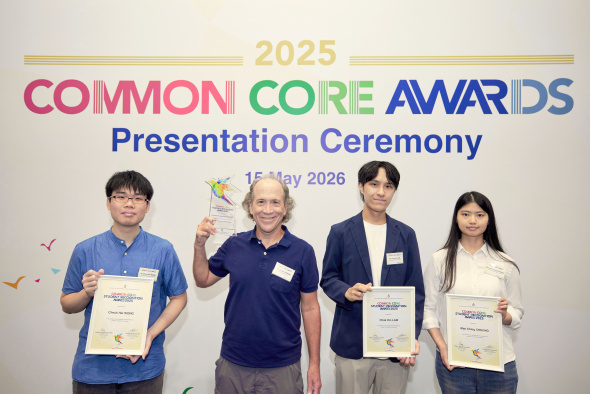
Prof. Andrew Horner (second left) is named the winner of the Common Core Teaching Excellence Award 2025 and Prof. Hnin Yin Yin Nyein (in absentia) is the Honorary Mention awardee. Cheung Man-Ching (first right), Lam Chak-Hin (second right) and Wong Cheuk-Hei (first left) are the Student Recognition Award winners.