HKUST Engineering Develops Advanced Sustainable Energy Storage Technology for High-Performance and Safer Solid-State Lithium Batteries
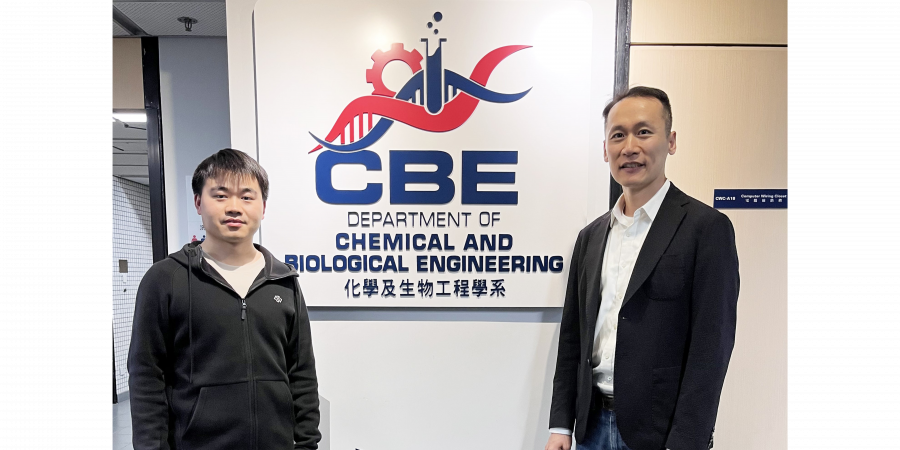
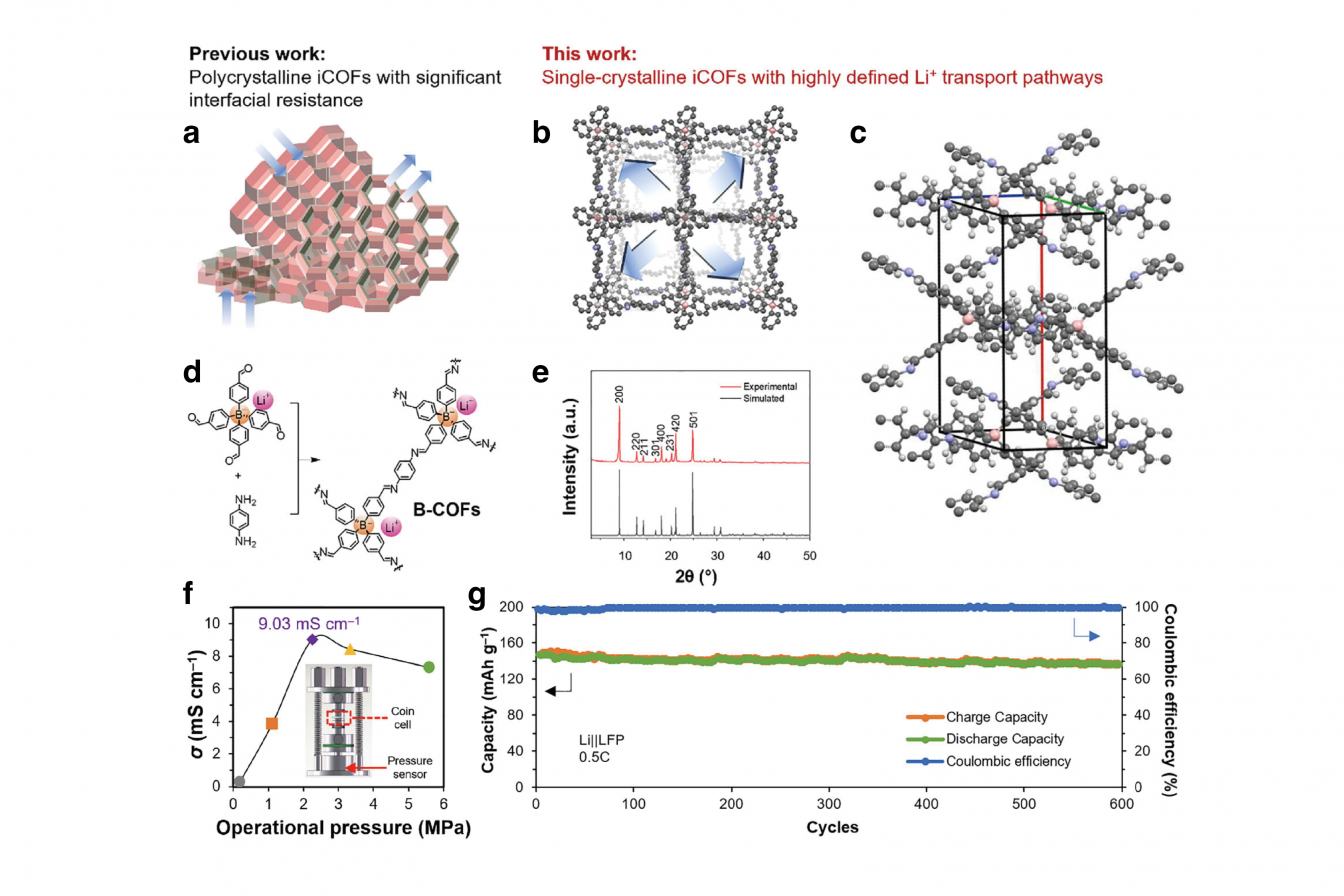
A research team led by Prof. Yoonseob KIM, Associate Professor of the Department of Chemical and Biological Engineering at The Hong Kong University of Science and Technology (HKUST) has reported a significant breakthrough in lithium metal battery (LMB) technology. The team has successfully synthesized a novel single-crystalline 3D borate covalent organic framework (B-COF), which demonstrates exceptional performance as a solid-state electrolyte, thereby enhancing the performance of solid-state lithium batteries. This advancement promises safer and higher energy density solutions for electric vehicles and large-scale energy storage. The research paper, titled “Single-Crystalline Borate Covalent Organic Frameworks for Solid-State Lithium Metal Batteries,” has been published in the prestigious journal Advanced Science.
Traditional LMBs face safety risks from lithium dendrite formation and rapid degradation due to unstable electrolyte interfaces. While Covalent Organic Frameworks (COFs) are promising electrolyte materials due to their porous structure and stability, most existing COFs are polycrystalline, which leads to significant interparticle resistance and limits their performance.
To address this issue, the research team utilized COF-303 as a template to construct a single-crystalline 3D B-COF with highly ordered ion channels. This single-crystalline nature significantly reduces intergrain resistance and facilitates uniform lithium deposition, effectively suppressing dendrite growth.
This work has achieved high performance in solid-state lithium batteries in the following areas:
- Exceptional Ion Conductivity and Selectivity: Achieved a remarkable ionic conductivity of 8.1 mS cm–1 at room temperature, with a Li+ transference number of 0.98 in a quasi-solid-state, ensuring rapid and selective ion movement.
- Superior Interface Stability and Safety: Supported stable lithium deposition and stripping for over 2,000 hours in symmetric cells, effectively suppressing hazardous dendrite formation.
- High Efficiency and Long-Term Durability: Full cells utilizing LiFePO4 cathodes demonstrated robust cycling with 91.8% capacity retention and 99.98% Coulombic efficiency over 600 cycles at 0.5C, delivering an initial capacity of 147 mAh g–1.
“Our research highlights the promising viability of single-crystalline 3D B-COFs as quasi-solid-state electrolytes. By eliminating the structural disorders found in polycrystalline materials, we have taken a significant step toward realizing high-performance, safe energy storage solutions that are crucial for a greener future,” said Prof. Yoonseob Kim, co-corresponding author of the study.
This research was conducted collaboratively by teams led by Prof. Yoonseob Kim at HKUST and Prof. WANG Yanming from the Global Institute of Future Technology at Shanghai Jiao Tong University (SJTU). The co-first authors of the study include Dr. TIAN Ye, a PhD graduate; Dr. CHENG Xiaolong, a postdoctoral fellow from the Department of Chemical and Biological Engineering at HKUST, and Mr. CHENG Lei, a PhD candidate at SJTU.
About The Hong Kong University of Science and Technology
The Hong Kong University of Science and Technology (HKUST) (https://hkust.edu.hk/) is a world-class university known for its innovative education, research excellence, and impactful knowledge transfer. With a holistic and interdisciplinary pedagogy approach, HKUST was ranked 6th in the QS Asia University Rankings 2026, 3rd in the Times Higher Education’s Young University Rankings 2024, and 19th globally and 1st in Hong Kong in the Times Higher Education’s Impact Rankings 2025. Eleven HKUST subjects were ranked among the world’s top 50 in the QS World University Rankings by Subject 2026. In addition, in the Times Higher Education World University Rankings by Subject 2026, HKUST’s Computer Science discipline which encompasses areas such as artificial intelligence and machine learning, has been ranked No. 1 in Hong Kong for ten consecutive years. Our graduates are highly competitive, consistently ranking among the world’s top 30 most sought-after employees. In terms of research and entrepreneurship, over 80% of our work was rated “internationally excellent” or “world leading” in the Research Assessment Exercise 2020 of the Hong Kong’s University Grants Committee. As of January 2026, HKUST members have founded over 1,900 active start-ups, including 10 Unicorns and 21 exits (IPO or M&A).
(This news was originally published by the HKUST Global Engagement and Communications Office here.)