
How Prof. SHI Ling Is Safeguarding the Cyber-Physical Future

As AI expands its role in the devices and infrastructure that underpin and enhance our lives, Prof. SHI Ling’s leading contributions to developing and securing the digital systems of this rapidly emerging world are opening innovative ways forward for industry, society, and next-generation talents.
Where is the world headed with the advent of artificial intelligence (AI) in everything we use and do? Be it unmanned aerial vehicles (UAVs) and the low-altitude economy, autonomous AI agents in computer systems, or AI-enabled medical devices within us, changes are rapidly taking place. For Prof. Shi Ling, Department of Electronic and Computer Engineering and Department of Chemical and Biological Engineering, and new Director of HKUST’s Cheng Kar-Shun Robotics Institute, it is thus a momentous time to be engaged in frontier advancement and safety of this transformative cyber-physical realm.
Balancing innovation and protection
Prof. Shi, a 2002 School of Engineering (SENG) alumnus, has played a significant role globally in optimizing the performance of networked control systems, sensor scheduling, and event-based state estimation in cyber-physical systems since earning his PhD at the California Institute of Technology (Caltech) and returning to HKUST as a faculty member in 2008. He has driven forward multi-agent robotic systems for UAVs and unmanned ground vehicles (UGVs). At the same time, the reflective pace-setter, who places great emphasis on responsibility, has become renowned for his foundational work pinpointing novel security risks of cyber-physical systems. Such concerns go beyond the traditional IT security issues of privacy and data loss to the injection of false data and system disruptions that could result in physical harm to people or failure of key infrastructure, among others.
Working in this critical area for over a decade, Prof. Shi and his researchers have been particularly well cited for characterizing worse-case scenarios facing such systems generally. “If you want to come up with the best defense, you have to study from the enemy’s point of view first – the optimal attack,” he said. “Once you know that, people can then build up protection mechanisms to enhance system safety, whether for UAVs, autonomous driving, or other areas.”
From village life to the digital world
Overall, Prof. Shi has published 180 papers in top journals and garnered 15,000 citations, with his focus on this future-shaping digital landscape initially motivated by a passion for mathematics, physics, and making a difference in the real world. “Pure math is interesting and beautiful, but I always wanted to link it with some practical use,” he said. Starting out in a remote village in Anhui Province, Prof. Shi’s family moved to the city of Chizhou when he was six. Despite a kindergarten being unavailable in his early rural life and first using a computer at the age of 18, he thrived throughout his school years and without pressure from his family. “We may not be able to provide you with what you want, but at least we can let you pursue your dream and fully support you,” he recalled his parents saying.
After studying hard for the Chinese Mainland’s dauntingly difficult gaokao university entrance examination – his ex-soldier father patrolling outside their house to keep the neighborhood children quiet – the young high-achiever became one of just over 50 Anhui students to gain a place at Tsinghua University in 1998. However, that same year, recruitment of Chinese Mainland undergraduates began for universities in the new Hong Kong Special Administrative Region, following the city’s return to Chinese sovereignty in 1997. Prof. Shi found himself among a select group, originally headed for Tsinghua, Peking, or Fudan universities, to be invited to join HKUST instead. Impressed by HKUST’s international nature at a time when the Chinese Mainland was still opening up to the world, he decided to make the move, joining the Electrical and Electronic Engineering (now Electronic and Computer Engineering) Department in spring semester 1999 as a member of the first group of 19 Mainland undergraduates at the University.
Finding support and overcoming challenges
In his BEng at HKUST, Prof. Shi focused on system control, where he could satisfy his love of theorems and proofs as well as work in an applied area, “the perfect mix for me”. He received powerful encouragement from faculty mentors Prof. LI Zexiang and now Emeritus Professor QIU Li, both giants in their respective fields of automation and system control. But student days did not always prove straightforward. In Prof. Shi’s first semester at HKUST, he struggled with the transition from high school textbook learning to university studies. After a wake-up call of a below-mean score in a mid-term, he recognized the unfeasibility of trying to go solo in tackling the mountain of work required. “So, I started to reflect on how to do better, to learn from my mistakes,” he explained. “Eventually I found a way. I realized I couldn’t do things just on my own. I needed to seek help from other people.” This new awareness led Prof. Shi to reach out to his fellow students to work together, a change in outlook that not only put him back on the fast track but marked a milestone in his personal development. The insight is also now regularly passed on to his students. “I say: ‘Form a study group, help each other. The time you spend assisting others is also a rewarding experience that will help you in the end.’”
Doctoral studies in the United States got off to a similarly testing start. Heading first to the University of California, Berkeley, Prof. Shi found the quantum control area assigned was not the right fit for him. After a year of struggle, he transferred to Caltech, gaining a place in exactly the right group to foster his interests in control and dynamical systems under the supportive supervision of Prof. Richard M. MURRAY. Hours were spent in brain-storming, novel idea generation, mistake-sharing, progress feedback, and opinion-seeking with peers, creating a deeply happy and lasting impression that Prof. Shi in turn has sought to foster in his own research group.
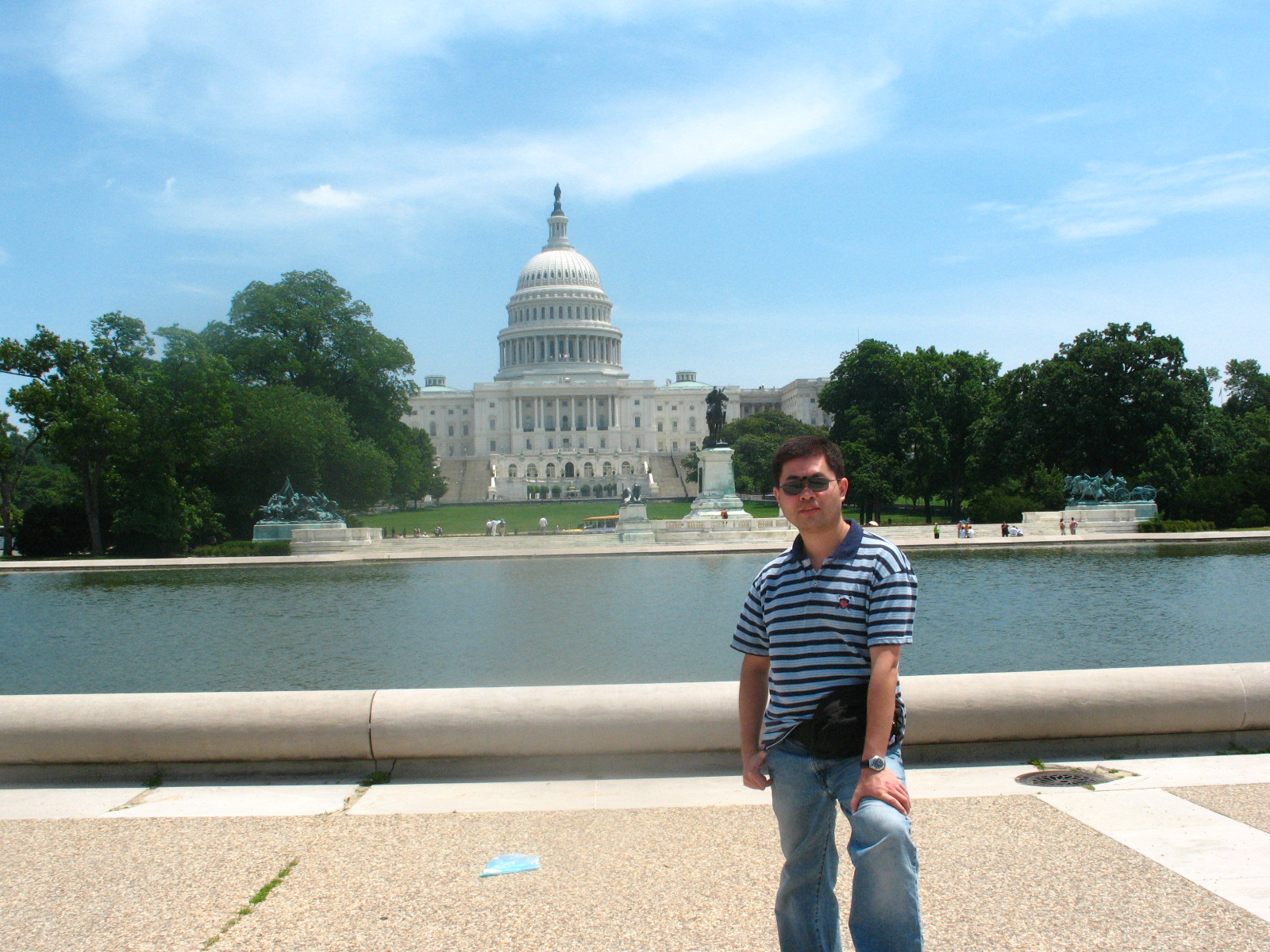
Doctoral studies at Caltech brought many lasting insights and encounters, including a trip to Washington DC during a visit to Johns Hopkins University in 2008.
Setting the pace globally at HKUST
Indeed, since returning to HKUST, Prof. Shi has been steadily moving up internally and externally. In 2020, he became a full Professor, while his outstanding work in cyber-physical systems security led to membership of the World Economic Forum’s Young Scientists Class 2020. He was elected an IEEE Fellow in 2023, a member of the Hong Kong Young Academy of Sciences (YASHK) in 2024, and the same year was nationally honored for his contributions in control and systems science with the Chen Han-Fu Award. He has further spurred on the field through numerous editorial roles in leading publications, technical committee participation, and international conference organization.
Alongside, Prof. Shi is now busy implementing a host of plans to drive forward the University’s Cheng Kar-Shun Robotics Institute. The Institute embraces over 30 HKUST faculty members, whose expertise covers a comprehensive range of pivotal fields, including soft robotics, humanoid robots, flexible electronics, and autonomous driving, and will move to the landmark Martin Ka Shing Lee Innovation Building this summer. In its new home, the Institute will occupy one and a half floors, providing space for diverse exhibitions and robot demonstration zones. Other new activities include a monthly seminar series for robotics researchers to share their latest work with University-wide colleagues and the public; a proposal for HKUST’s first Master of Engineering Program in Robotics and Embodied AI; an industrial summit this June where top robotics company executives provide their insights on industry trends to leading academics, followed by an academic summit in December; and the launch of a membership-based industry alliance to foster wide-ranging connectivity and internships. “Our ambition is a state-of-the-art Robotics Institute that is among the best on the planet!” he said.
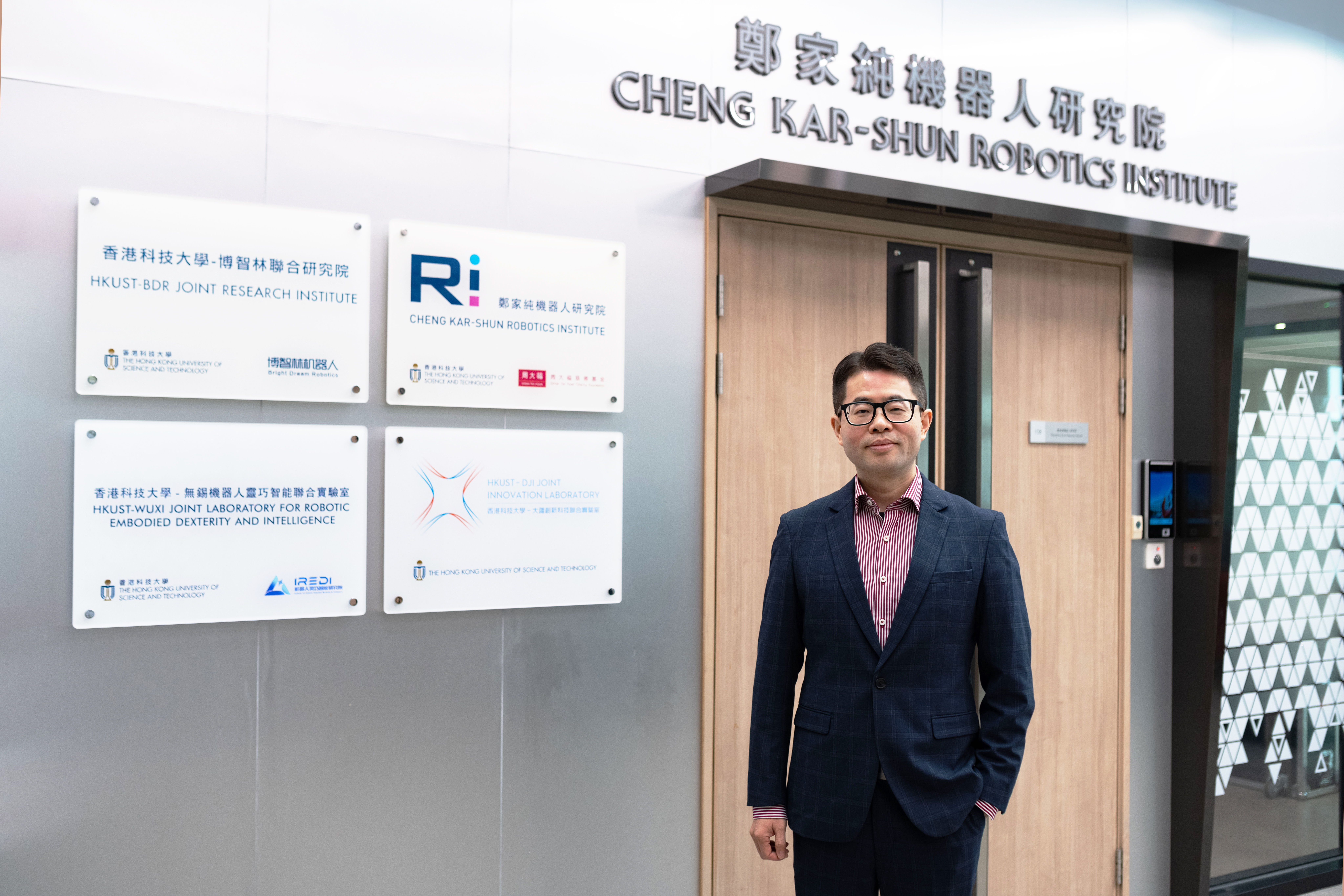
As the new Director of HKUST’s Robotics Institute, Prof. Shi is working with over 30 faculty members spanning diverse areas of the dynamic field and drawing up a creative agenda to enhance the Institute’s global impact.
Integrating STEAM and entrepreneurship
Students have flourished too through Prof. Shi’s passion and skills as an educator. He received an Engineering Teaching Excellence Appreciation Award as early as 2011-12 and was lauded again in 2023-24. He has supervised 26 PhD students and 21 MPhil students. Among his doctoral graduates, 11 are now faculty members at Mainland universities and six awarded NSFC Excellent Young Scientists Fund (Overseas) research funding. Beyond the curriculum, a further win-win learning initiative is his highly successful combination of inspirational Science, Technology, Engineering, Arts, and Mathematics (STEAM) outreach in local schools and his own students’ entrepreneurship. Working with over 70 primary and secondary schools to date, Prof. Shi and his team have introduced the basics of flight and autonomous vehicles in a fun way to more than 6,000 young learners using innovative, safe, and modifiable model plane kits. They include “probably the world’s lightest aircraft that actually flies”, at only 8.5 grams inclusive of propeller, body, battery, and chips, he noted. Start-up Universpirit Innovation, a venture driven by his researchers and set up in 2022, designs and arranges the production of the inexpensive models in Shenzhen, with participants buying the plane kits to use in STEAM aerospace education scenarios from entry-level to advanced innovation. “My graduates have the motivation to run the company and are the heroes, I provide guidance and the roadmap, and this creates a very nice ecosystem,” Prof. Shi said. At the same time, talents for the future low-altitude economy are fostered as “school students just love to do this”, he added.
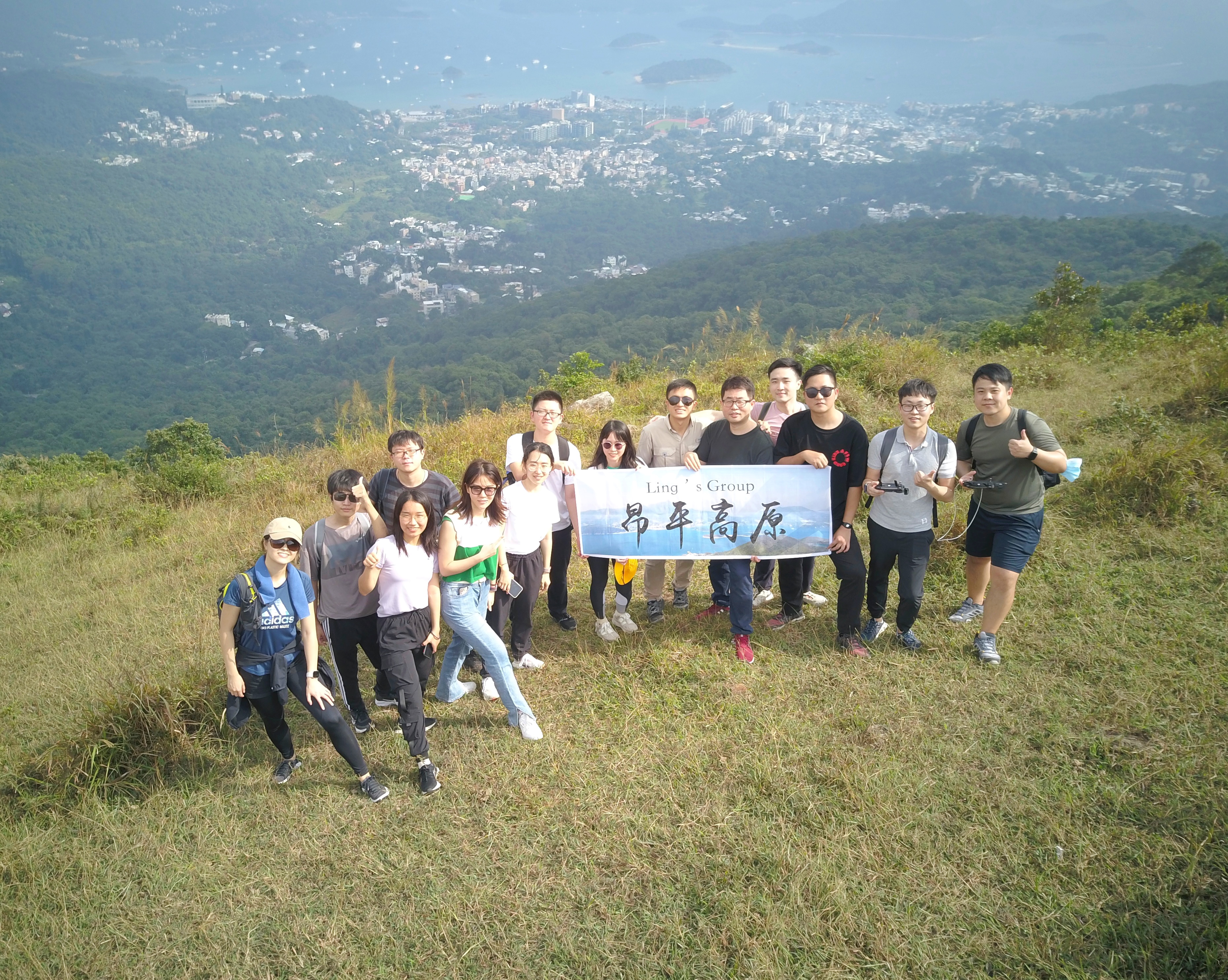
Hiking with his students at HKUST.
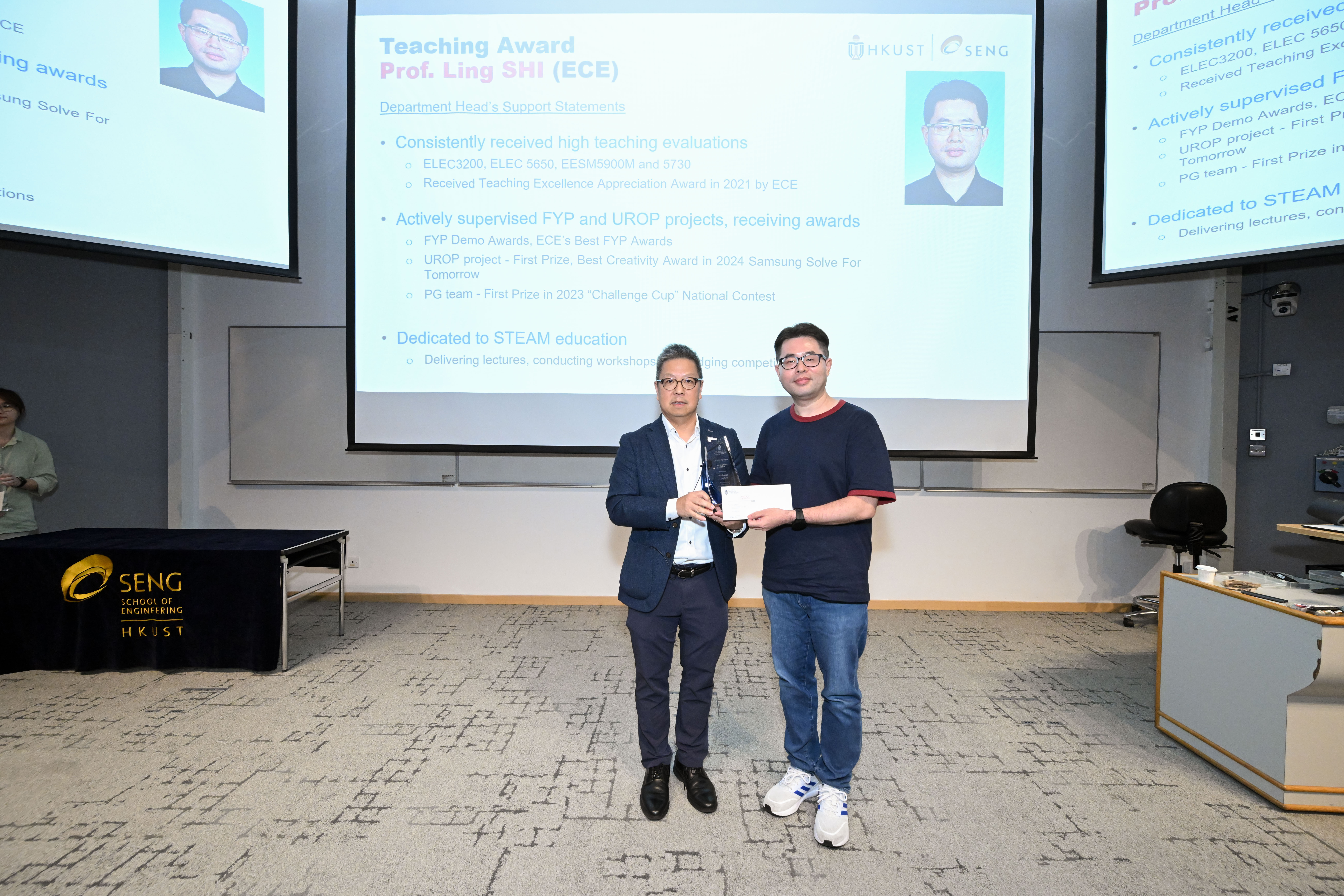
Receiving the Engineering Teaching Excellence Appreciation Award 2023-24 for his passion and skills as an educator from HKUST Dean of Engineering.
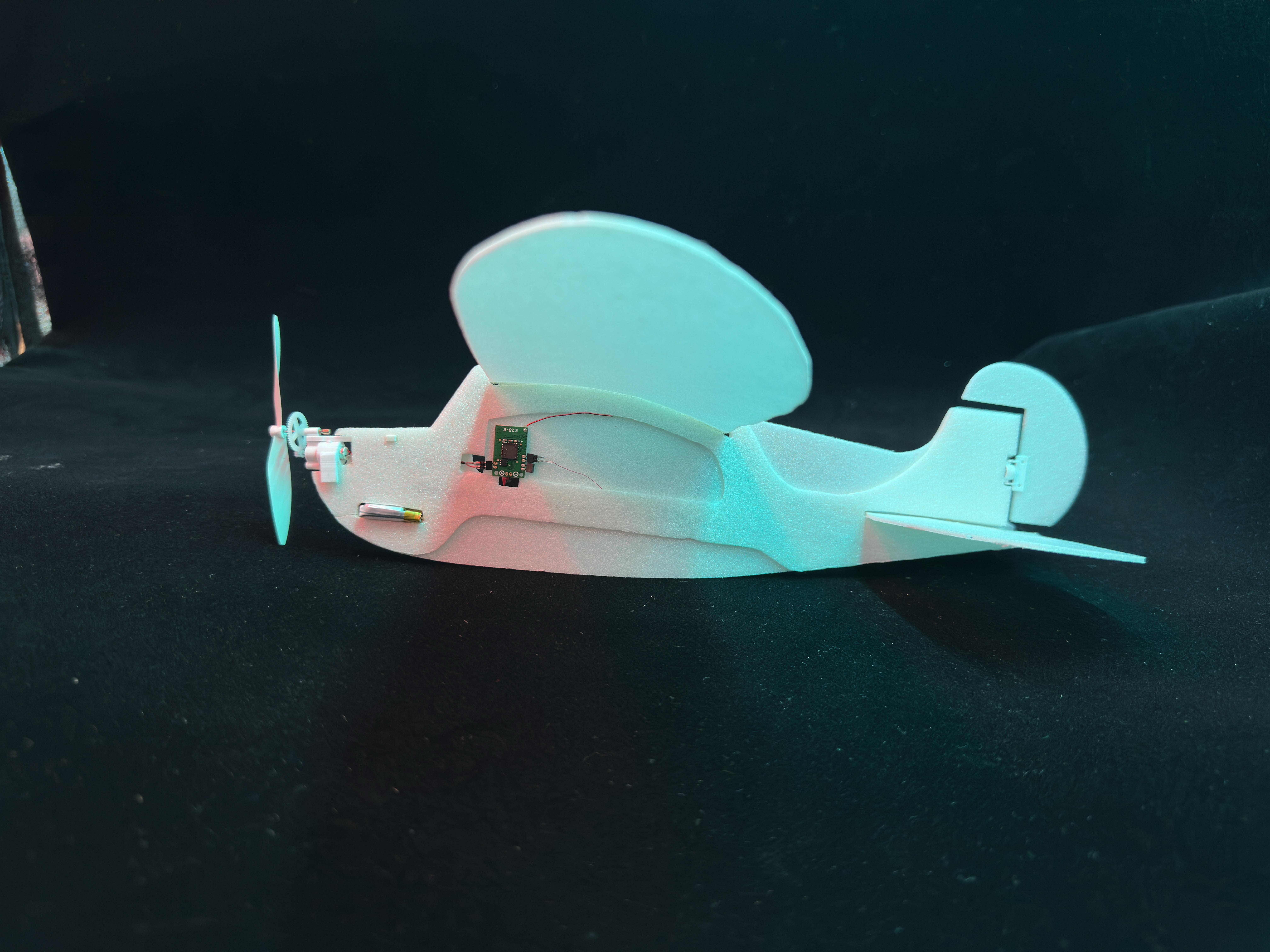
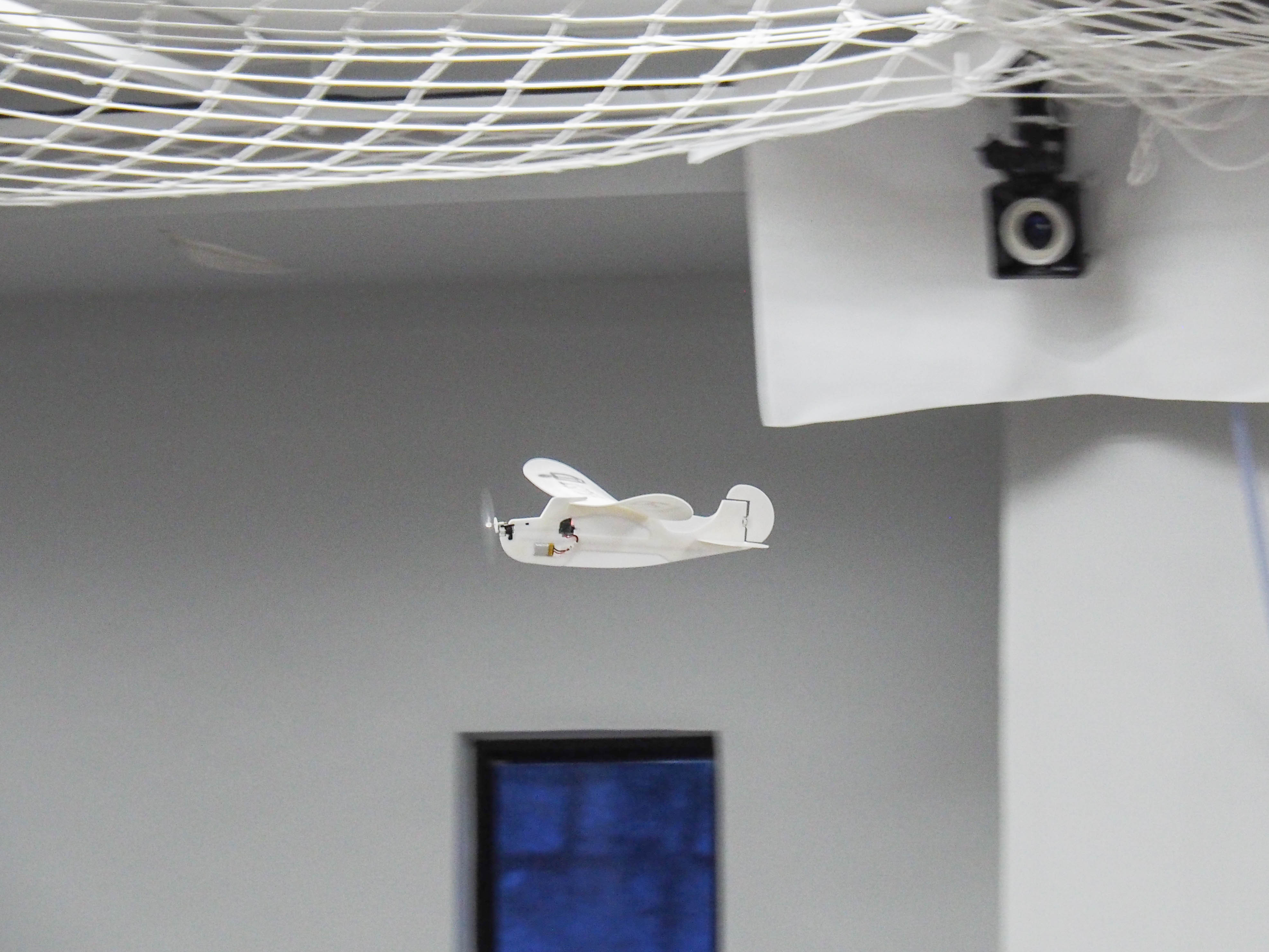
Aiding STEAM learning for the low-altitude economy: (left) the 8.5-gram indoor model plane designed by members of Prof. Shi's research team-turned-start-up entrepreneurs, which is equipped with a chip and capable of flight (right).
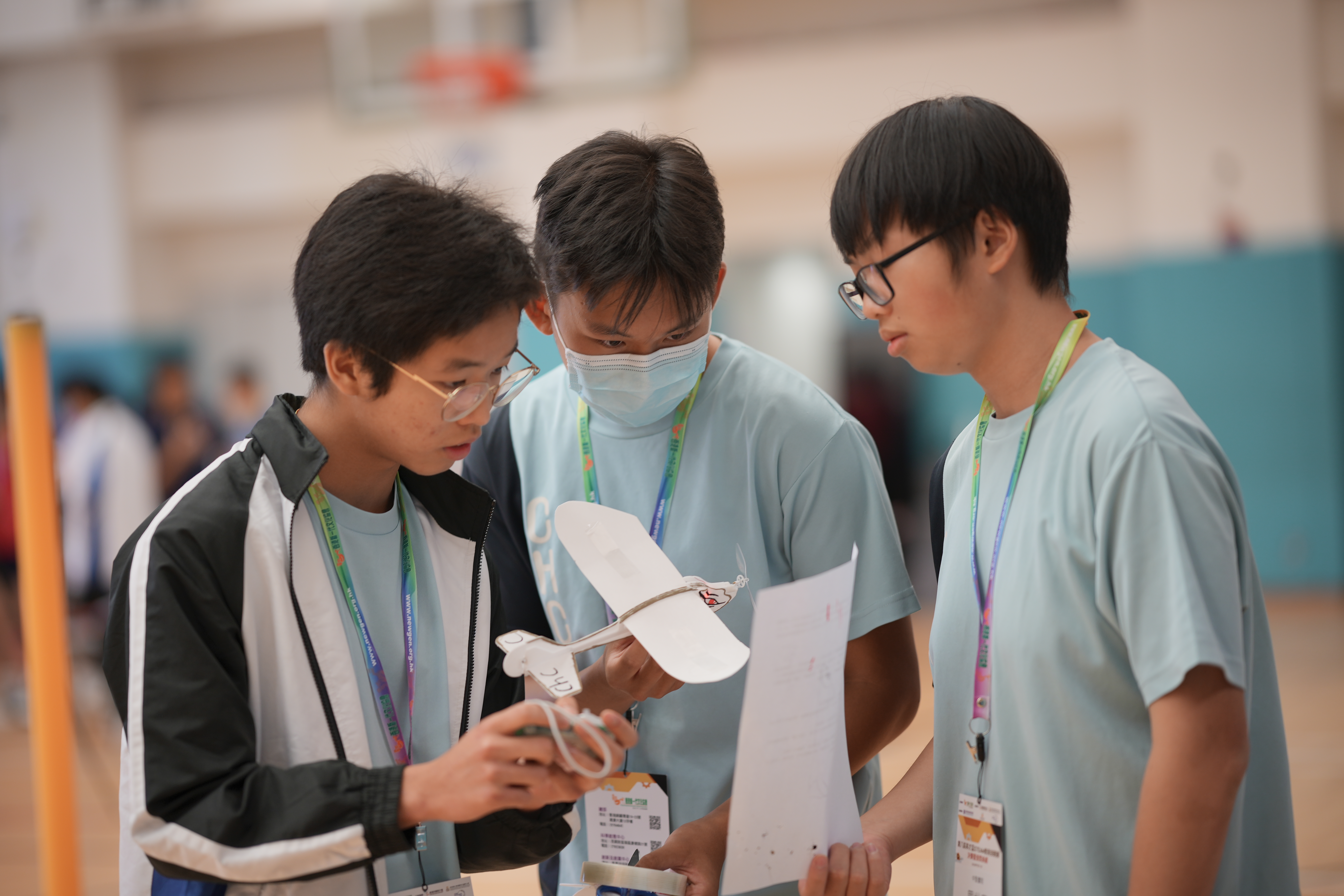
School students use the 8.5-gram model plane to gain hands-on experience of aerospace issues and solutions.
Shape of life ahead
With a wife from Hong Kong and an eight-year-old daughter, all these commitments add up to an immensely busy schedule. Even traveling in the holidays is often to other universities to forge and solidify networks for collaborations. However, it is a life that Prof. Shi relishes. “As an alumnus, I have a deep feeling about HKUST and wish to make contributions because I personally have benefited a lot and want to see it become better and better. I have also built up my entire career here,” he explained. As to the future and the cyber-physical world he is seeking to safely usher in, he is generally optimistic. Among his career goals, he would like to work closely with industry to ensure all autonomous vehicles and UAVs have a security layer that enables them to detect bad data and have a sense of when they should stop and when they should check intelligently and wisely. “In terms of the world, I hope people will get to enjoy more of the benefits provided by AI and robotics so we are all freed from tedious types of work and can pursue our own dreams.”