SENG News

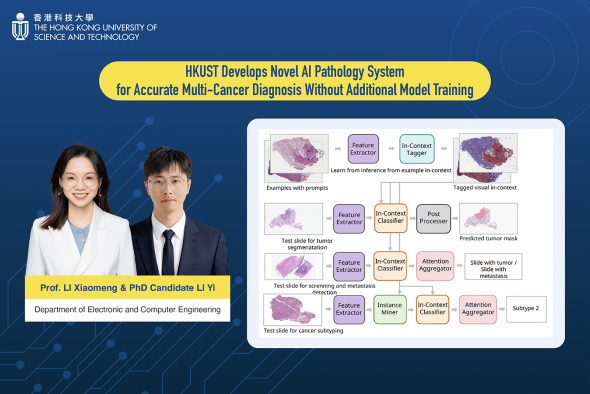
Prof. Li Xiaomeng (left), Assistant Professor from the Department of Electronic and Computer Engineering and Associate Director of Center for Medical Imaging and Analysis at HKUST, together with her student Li Yi, a PhD candidate from the Department of Electronic and Computer Engineering, develop the novel AI pathology system PRET.
Prof. Li Xiaomeng (left), Assistant Professor from the Department of Electronic and Computer Engineering and Associate Director of Center for Medical Imaging and Analysis at HKUST, together with her student Li Yi, a PhD candidate from the Department of Electronic and Computer Engineering, develop the novel AI pathology system PRET. 
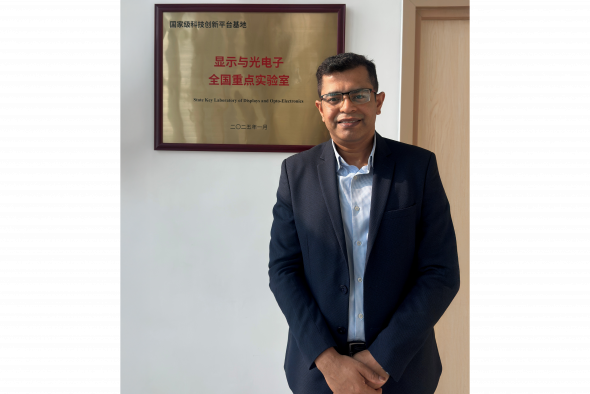
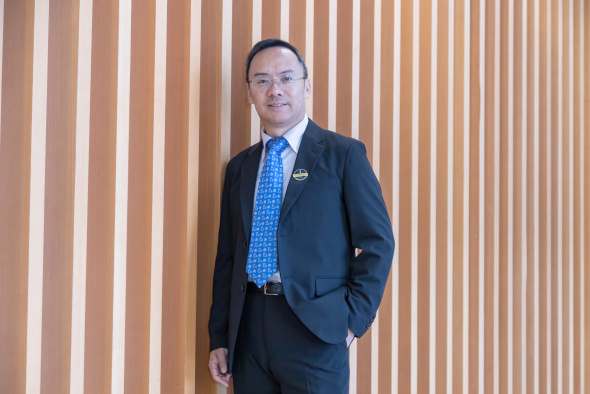
Prof. Abhishek Srivastava was cited “for sustained leadership in optical materials innovation, pioneering advances in ferroelectric liquid crystals, LC alignment technologies, and quantum rod performance for visual display systems.”
Prof. Abhishek Srivastava was cited “for sustained leadership in optical materials innovation, pioneering advances in ferroelectric liquid crystals, LC alignment technologies, and quantum rod performance for visual display systems.” 
Recognizing Sustained Leadership in Optical Materials Innovation
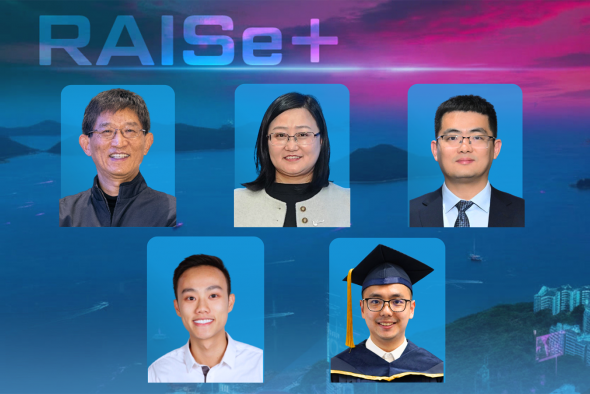
Among the seven HKUST projects selected in the third round of the RAISe+ Scheme, five are led by School of Engineering faculty members and graduates.
Among the seven HKUST projects selected in the third round of the RAISe+ Scheme, five are led by School of Engineering faculty members and graduates. 
Taking Up a Large Share of University’s Total
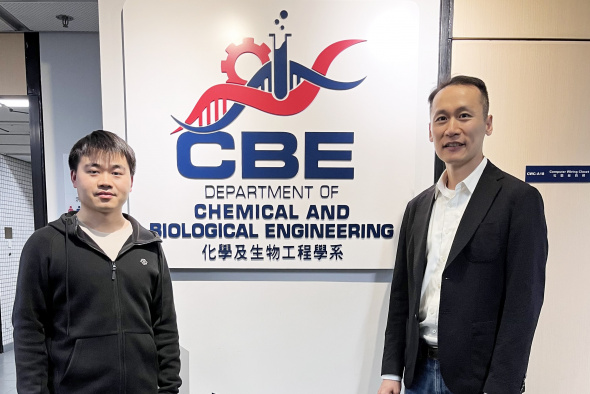
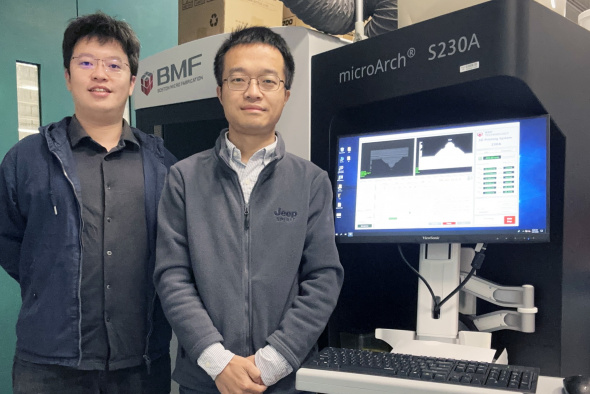
Prof. Yoonseob Kim (right), Associate Professor, and Dr. Cheng Xiaolong (left), postdoctoral fellow, from the Department of Chemical and Biological Engineering at HKUST.
Prof. Yoonseob Kim (right), Associate Professor, and Dr. Cheng Xiaolong (left), postdoctoral fellow, from the Department of Chemical and Biological Engineering at HKUST. 
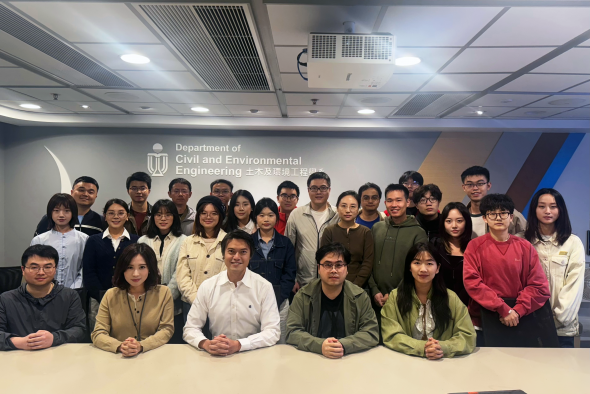
Prof. Dan Tsang (center, front row), corresponding author of the paper, and Dr. Xu Zibo (second right, front row), first author of the paper, and other team members in Prof. Tsang’s research group.
Prof. Dan Tsang (center, front row), corresponding author of the paper, and Dr. Xu Zibo (second right, front row), first author of the paper, and other team members in Prof. Tsang’s research group. 
Significant Study on Soil Carbon Stability Recognized
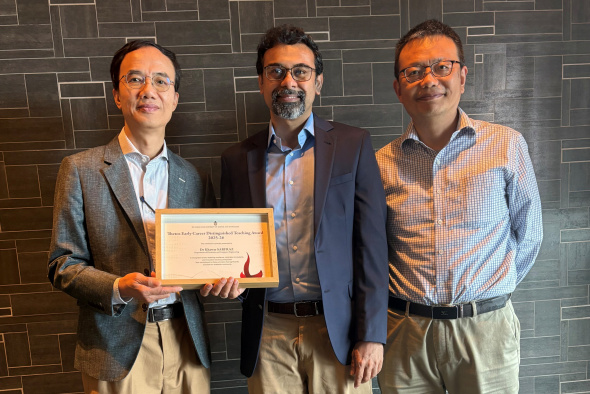
Dr. Khawar Sarfraz (center), Lecturer I in the Department of Electronic and Computer Engineering (ECE), received the Thetos Early Career Distinguished Teaching Award 2025-26 from Prof. Jimmy Fung (left), HKUST Associate Provost (Teaching & Learning). Also pictured is Prof. Yu Weichuan (right), Associate Head (PG Studies and Outreach) of the ECE Department.
Dr. Khawar Sarfraz (center), Lecturer I in the Department of Electronic and Computer Engineering (ECE), received the Thetos Early Career Distinguished Teaching Award 2025-26 from Prof. Jimmy Fung (left), HKUST Associate Provost (Teaching & Learning). Also pictured is Prof. Yu Weichuan (right), Associate Head (PG Studies and Outreach) of the ECE Department. 
Prof. Hu Wenqi (right), his postgraduate student Chen Xi (left), and other research team members at HKUST develop the world’s first bio-inspired artificial cilia system, advancing breakthroughs in medical and microrobotics applications.
Prof. Hu Wenqi (right), his postgraduate student Chen Xi (left), and other research team members at HKUST develop the world’s first bio-inspired artificial cilia system, advancing breakthroughs in medical and microrobotics applications. 
Advancing Breakthroughs in Medical and Microrobotics Applications
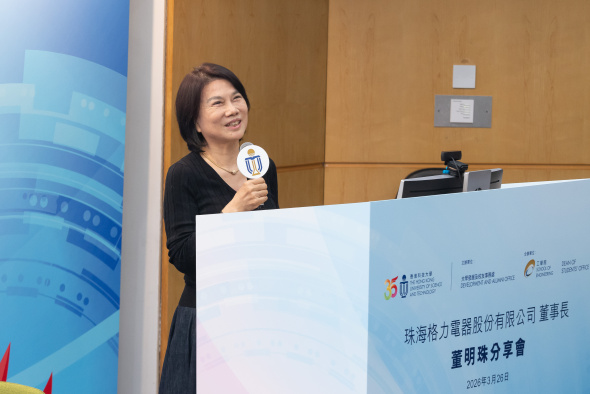
Ms. Dong Mingzhu, Chairman of Gree Electric Appliances, Inc. of Zhuhai,‌ urged HKUST students to maintain an energetic spirit, noting that sustained effort will ultimately yield rewards.
Ms. Dong Mingzhu, Chairman of Gree Electric Appliances, Inc. of Zhuhai,‌ urged HKUST students to maintain an energetic spirit, noting that sustained effort will ultimately yield rewards. 
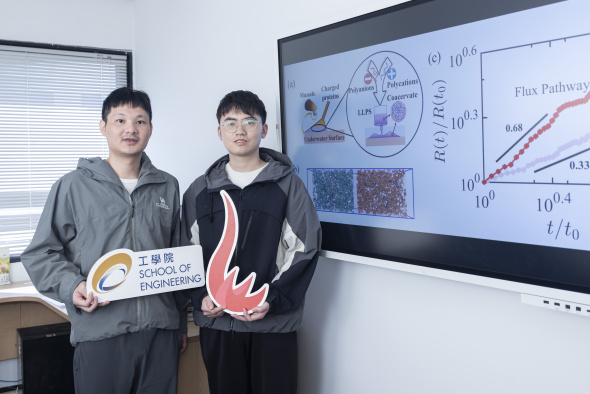
Prof. Chen Shensheng (left) and PhD student Wu Zongpei (right) simulated the whole process of liquid-liquid phase separation from start to finish, revealing how mussels instantly glue themselves to rocks. Their research holds significant implications for developing instant biocompatible surgical glues and programmable smart materials.
Prof. Chen Shensheng (left) and PhD student Wu Zongpei (right) simulated the whole process of liquid-liquid phase separation from start to finish, revealing how mussels instantly glue themselves to rocks. Their research holds significant implications for developing instant biocompatible surgical glues and programmable smart materials. 
Providing Implications for Instant Biocompatible Surgical Glues