How Prof. WANG Shuai Found His Way to AI Security
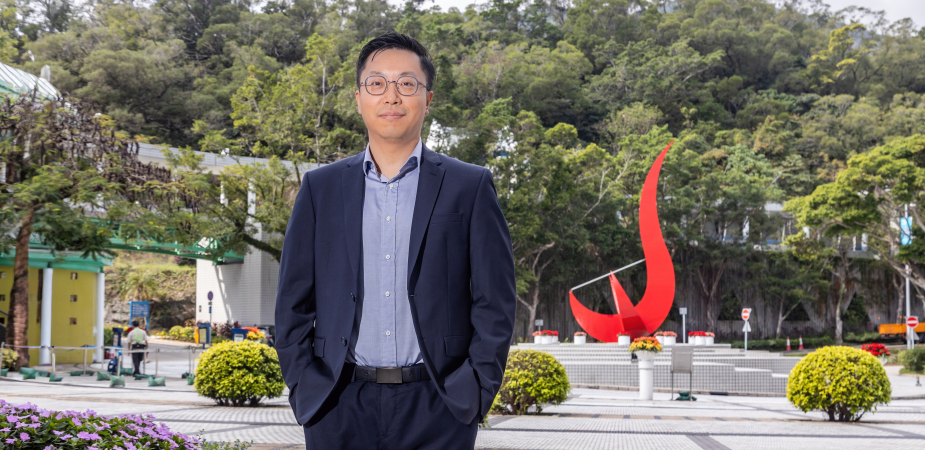
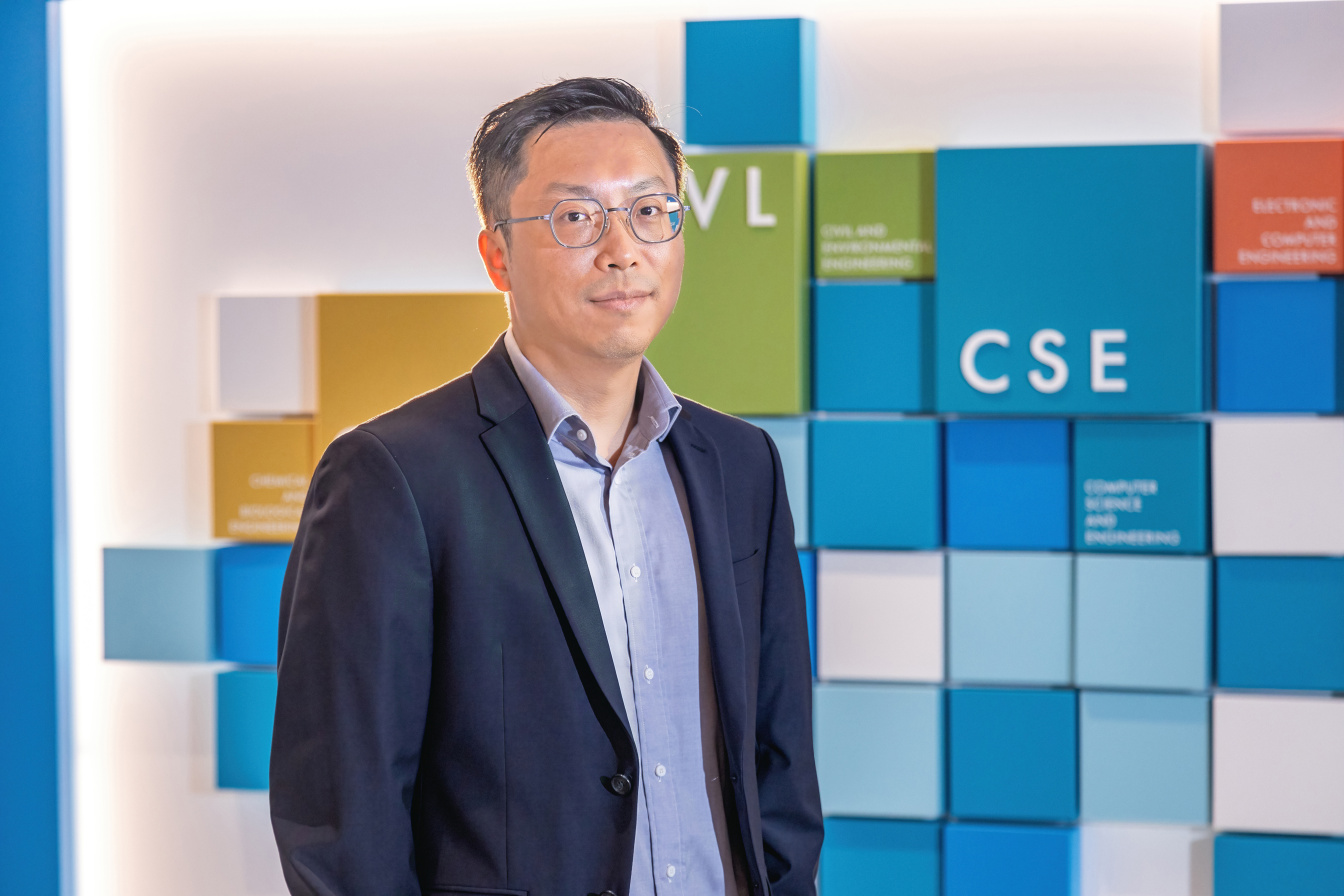
Building clean, elegant solutions to hard problems has defined Prof. WANG Shuai’s career. His research has helped shape how modern systems get secured – and now, he is working toward a bigger vision: full-stack, lifecycle AI security solutions built for this new era.
Prof. Wang Shuai is known today for his work on AI security and software security. But rewind to his childhood, and his real obsession was mathematics. “There’s a clean, elegant beauty to mathematics. I could sit for an entire afternoon lost in a problem,” recalls the Associate Professor of the Computer Science and Engineering Department. He grew up in a family of scholars – his father taught at a medical school, and both his grandparents were teachers. “My dream was simple – becoming a math professor.” But life rarely follows the plan we set for it.
The math degree that did not happen
His National College Entrance Examination results weren’t enough for the mathematics department. Instead, he was placed in the Department of Electronic Engineering at Peking University (PKU). “My childhood dream had, in a sense, shattered. At the time I knew almost nothing about computers – to me, they were just for playing games.”
His interest in computers first took hold in a university programming class, where he came across functional programming languages, such as Haskell, OCaml, and Scala. He found that code written in these languages was exceptionally clean and elegant – much like writing mathematical functions.
Despite this early spark, he spent his first three years at university feeling a bit discouraged, “I couldn’t find a sense of direction. Economics was very popular at the time, so I drifted along and minored in it, even though I wasn’t particularly interested.”
Coding his way back to passion
The real turning point came in his final year, during an internship at the telecommunications research lab at PKU. “It was my first exposure to practical, large-scale software systems. Telecommunications software was very complex back then – the algorithms, resource management and network programming paradigms. I also discovered just how fragile large software systems actually are, full of holes waiting to be found.”
He soon became interested in techniques that could automatically detect errors and vulnerabilities in large, real-world software systems. It was the moment that this lifelong lover of math and logic found his footing again, and it planted the seed that would grow into his career in computer security. “It’s better to spend your time on what genuinely interests you rather than drifting with the crowd – that’s the only way not to waste my years.”
After graduating, he took a gap year to strengthen his PhD application, working as a software development intern first at Microsoft Research Asia and then Intel China, where he got hands-on with frontier work in systems and computer security. He was eventually admitted to Penn State University in the United States – a move that carried him across the globe to pursue what he truly loved.
From software security to AI security
Prof. Wang describes his PhD years in the US as one of the “two happiest stretches” of his life. He’d wake at eight every morning and work through research until two the next morning, and never grew tired of it. His biggest breakthrough during his doctorate took only a year and a half: a tool that significantly reduced the information lost during software reverse engineering.
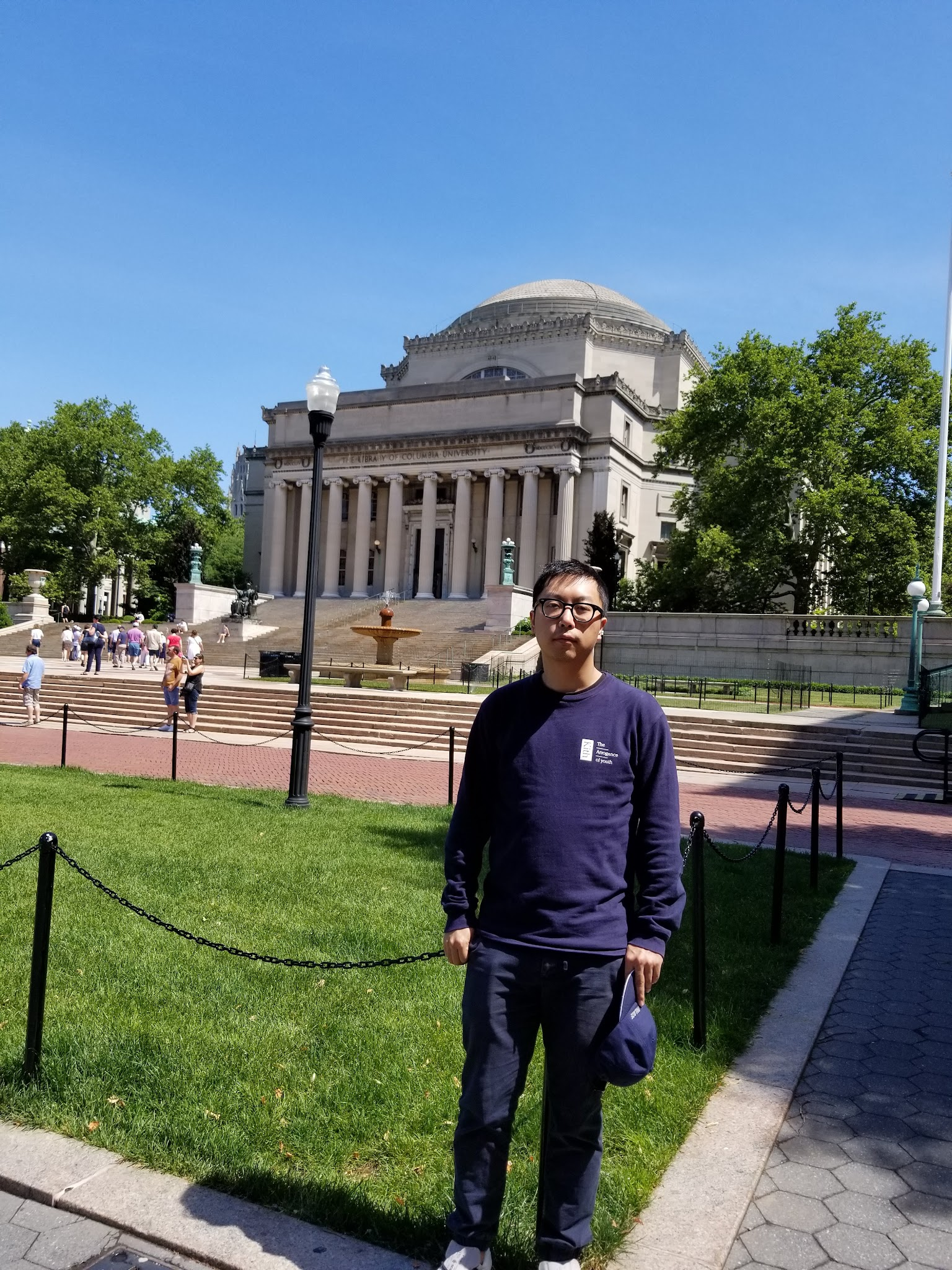
Prof. Wang visiting Columbia University in 2017 during his PhD years in the US – one of the “two happiest stretches” of his life.
“Reversing a compiled program back into source code normally loses a huge amount of information, which was a major obstacle to building effective low-level code defences.” He broke through that bottleneck by empirically studying hundreds of real-world binaries and distilling a set of rules that let disassembled code reassemble cleanly, without manual fixing. The idea itself was simple – which, to him, was the point. That work contributed to modern software reverse engineering in both industry and academia. Some leading companies later tried to poach him with generous offers, but he wasn’t tempted.
“I took a winding path to find my direction again, and once I did, all I wanted was to finish my PhD properly. I told myself I needed to dive deep into research and become a scientist,” Prof. Wang says.
Midway through the program, he realized that writing a paper is a lot like writing code – it, too, can be written cleanly and elegantly. As he came to enjoy writing papers, he decided to commit to an academic career.
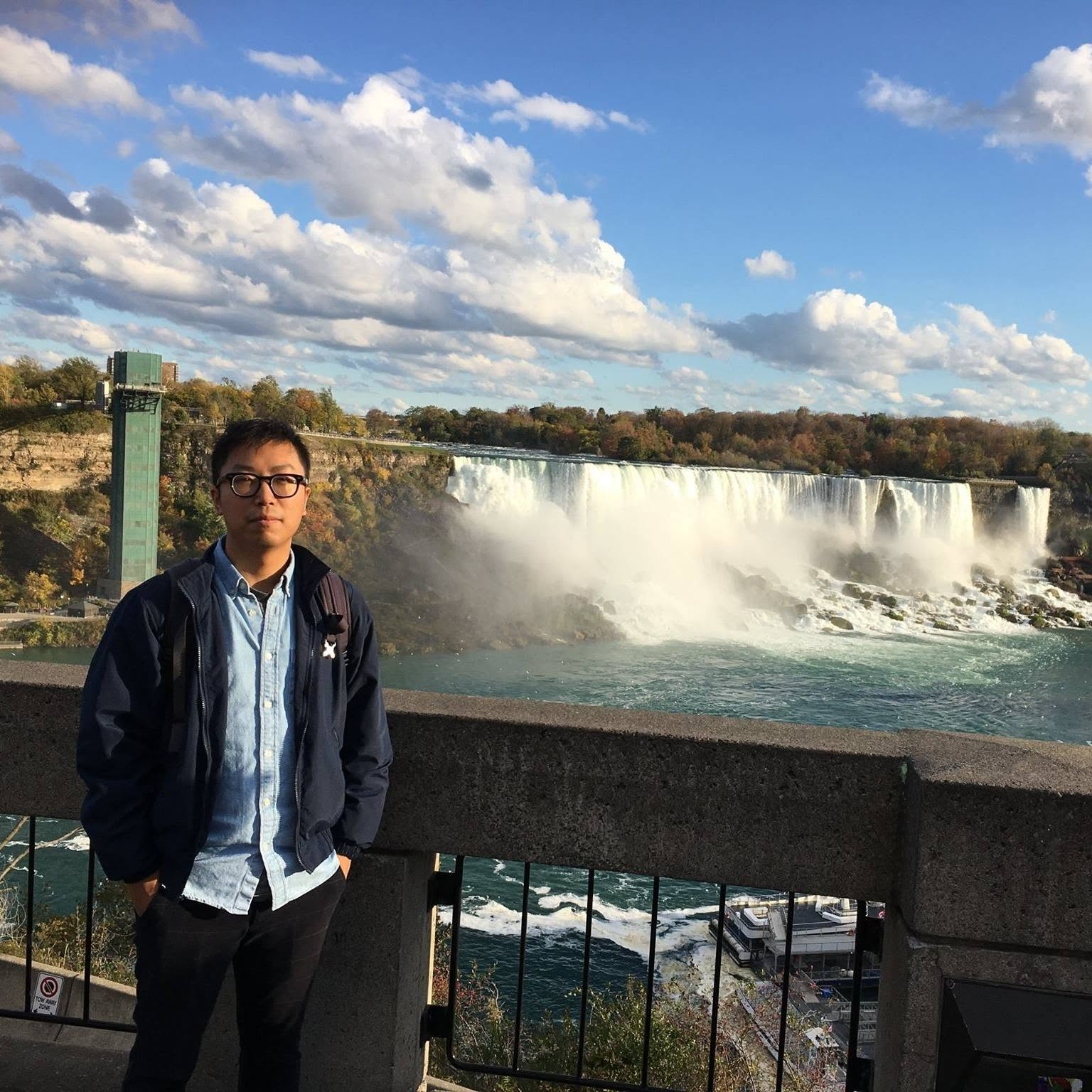
Prof. Wang at Niagara Falls on a conference trip during his PhD in 2016. His doctoral breakthrough, achieved in just a year and a half, contributed to modern software reverse engineering.
After completing his PhD in the US, he joined Prof. SU Zhendong – a globally renowned scholar in software systems – at ETH Zurich in Switzerland for postdoctoral research. There, what he learned wasn’t just technical but a whole philosophy of mentorship. “Prof. Su is my role model. He showed me the relationship between professor and student isn’t one of boss and employee, but of collaborators who inspire each other. His respect for students shaped how I mentor my own now,” he says. It was also during this time that his interests expanded from software security into AI system security. He and his collaborators applied a range of classic software security techniques, such as security testing, static analysis, and formal verification, to AI systems. Essentially, they treated AI models as a new type of software to analyze and protect – a clean framing that let decades of software security know-how carry over. Building on their early work from 2019, they went on to uncover a large number of errors in popular, commercial AI models and AI services.
HKUST – a second golden chapter
After a year at ETH, Prof. Wang joined HKUST in 2019 to further his research on AI security. “Hong Kong is where East and West meet, and academia and industry converge – real resources and real problems for computer science research. Besides, HKUST’s Computer Science and Engineering Department has a strong international reputation,” Prof. Wang says.
He calls his days at HKUST another of his happiest stretches. “Every day I’d grab a quick meal and head to the office – no one to disturb me. Just keep writing papers. Very productive, very focused, at peace.”
One of his most notable achievements here is uncovering an AI security vulnerability: even Trusted Execution Environments (TEEs) – hardware-based “safes” widely trusted for secure computation – turned out to leak, with Prof. Wang and his team showing that attackers could extract private data with striking accuracy using TEE side channels. The paper earned him and his team the Distinguished Paper Award at the 46th IEEE Symposium on Security and Privacy, one of the field’s top conferences. True to form, he stays modest about the recognition.
“A research breakthrough doesn’t happen ‘magically’ – it comes as compound interest paid out on years of accumulated knowledge and skill,” he says. “I’d already worked with side-channel attacks at Intel China in 2013. For this research, I added a bit of creativity on top of that foundation, designed a brand-new kind of side-channel attack, and then aimed it at AI systems – piecing this framework together step by step.”
In his view, HKUST provides world-class support for junior faculty to build up their research careers. “You’re not bogged down by too much administrative burden, and the University draws some of the most talented students. For research like ours, building AI models and systems, having good people around you means things get done much faster,” he says.
As a mentor, Prof. Wang strives to create a focused environment for his PhD students. “What I care about isn’t the number of papers they publish, but whether they grow into independent researchers,” he explains. Above all, he tries to cultivate taste. “Plenty of problems are solvable, but far fewer are worth solving. He encourages his students to be selective – to recognize a clean idea and to walk away from a project that only holds together with patch after patch.
Thinking like a customer
Beyond the lab, Prof. Wang has also ventured into entrepreneurship. He co-founded CipherInsight with his PhD students in 2024, focusing on data privacy and AI security in financial contexts, and partnering with banks and institutions such as HSBC. At the outset, his thinking was straightforward: build good technology, and it will naturally translate into a sellable product. He soon learned that the real challenge was never the technology.
“AI security is more like the insurance industry in nature – it doesn’t generate revenue directly, so customers won’t necessarily pay for it,” he explains. Clean technology, he learned, does not automatically make a clean business. The team now starts from the business case – following where the capital flows, adjusting to feedback from early customers, and building out an ecosystem – rather than staring at the technology alone.
A word for the next generation
Asked about his personal motto, Prof. Wang offers no grand phrases – just two plain pieces of wisdom: “Find what genuinely interests you, commit to it, and let time compound into real growth. If a place isn’t working out, that’s not a reflection of you – go find one that fits.”
Outside of work, he unwinds through reading – Japanese detective fiction, Haruki Murakami (村上春樹) – and swimming and weightlifting, the kind of focused, breath-by-breath effort he finds calming. In the end, Prof. Wang never really left mathematics behind – whether in a line of code, a paper or a company, he is still chasing that same clean, elegant beauty.