Undergraduate Team Earned Third Prize in International Smart Remote Chemical Engineering Experiments Competition
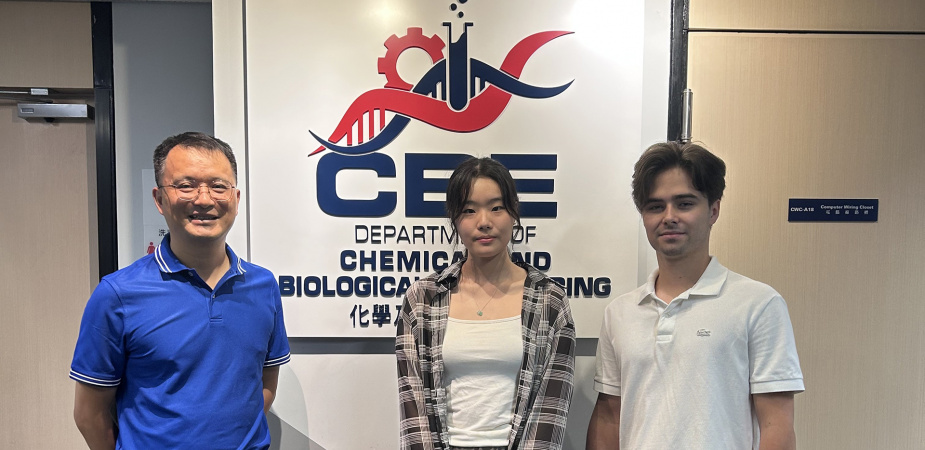
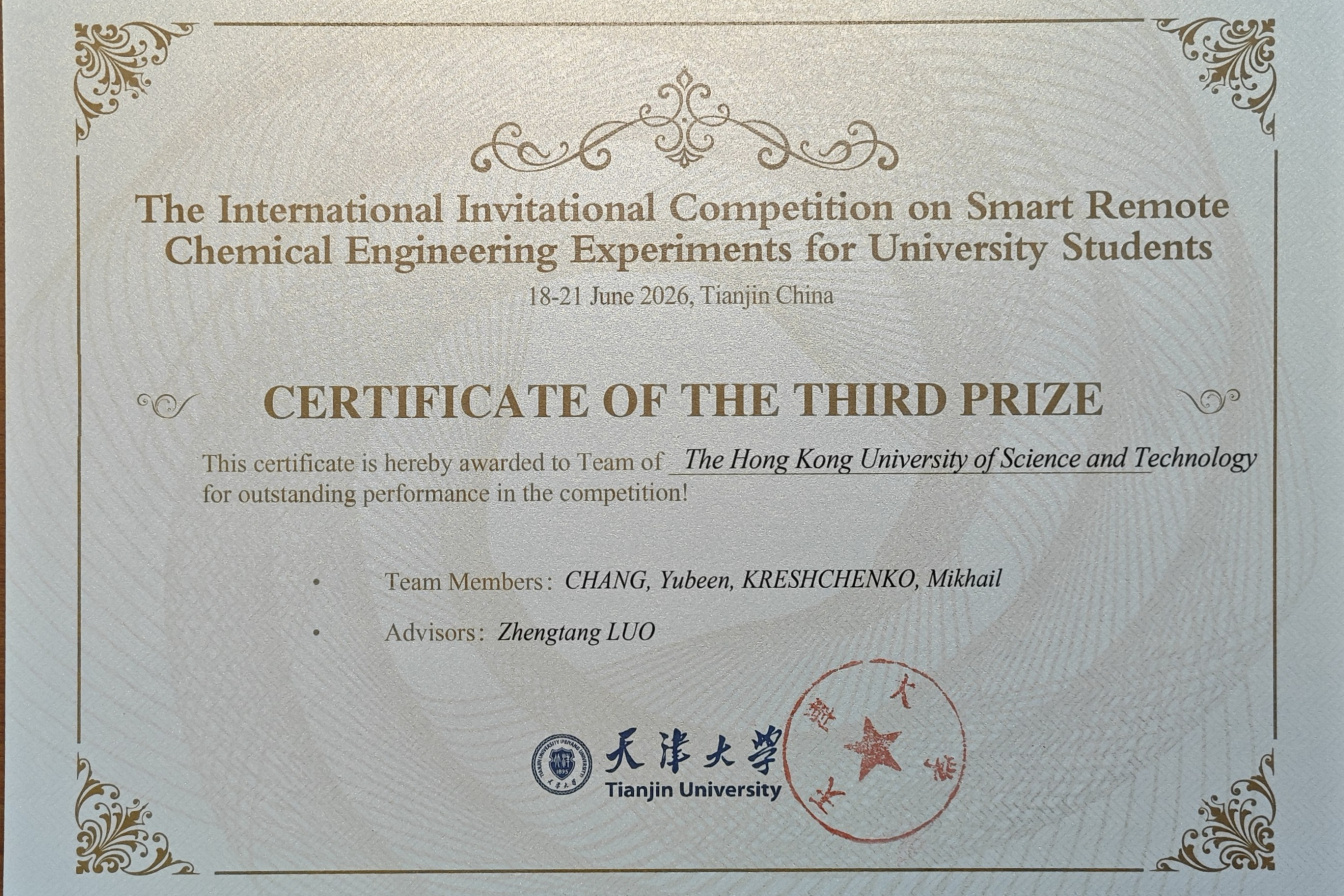
A team of two undergraduate students from the Department of Chemical and Biological Engineering, Yubeen CHANG and Mikhail KRESHCHENKO, won third prize in the International Invitational Competition on Smart Remote Chemical Engineering Experiments for University Students, hosted by Tianjin University on June 18-21, 2026. Supervised by Prof. LUO Zhengtang, the team was among 18 university teams participating from around the globe.
The competition entailed a remote operation of a distillation column system. Subjected to time, safety, and design constraints (such as installed system interlocks and alarms), a specified product purity and quantity had to be achieved. Competitions like this offer valuable exposure to real-world plant operations for chemical engineering students.
Through effective teamwork and application of course knowledge, Yubeen and Mikhail successfully planned and controlled multiple units of operation at the same time. Key factors contributing to their success included:
- Applying basic distillation column principles to develop their own prediction of what is “supposed” to happen during the operation. Hence, figuring out the cavities and uncertainties.
- More advanced look at the process revealing the unsteady-state problem solutions and sequence of necessary actions.
- Safety and energy cost considerations, which hugely impacted grading and thus, decision making.
Related link:
- Department news (Aug 11, 2026): HKUST Awarded 3rd Place in International Smart Remote Chemical Engineering Experiments Competition