
How Prof. Fugee TSUNG Builds Bridges Between Data, Industry, and Human Spirit
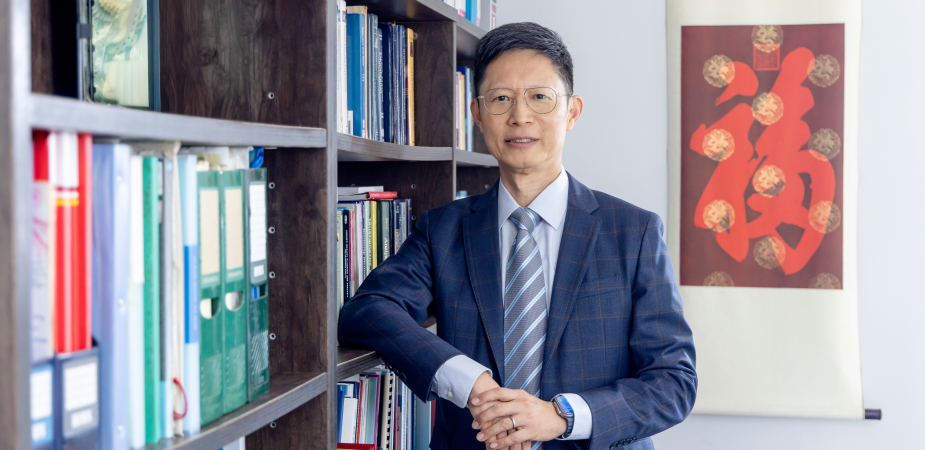
When Prof. Fugee TSUNG looks back on his career, he does not see a straight line from engineering to statistics to artificial intelligence. Instead, he sees a series of “seeds” planted early in life, each one growing into a way of thinking that defines his work across industrial engineering, quality control, and interdisciplinary innovation.
“Looking back at my journey,” the Chair Professor of the Department of Industrial Engineering and Decision Analytics (IEDA) reflects, “I realize that the seeds of my interdisciplinary approach were planted long before I became a researcher. It was not by design, but through a sequence of curiosities that eventually came together.”
That instinct to connect disparate fields began in his student years. Growing up in an intensely competitive education system, he attended the most prestigious high school in his city. Strong in mathematics and physics, he might have seemed destined for a conventional engineering path, but his high school experience took a quieter turn.
“I was placed in a talent class for Chinese literature,” he says with a smile. “At the time, people associated math and physics with high IQ, so I kept my literary pursuits quiet. Yet, every week, I would attend the Chinese Classical Studies Club to listen to lectures on culture and philosophy. That was the beginning of my curiosity for interdisciplinary thinking.”
He recalls a teacher who introduced him to the profound nature of aesthetics. “I read a serious book about the definition of beauty, which was framed within the stream of Chinese culture,” he says. “At the time, it was just an interest. I didn’t know then that this ability to step across boundaries—from the technical to the cultural—would become the hallmark of my career.”
During his undergraduate studies, he followed the expected route into mechanical engineering. However, his perspective widened as he matured. “Mechanical engineering focuses on the single machine,” he explains. “Industrial engineering, by contrast, treats the entire factory as a system. It’s a matter of zooming out; you look at the machine, but you also see how it functions within the larger whole. That shift in perspective changed how I approached every problem I encountered thereafter.”
He pursued graduate studies in industrial and operations engineering at the University of Michigan, where the program was tightly linked to the automotive industry in Detroit.
“Michigan was truly the center of the automotive world,” he notes. “Most engineering innovations were rooted in that ecosystem, and I was lucky to learn how to solve real, practical problems there. My thesis was related to automotive manufacturing, and everything I do today starts from those foundations.”
It was here that he learned a vital lesson: research is only as good as the problem it solves. He avoided the trap of abstract theory, preferring instead to work on the shop floor where the challenges of quality and reliability were tangible and immediate.
A temporary move to a young institution
When he later received an offer from the young Hong Kong University of Science and Technology after being interviewed by Founding IEDA Department Head, the late Prof. Mitchell TSENG, the decision was not simple. “The economy in the US was strong, and job prospects were plentiful,” he recalls. But the offer from HKUST was unexpected and compelling. “I had to decide between industry and academia. My wife and I decided to take the leap, thinking we would spend a few years in Hong Kong, gain experience, and then see what came next. That was nearly 30 years ago.”
At the time, HKUST was an ambitious, unproven project. “We didn’t know what the future held,” he says. “But we bought into the vision of building an ‘Asia’s MIT.’” Reminiscing three decades on campus, he admits that it was the people that ultimately kept him bound to the University, and of course a beautiful campus nestled on the hillsides of one of Hong Kong’s most spectacular sea fronts also helped.
“In all, it was the mutual trust I’ve built with my students and the experience of growing alongside this institution that I am most proud of,” he beams.
This theme of “growth” is one he often repeats. He views his tenure not as a stationary position, but as a period of shared evolution, where he and the University both learned how to transform from a bold idea into a globally recognized engine of discovery.
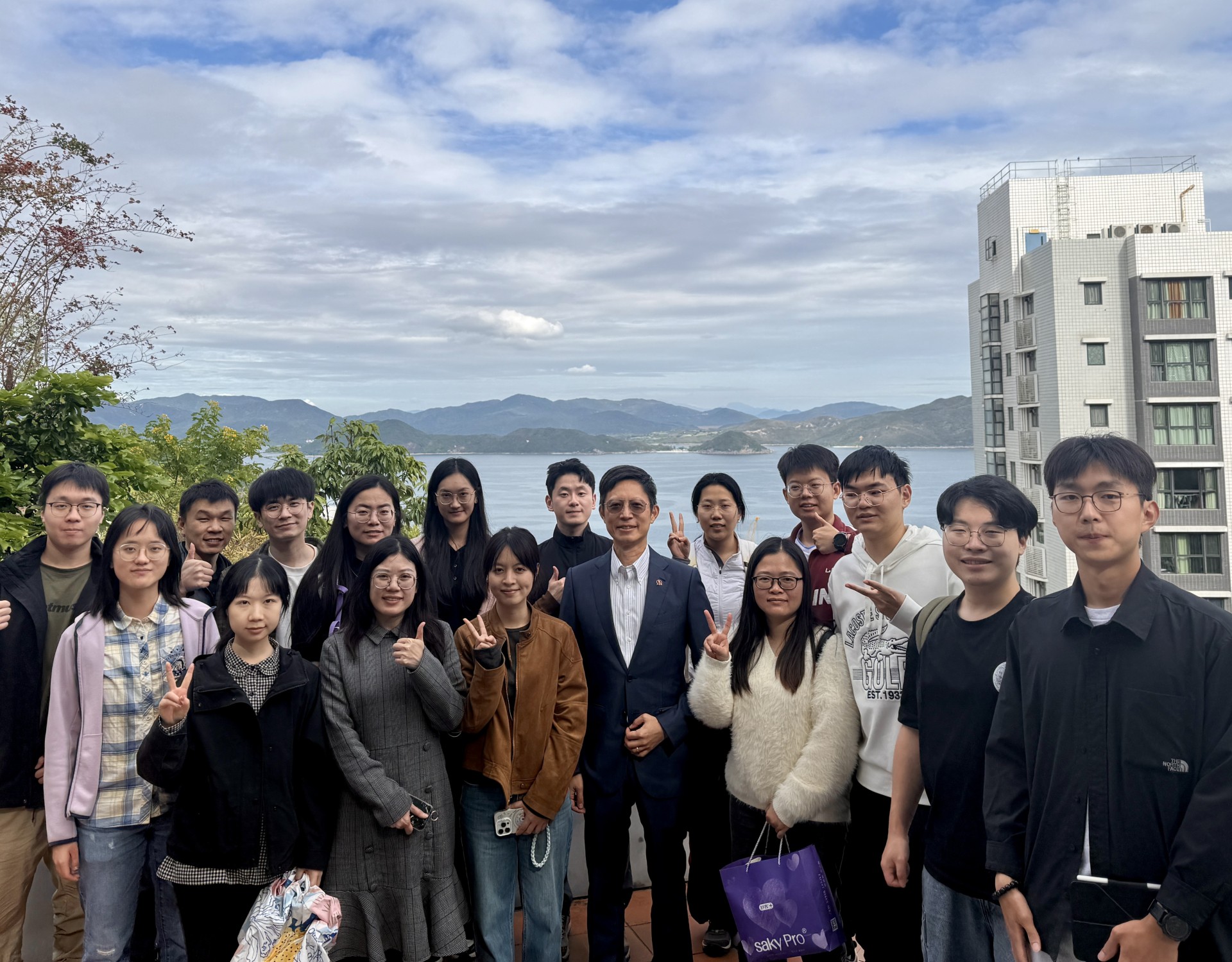
Prof. Fugee Tsung and his research group’s students
From quality to AI: the evolution of the discipline
Today, Prof. Tsung carries many roles including: Director of Quality and Data Analytics Lab (QLab), Co-Director of Industrial Informatics and Intelligence Institute (Triple-I Institute) and Associate Director of HKUST-HKPC Joint Research Lab for Industrial AI and Robotics (INAIR). But he is not fixated on titles, instead, his research is one of his proudest achievements.
Long centered on quality engineering and statistical process control, his career was recently recognized with the 2025 Shewhart Medal, an honor often described as the “Nobel Prize of Quality Control,” and the 2025 George L. Smith International Award for Excellence in Promotion of Industrial Engineering. Both awards celebrate his pioneering work in improving industrial system quality and his impactful academic leadership. “My work is about quality control,” he explains. “In medical terms, we monitor a system to detect changes—shifts from an ‘in-control’ state to an ‘out-of-control’ state—to provide early warnings.”

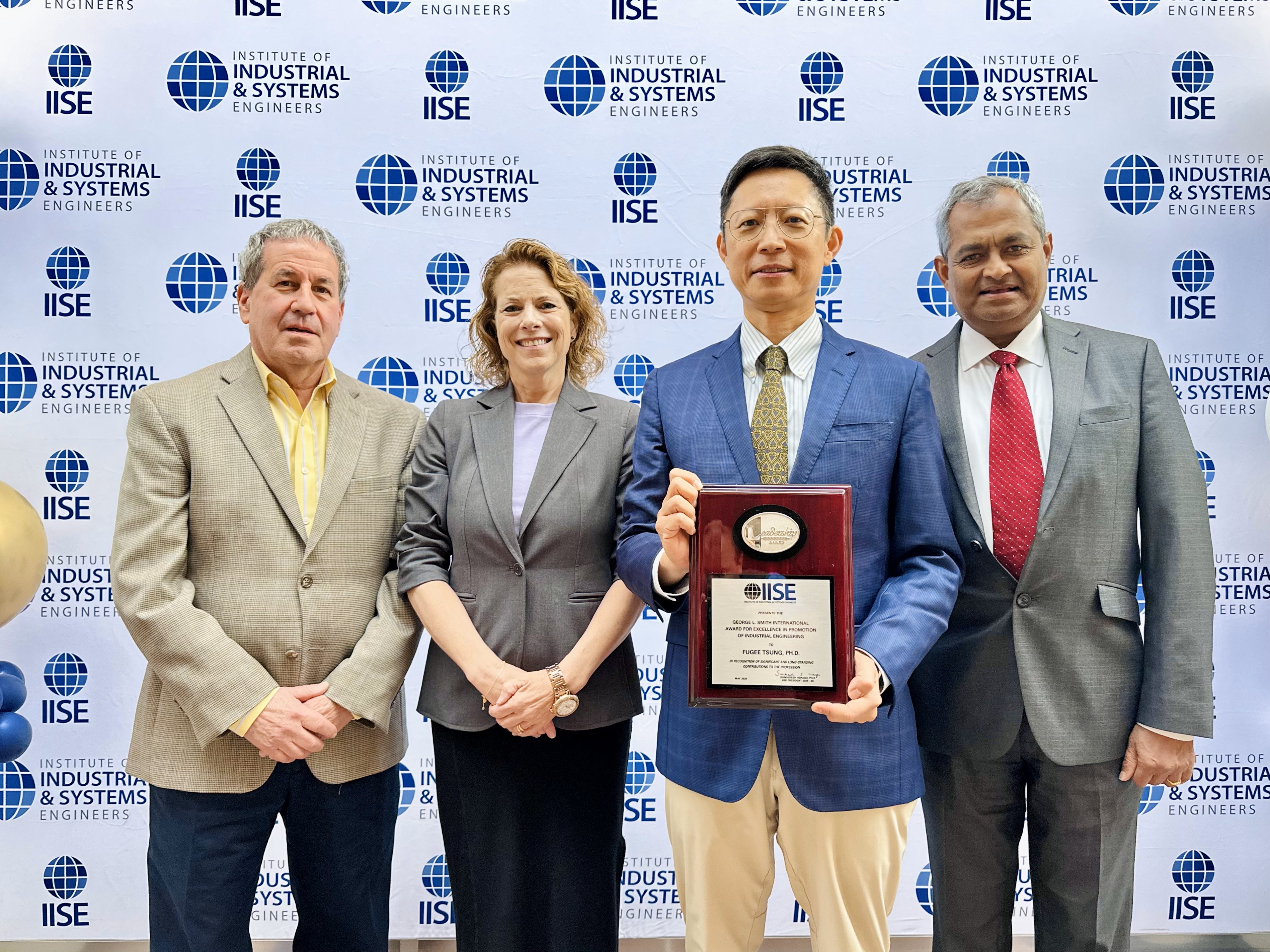
(Left) Prof. Fugee Tsung received the 2025 Shewhart Medal from the American Society for Quality (ASQ) – the Nobel Prize in the field of quality – at the ASQ World Conference on Quality and Improvement, held in the United States on May 4, 2025. He is among the very few Chinese scholars to have received this prestigious honor since it was first presented in 1948.
(Right) Prof. Tsung was conferred the prestigious George L. Smith International Award for Excellence in Promotion of Industrial Engineering by the Institute of Industrial and Systems Engineers (IISE) on June 2, 2025, at the IISE Annual Conference & Expo, held in Atlanta, Georgia.
He highlights three core pillars in his work: mastering complex multi-stage systems, taming high-dimensional industrial big data, and integrating AI for smart manufacturing. He has developed advanced process monitoring and diagnostic tools that leverage anomaly detection, multimodal analytics, and physics-informed models. His current research focuses on grounding AI in industrial reality, emphasizing critical safety guardrails and high-impact transformation.
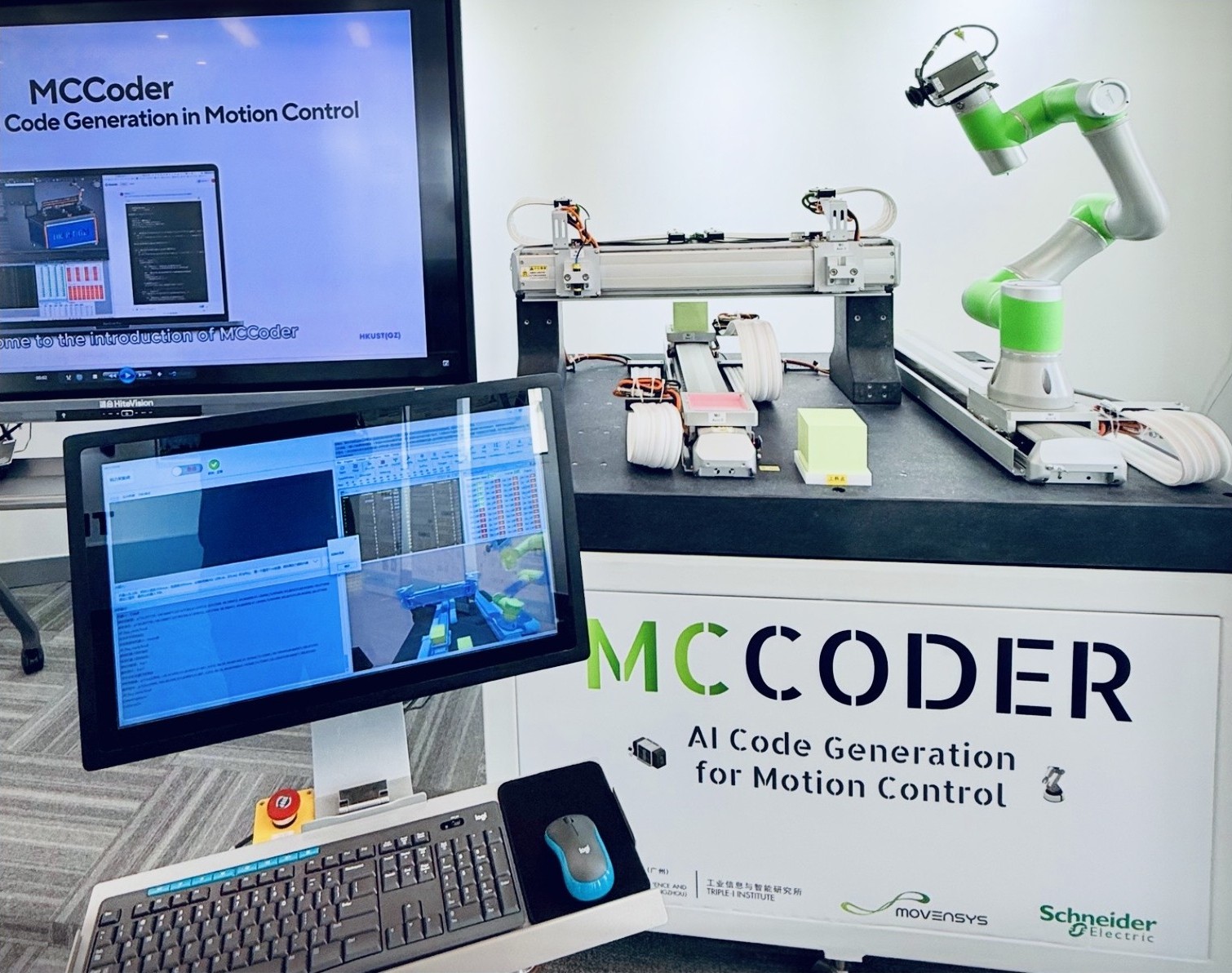
Prof. Tsung’s MCCoder research project explores AI-driven code generation for motion control, advancing safer and smarter automation in industrial processes.
“Data has become increasingly complex,” he says. “It is no longer just numbers; it includes images, text, and video. While AI is incredibly powerful, we must remember that if we want to apply it in a real industrial setting, there is still a gap to bridge. It is not straightforward. Human judgment must remain in the loop.”
He emphasizes that the goal is not to automate for the sake of automation, but to transform industrial data into “reliable, trustworthy intelligence.” He is acutely aware that in a factory, where human safety and economic loss are at stake, the tolerance for error is effectively zero. Therefore, his approach to AI is conservative, focusing on guardrails and interpretability rather than unconstrained black-box models.
Building cross-disciplinary communities
Aside from his research, Prof. Tsung is celebrated for many leadership roles, including his impact of the development of HKUST in Guangzhou. As the Founding Acting Dean of the Information Hub in HKUST(GZ), this proved to be a turning point in his career.
“I helped recruit our first 50 faculty members to the Information Hub in Guangzhou, helping to build it from scratch,” he says. “Engaging with those brilliant minds gave me the confidence to bridge the gaps between industrial practice and AI.”
Another notable contribution at Guangzhou was the creation of the Triple-I Institute—a natural response to complex challenges in the industry. Covering research fields such as industrial big data, industrial intelligence, industrial Internet of Things, and industrial carbon neutrality. Its purpose was to promote intelligence transformation and enhance industrial competitiveness.

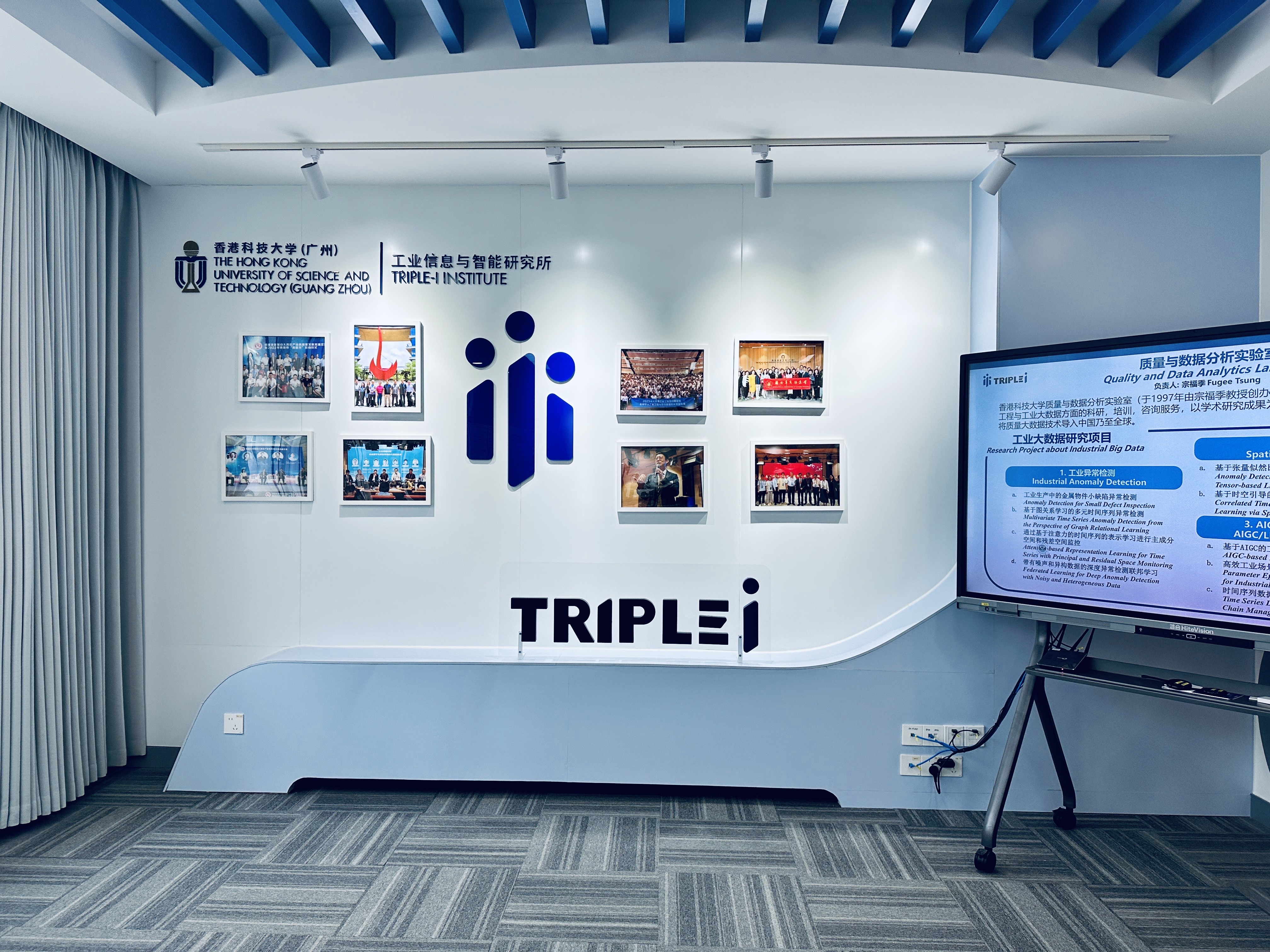
Triple-I Institute at HKUST(Guangzhou)
“Sometimes, a vision for cross-disciplinary work isn’t just designed—it emerges because the problems we face today require expertise from AI, robotics, data science, and manufacturing all at once,” he notes.
By breaking down the silos between departments/thrusts in line with the Founding President’s vision, he has built a hub where researchers are compelled to engage with the realities of industry-driven missions. He believes the most significant breakthroughs occur at “intersections,” and during his time at HKUST(GZ), he has worked to ensure that these intersections are not merely theoretical but physical—enabled by joint laboratories, shared goals, and sustained cross-disciplinary collaboration.
Teaching as a design philosophy
Prof. Tsung is an avid mentor who believes teaching is a craft that requires constant reinvention. “I truly love teaching,” he says.
Reflecting on the long-running Global Manufacturing joint course with Stanford University—first initiated in 1995 and later sustained and reshaped through his involvement—he recalls, “It was an intensive project where students collaborated across continents to solve real-world industrial problems. It was challenging for both the students and the professors, but the companies we worked with valued it because the students produced genuine, useful innovation.”
Students traveled between Hong Kong and the United States, worked directly with industry sponsors, and experienced firsthand what it meant to confront messy, high-stakes engineering challenges. For Prof. Tsung, it embodied his conviction that engineering education must extend beyond the classroom and into real systems.

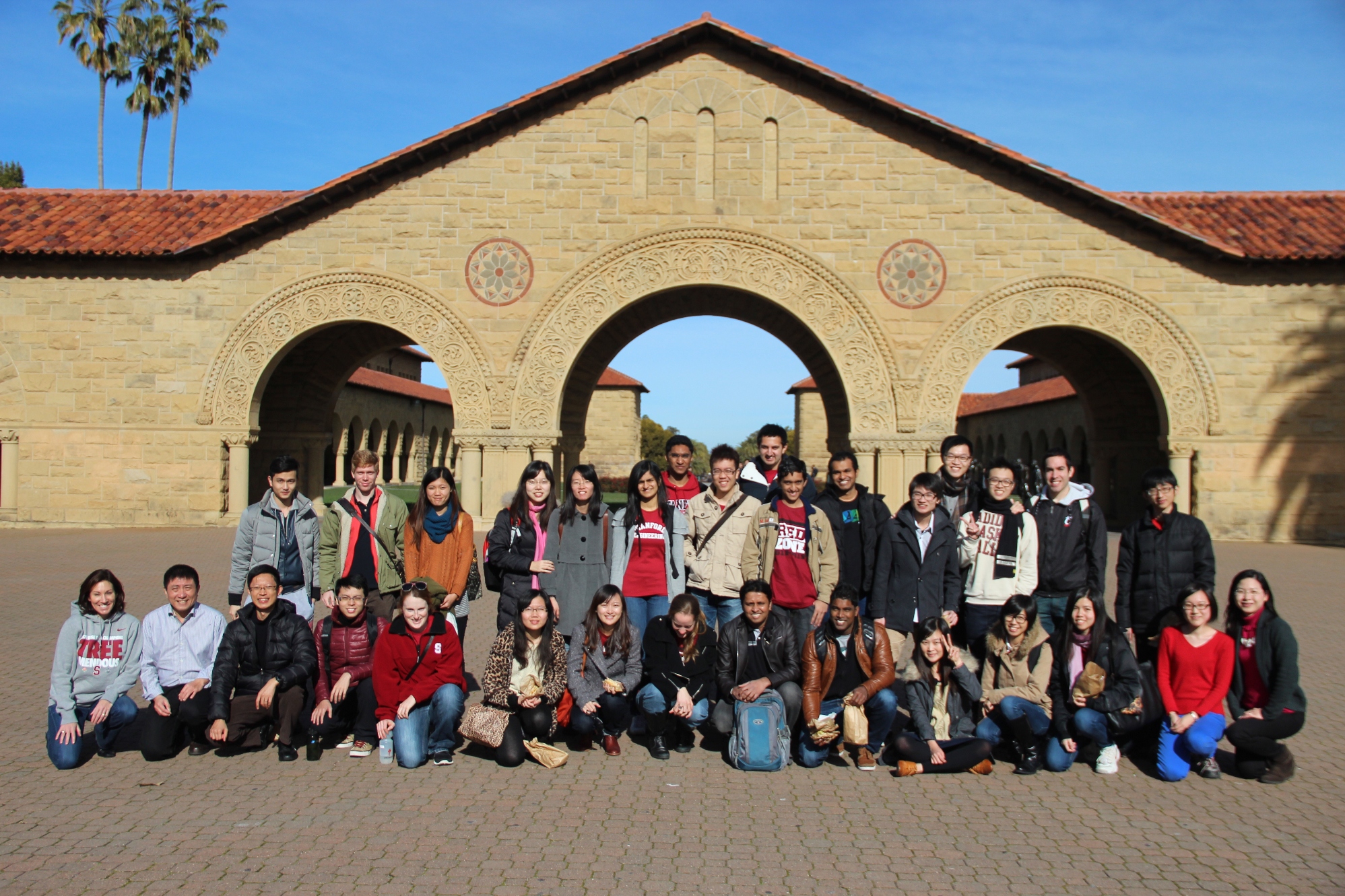
Students and faculty members at the HKUST-Stanford Global Manufacturing joint course. Photos taken at HKUST (left) and Stanford University (right) in 2013.
Equally formative was the Design Thinking course he introduced in summer 2013 during his tenure as Head of the IEDA Department (2009–2015). Inspired by a similar course he had observed at Stanford, he initiated a collaboration with the China Academy of Art—an unconventional partnership at the time between engineers and artists. Many were skeptical that the two cultures could meaningfully engage. Yet under his leadership, students from technology and art worked side by side, developing projects that combined technical feasibility with aesthetic sensibility.
“The design-thinking collaboration with the China Academy of Art is particularly memorable to me,” he reflects, “because it reminds engineering students that aesthetics, empathy, and craftsmanship are also part of quality.”
For him, the course demonstrated that innovation is not only analytical but human-centered, and that rigor and creativity are not opposites, but complements.
In the age of generative AI, he believes the classroom model must evolve once again. “We can no longer rely on traditional homework when AI can provide instant answers. As teachers, we must design exercises that truly stretch students’ capabilities.”

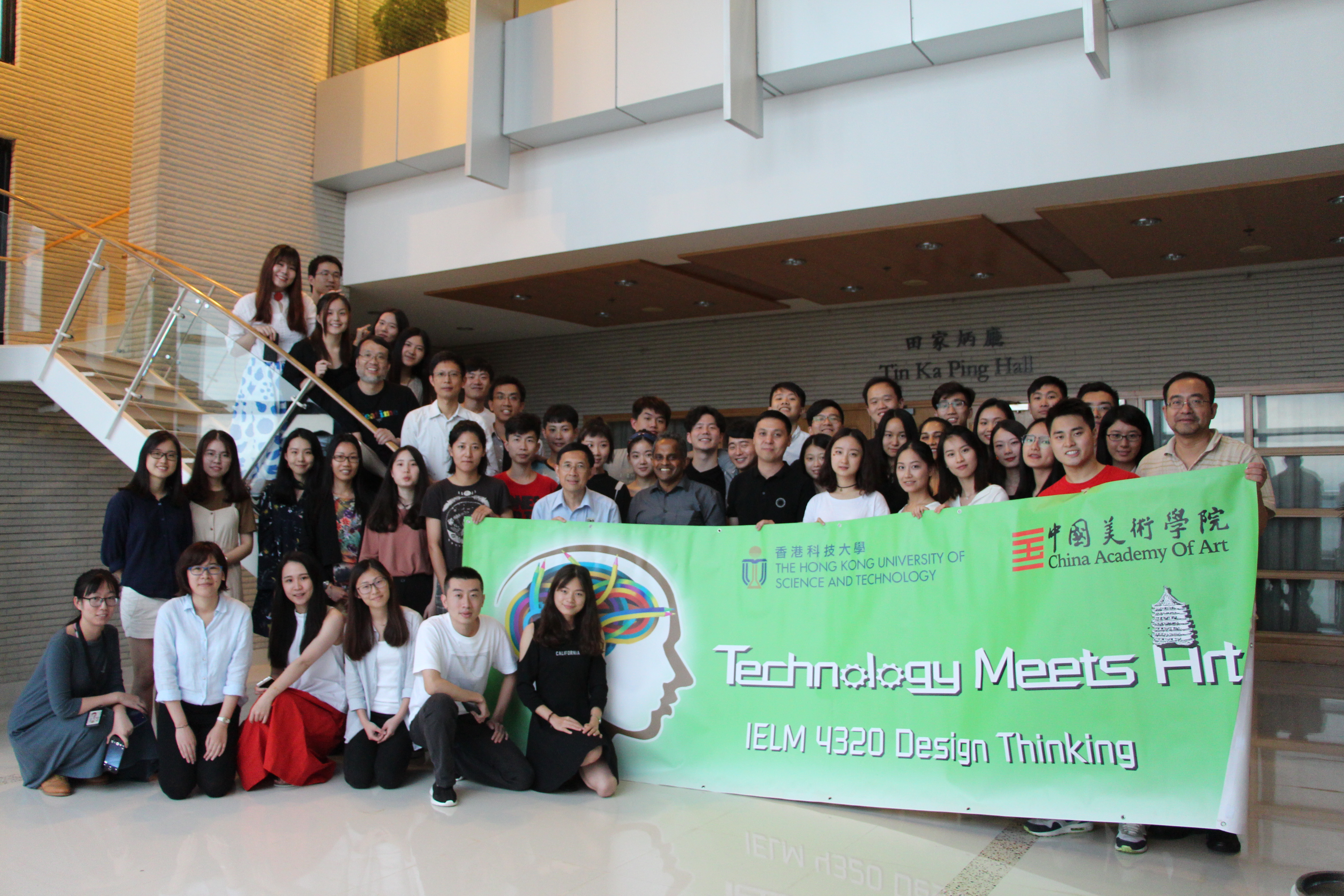
The Design Thinking course co-organized by HKUST and the Hangzhou-based China Academy of Art (CAA). Photos taken at CAA in 2013 (left) and HKUST in 2017 (right).
He identifies three essential skills for the next generation: the ability to ask the right questions (inquiry), the ability to connect different fields (interdisciplinary integration), and the capacity for “taste” or judgment. “In an era of AI-generated output, human judgment is the rare, irreplaceable quality,” he asserts. He urges his students not to compete with machines on computation, but to excel at the very things machines cannot do: identifying the core of a problem, discerning quality from mediocrity, and synthesizing disparate pieces of information into a coherent argument.
Playing the long game
Outside the university, Prof. Tsung maintains a rhythm that balances professional intensity with inner stillness. “I have practiced Wudang martial arts for years,” he says. “It provides a necessary reset, allowing me to rediscover my body. It’s not about research productivity; it’s about maintaining peace.” He finds that the discipline of the physical form informs the discipline of the mind.
He also reads the Diamond Sutra daily. “It helps maintain inner space. If you are always firefighting, you forget what is truly important.” His philosophy is that rigor and freedom are not mutually exclusive. “The logic of research and the ‘random walk’ of creativity can coexist,” he says. “You need to maintain enough space to see the bigger picture, and eventually, you will find the chance to connect the dots.”
Living his life according to the philosophy that his career is a marathon rather than a race, this is perhaps the most defining aspect of his character. While he has achieved extraordinary milestones—from the Shewhart Medal to the creation of entire institutes—he resists the urge to label his life a race. Instead, he views his career as a deliberate, thoughtful exploration. He has remained in academia not because it is safe, but because it provides the freedom to pursue the questions that matter most.
Trekking the globe from Michigan to Hong Kong to Guangzhou, Prof. Tsung has spent his life building bridges: between disciplines, between theory and practice, and between the demands of the digital age and the human spirit. He remains a student of his field, still looking for the next seed to plant, still zooming in on the machine and zooming out on the system, and always reminding those around him that the ultimate metric of any research is not the citation count, but the meaningful change it creates in the world.

